



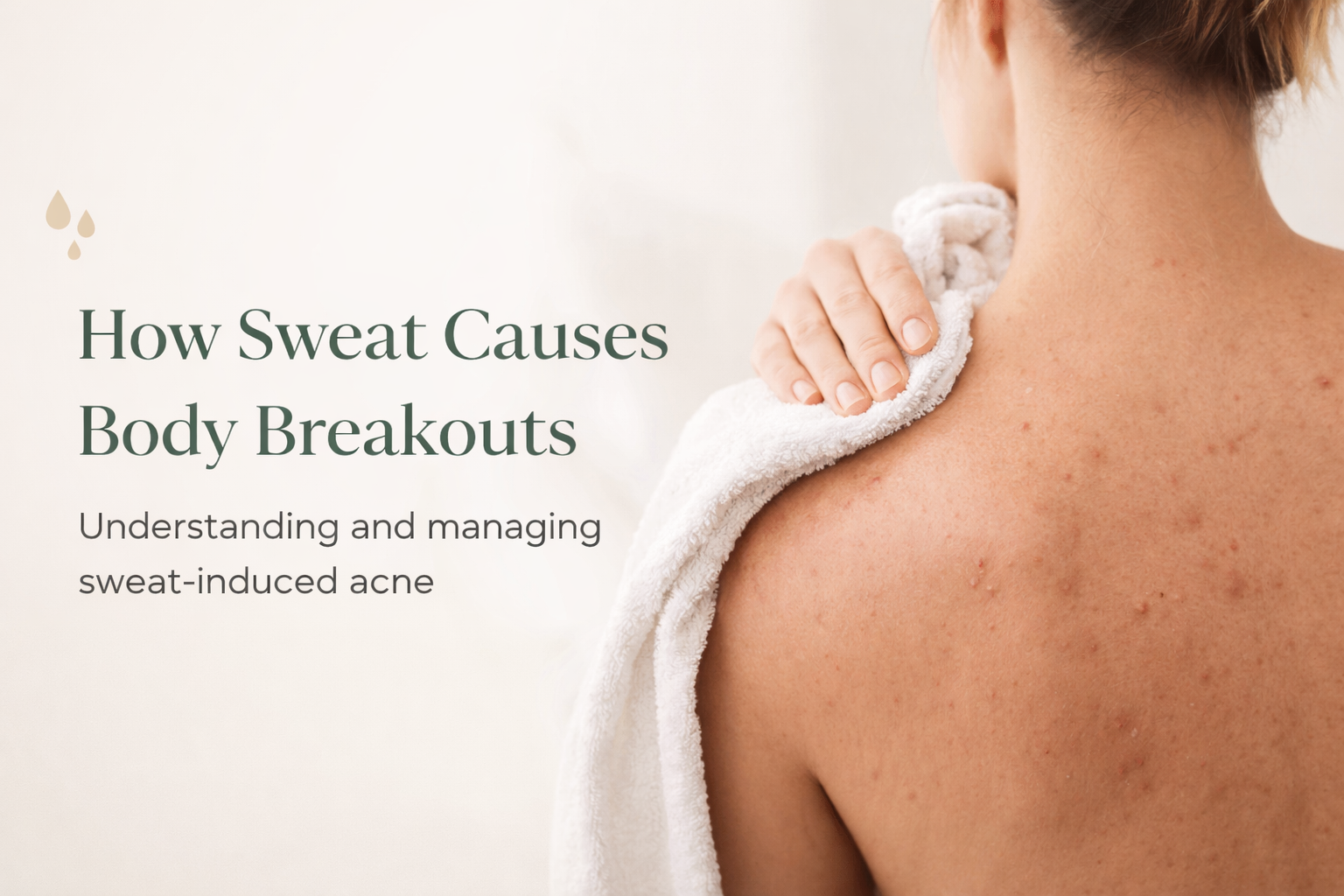
How Sweat Causes Body Breakouts
Have you ever noticed new pimples on your back or chest after a tough workout or a hot, humid day? You're not alone. While sweat is a natural and healthy bodily function, it can unfortunately contribute to body acne. Instead, it mixes with natural oils, bacteria, and dead skin cells on your skin's surface, creating the perfect storm for clogged pores and breakouts.
Why Do Breakouts Occur After Sweating?
Breakouts happen after sweating because the moisture acts like a magnet for pore-clogging substances. Your skin naturally produces an oil called sebum to stay moisturized. When your skin gets sweaty, this sebum can mix with dead skin cells and bacteria that are already present on your skin.
This sticky mixture can get trapped inside your hair follicles and pores. The warm, damp environment is perfect for bacteria to multiply, leading to an inflammatory response from your body. This inflammation is what you see as red, angry pimples. So, why does sweat sometimes make my body acne worse? It's because this moisture provides an ideal breeding ground for acne-causing bacteria.
What Is Happening on Your Skin During Exercise?
When you exercise, your body temperature rises, and your sweat glands kick into gear to cool you down. This process also causes your pores to open or dilate to release heat more efficiently. While this is a healthy and necessary function, it leaves your skin more vulnerable.
With your pores open, it's easier for dirt, bacteria, and excess oil to get inside. The increase in blood flow and sebum production during a workout can further contribute to this. If you touch shared workout equipment and then touch your skin, you can transfer bacteria directly into these open pores.
Does working out increase my chances of getting acne because of sweat? It can if you don't take the right precautions to cleanse your skin promptly afterward.
Common Types of Sweat-Related Body Acne
Sweat-related body acne can appear in several forms, much like regular acne. You might notice small red bumps, pustules (pimples with a white head), or even blackheads and whiteheads. This common skin condition is not limited to just one type of acne breakout.
Sweat Pimples vs Regular Body Acne
What is the difference between sweat pimples and regular acne? The primary distinction lies in the main trigger. While both involve clogged pores, the cause behind the clog is different. Regular acne is often driven by internal factors like genetics, hormones, and stress, which cause your oil glands to overproduce sebum.
Sweat pimples, on the other hand, are primarily triggered by an external factor: sweat trapping oil and bacteria on the skin's surface.
Here's a simple breakdown:
-
Regular Acne: Often caused by genetics, hormones, and internal stress leading to excess sebum.
-
Sweat Pimples: Caused by sweat mixing with oil, dirt, and bacteria, clogging pores externally. This is a specific type of acne breakout linked to activity and environment.
Signs of Sweat-Induced Breakouts
Identifying sweat-induced breakouts is key to treating them correctly. These breakouts typically appear in areas where sweat accumulates most. Unlike a uniform rash, they often present as individual pimples or clusters.
If you're wondering how to prevent acne that forms after exercise, the first step is recognizing the signs. The appearance can be quite similar to other forms of acne, which can sometimes be confusing. However, the timing and location are your biggest clues.
Look for these common signs after a workout or on a hot day:
-
Small red bumps on the skin.
-
Clusters of pimples on your back, chest, or shoulders.
-
Painful or tender spots in areas prone to friction.
-
Whiteheads or blackheads appearing after periods of heavy sweating.
-
General skin irritation in areas covered by tight-fitting clothes.
Key Body Areas Most Prone to Sweat and Body Acne
Certain locations of the body are more susceptible to sweat-induced breakouts. These areas typically have a higher concentration of sweat glands or are subject to more friction from clothing and equipment. The back, chest, and groin area are common hotspots.
Understanding these high-risk zones can help you pay extra attention to them in your post-workout skincare routine. Now, we'll examine why areas like the back and chest are so prone to breakouts and highlight other hotspots you should be aware of.
Back (“Bacne”) and Chest Overview
The back and chest are two of the most common areas for sweat pimples, leading to the dreaded "bacne." These areas have a high density of sebaceous glands, which produce oil. When you sweat, tight shirts or sports bras trap that moisture against your skin, creating a breeding ground for bacteria.
Friction is another major contributor. The constant rubbing of a sweaty shirt, backpack straps, or sports equipment against your skin can irritate the hair follicles and push bacteria deeper into your pores. This is why back acne is so prevalent among athletes and active individuals.
Other Hotspots: Shoulders, Buttocks, and Under Breast
Beyond the back and chest, several other locations of the body are prone to sweat pimples. These areas often experience a combination of moisture accumulation and friction, making them hotspots for this frustrating skin condition.
The shoulders are frequently affected, especially if you carry a backpack or gym bag that rubs against the skin. Similarly, the buttocks can be a problem area for cyclists or anyone who sits for long periods in sweaty workout clothes. The area under the breasts is another common spot due to trapped sweat and friction from a sports bra.
Key hotspots to watch include:
-
Shoulders: Friction from bag straps can trap sweat and irritate pores.
-
Buttocks: Common in cyclists and runners due to friction and prolonged contact with sweaty clothing.
-
Under the breasts: Sports bras can trap moisture, leading to clogged pores.
How Sweat Interacts with Sebum, Dead Cells, and Bacteria
When you sweat, the moisture on your skin's surface creates a sticky situation. It mixes with sebum, the oily substance that keeps your skin from drying out. This mixture then acts like glue, trapping dead skin cells that would normally flake off.
This combination of sweat, oil, and dead skin cells forms a plug that clogs your sweat ducts and hair follicles. This clog creates the perfect anaerobic (oxygen-free) environment for the growth of bacteria, specifically Cutibacterium acnes (C. acnes). The bacteria feed on the sebum, multiply rapidly, and trigger an inflammatory response from your immune system, resulting in a pimple. This explains why sweat can make body acne worse—it fuels the entire acne-forming process.
|
Sweat Trigger |
The Acne Risk |
How to Fix It |
|---|---|---|
|
Intense Gym Sweat |
High, due to bacteria and oil being trapped under clothing. |
Shower immediately after your workout. |
|
Daily Humidity |
Medium, as pores can become clogged over the day. |
Use a targeted body wash in your evening shower. |
|
Sun Exposure + Sweat |
High risk of dark marks (PIH) after acne heals. |
Apply a non-comedogenic sunscreen before going out. |
The Role of Friction and Occlusion from Clothing
Friction and occlusion are major culprits when it comes to sweat-induced acne. Occlusion refers to the blockage of the skin, which happens when you wear tight clothes. These garments trap sweat and heat against your body, preventing your skin from breathing.
This creates a warm, moist environment that encourages bacterial growth. Add friction from the fabric rubbing against your skin, and you've got a recipe for skin irritation and a specific type of breakout called acne mechanica. This condition is caused by physical pressure or rubbing on the skin.
Consider these factors related to your clothing:
-
Tight clothes, like sports bras and compression leggings, trap sweat.
-
Backpack straps or sports padding can cause friction on the back and shoulders.
-
Hats and headbands can lead to sweat pimples along the hairline.
-
Non-breathable fabrics prevent sweat from evaporating.
Lifestyle Factors That Can Worsen Sweat and Body Acne
Your daily habits and environment can significantly impact your skin's susceptibility to sweat and body acne. Certain behavioral factors, like your workout routines or living in humid weather, can increase the chances of breakouts. Daily sweating from any activity, not just exercise, can contribute to the problem.
These lifestyle elements can amplify the conditions that lead to clogged pores and inflammation. Let's look at how specific activities and clothing choices can play a role in worsening sweat-related acne.
Workout Routines, Humid Weather, and Daily Sweating
Intense workout routines naturally lead to excessive sweating, increasing your risk of breakouts. The longer sweat sits on your skin after exercise, the more time bacteria have to multiply. Spending long periods of time in sweaty clothes is a major contributing factor.
Living in a region with high humidity can also make you more prone to sweat acne. The constant moisture in the air means sweat evaporates more slowly from your skin, leading to prolonged dampness and potential skin irritation.
Here are a few scenarios that increase risk:
-
High-intensity interval training (HIIT) causes rapid and heavy sweating.
-
Hot yoga sessions combine heat, humidity, and intense physical exertion.
-
Outdoor sports in the summer expose you to both sun and sweat.
Impact of Tight Clothing and Non-Breathable Fabrics
The clothes you wear during a workout can make a huge difference. Do certain types of clothing or fabrics affect whether sweat causes acne? Absolutely. Tight clothing, while often preferred for performance, creates occlusion, trapping sweat and heat against your skin.
Non-breathable fabrics like certain polyesters and nylons are particularly problematic. They don't allow sweat to evaporate, keeping your skin damp and creating an ideal environment for bacteria to thrive. This constant moisture combined with the friction of the fabric can lead to significant skin irritation and sweat pimples.
To minimize this impact, consider the following:
-
Opt for loose-fitting workout gear when possible.
-
Choose moisture-wicking fabrics designed to pull sweat away from the skin.
-
Avoid wearing tight clothes for extended periods after your workout.
-
Change out of sweaty garments as soon as you're done exercising.
Sweat vs. Heat Rash—What’s the Difference for Your Skin?
It's easy to confuse sweat pimples with heat rash, as both can appear after sweating in hot conditions. However, they are two different skin conditions that require different approaches to care. Heat rash, also known as miliaria, occurs when your sweat ducts become blocked, trapping sweat beneath the skin.
This results in a rash of tiny, often itchy, bumps. While both are related to sweat, the underlying cause and appearance differ.
Symptoms and Appearance of Heat Rash vs Sweat-Induced Body Acne
Is there a link between heat rash and sweat pimples, or are they different? They are different conditions, though both are triggered by sweat. Heat rash typically appears as clusters of very small, clear or red bumps that can feel prickly or itchy. The bumps are a result of blocked sweat ducts, not infected pores.
Sweat pimples, on the other hand, are a form of acne. They are inflamed pores clogged with oil, dead skin, and bacteria. These bumps are often larger, redder, and may have a white or black head. They can be painful or tender to the touch, unlike the general itchiness of a heat rash.
Here's a quick comparison:
-
Heat Rash: Tiny, itchy, clear or red bumps. Caused by blocked sweat ducts.
-
Sweat Pimples: Larger, inflamed red bumps, sometimes with a head. Caused by clogged and infected pores.
-
Heat rash often feels prickly.
-
Sweat pimples can be painful or tender.
Why They Require Different Care Approaches
Because heat rash and sweat pimples have different causes, they need different treatments. Heat rash usually resolves on its own once the skin cools down. The primary goal is to reduce sweating and keep the skin cool and dry. Harsh acne treatments can further irritate a heat rash.
Sweat pimples, being a form of acne, require targeted acne treatments to clear the clogged pores and reduce bacteria. Using products designed for heat rash won't be effective on acne. It's crucial to correctly identify the condition to choose the right skincare products.
Consider these different care strategies:
-
For Heat Rash: Keep skin cool and dry, wear loose clothing, and avoid heavy creams.
-
For Sweat Pimples: Use cleansers with salicylic acid, apply targeted acne treatments, and maintain proper hygiene.
-
Acne products can worsen heat rash.
-
Cooling the skin is the primary treatment for heat rash, not acne.
How to Cleanse and Care for Skin Post-Sweat
Proper hygiene after sweating is your first line of defense against body breakouts. The goal is to remove the sweat, oil, and bacteria from your skin as quickly as possible. This simple step can prevent pores from becoming clogged in the first place.
A consistent post-sweat skincare routine involves more than just a quick rinse. It includes showering promptly, using the right cleansers, and changing into clean clothes. We'll now discuss the importance of immediate showering and how to choose cleansers that effectively target sweat and body acne.
Importance of Immediate Showering
How should I clean my skin after sweating to minimize pimples? The single most effective step you can take is to shower immediately after a workout. Letting sweat dry on your skin allows it to mix with oils and bacteria, which then settle into your open pores. The longer you wait, the higher your risk of breakouts.
Showering within 20-30 minutes of finishing your exercise washes away this pore-clogging mixture before it can cause problems. After showering, be sure to pat your skin dry with a clean towel and change into fresh, clean clothes.
Key takeaways for post-workout showering:
-
Shower as soon as possible to remove sweat, oil, and bacteria.
-
Avoid staying in sweaty clothes for long periods of time.
-
Always use a clean towel to dry off to prevent transferring bacteria back onto your skin.
Choosing Cleansers That Target Sweat and Body Acne
Using the right cleanser is essential for preventing sweat-induced body acne. Look for body washes that contain active ingredients known for fighting acne. A standard soap bar may not be effective enough to break down the oil and dead skin cells clogging your pores.
Ingredients like salicylic acid are particularly effective. Salicylic acid is a beta-hydroxy acid (BHA) that exfoliates the skin and can penetrate deep into the pores to dissolve oil and debris. Benzoyl peroxide is another excellent ingredient that works by killing acne-causing bacteria. These are available in many over-the-counter products.
When choosing a cleanser, look for:
-
Salicylic Acid: To exfoliate and dissolve oil inside the pores.
-
Benzoyl Peroxide: To kill bacteria on the skin's surface.
-
Non-Comedogenic Formulas: To ensure the product itself won't clog your pores.
The Love Co Sweat and Body Acne Solutions Routine
Are there skincare routines to avoid breakouts caused by sweating? Yes, and a consistent routine is key. A simple yet effective three-step approach—cleanse, treat, and protect—can keep your skin clear even with an active lifestyle. The Love Co offers a combination of skincare products specifically designed to combat sweat-induced body acne.
This routine focuses on using targeted acne treatments to address breakouts at every stage. By incorporating a medicated body wash, a convenient treatment spray, and a protective sunscreen, you can maintain healthy skin. Let's break down each step.
Step 1 – Acne Body Spray for On-the-Go Breakout Prevention
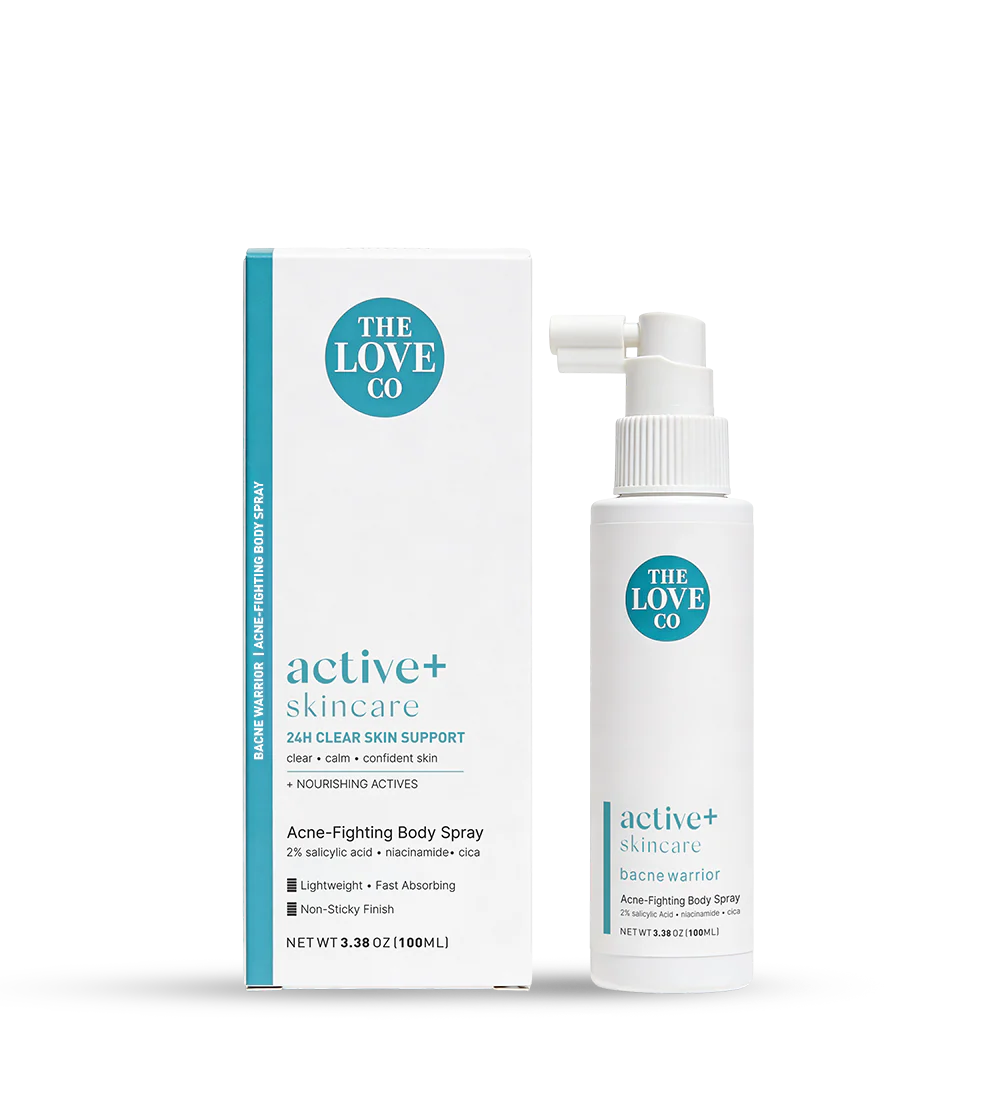
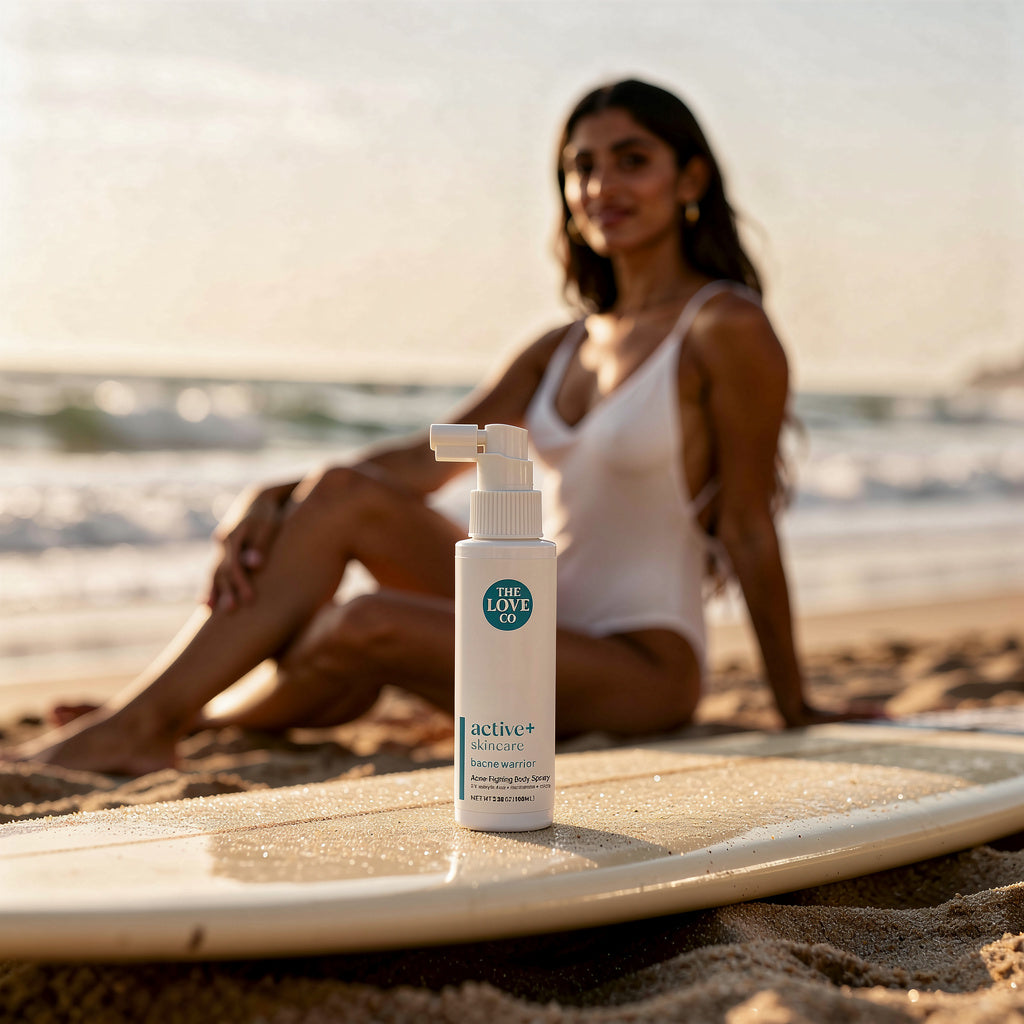
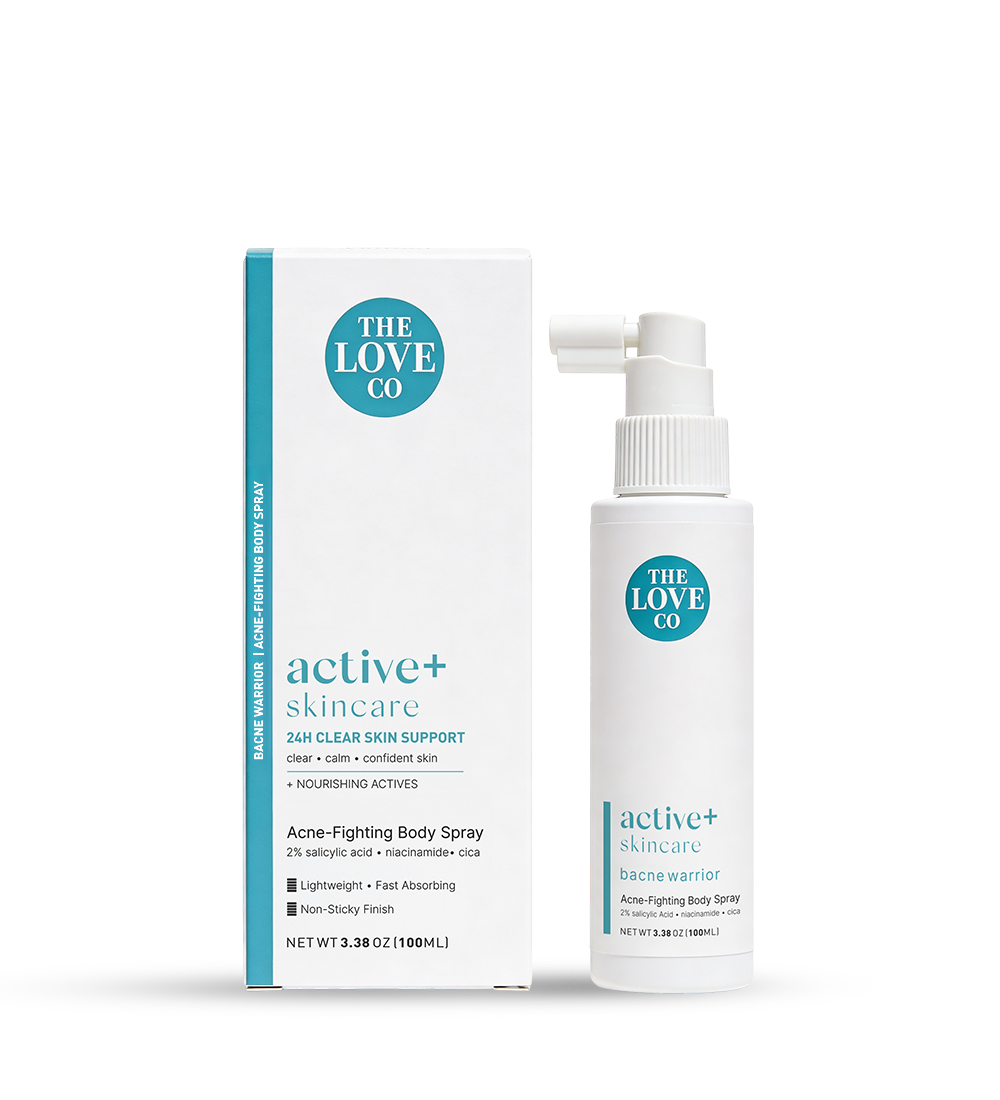
If you can't shower immediately after a workout, an acne body spray is a game-changer. The Love Co Acne Body Spray is designed for quick, on-the-go use. You can mist it over breakout-prone areas like your back and chest right after you finish exercising, even before you leave the gym.
This portable spray helps to fight bacteria and reduce inflammation before it can lead to full-blown acne breakouts. It dries quickly, so you can get dressed without any sticky residue. It acts as an excellent first line of defense when a shower isn't an immediate option.
Why use an acne body spray?
-
It's perfect for your gym bag for immediate post-workout treatment.
-
It helps to neutralize bacteria on the skin's surface quickly.
-
It's a convenient alternative to topical antibiotics for mild breakouts.
Step 2 – Salicylic Acid Body Wash for Deep Pore Cleansing
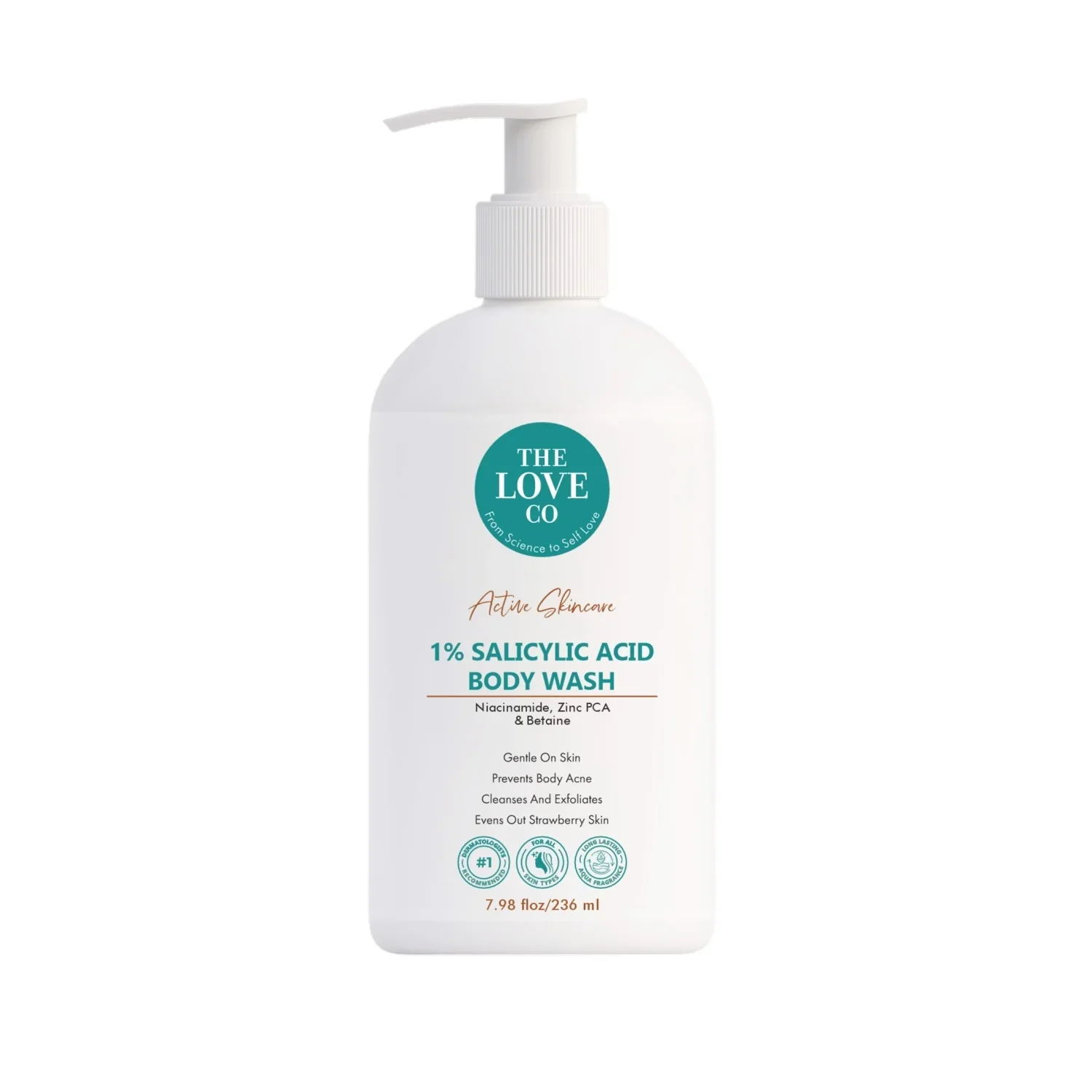
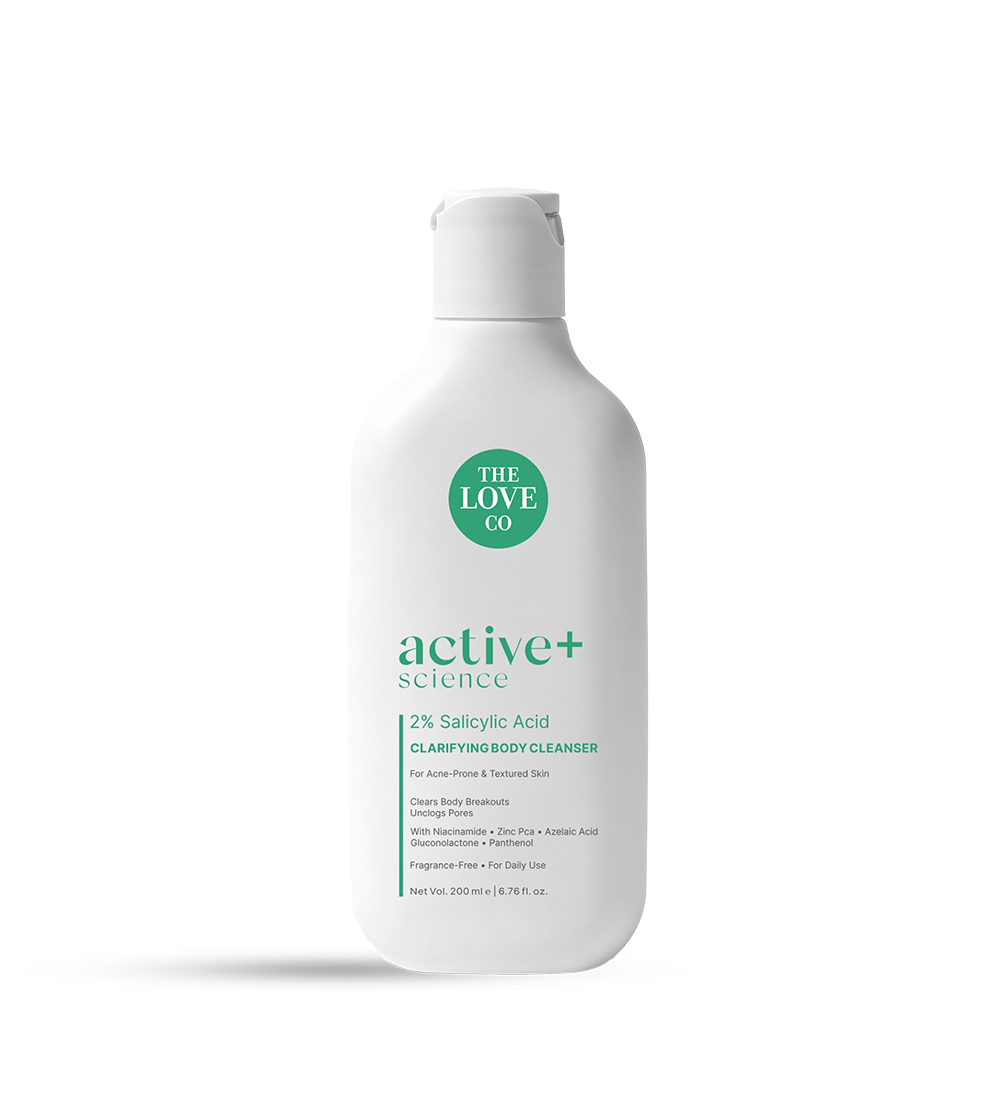
When you do get to the shower, using a body wash formulated for acne is crucial. The Love Co Salicylic Acid Body Wash is designed for deep pore cleansing. The salicylic acid penetrates the oil and sweat mixture that clogs pores, helping to dissolve it from within.
This body wash gently exfoliates dead skin cells, preventing them from building up and contributing to future breakouts. It's suitable for most skin types and is an essential part of any routine aimed at achieving healthy skin. Regular use can significantly reduce the occurrence of sweat-related acne.
Benefits of a Salicylic Acid Body Wash:
-
It provides a deep clean to clear out clogged pores.
-
It helps to prevent new pimples from forming.
-
It's an effective way to manage body acne on large areas like the back and chest.
Step 3 – SPF Sunscreen Body Lotion to Prevent PIH and Irritation
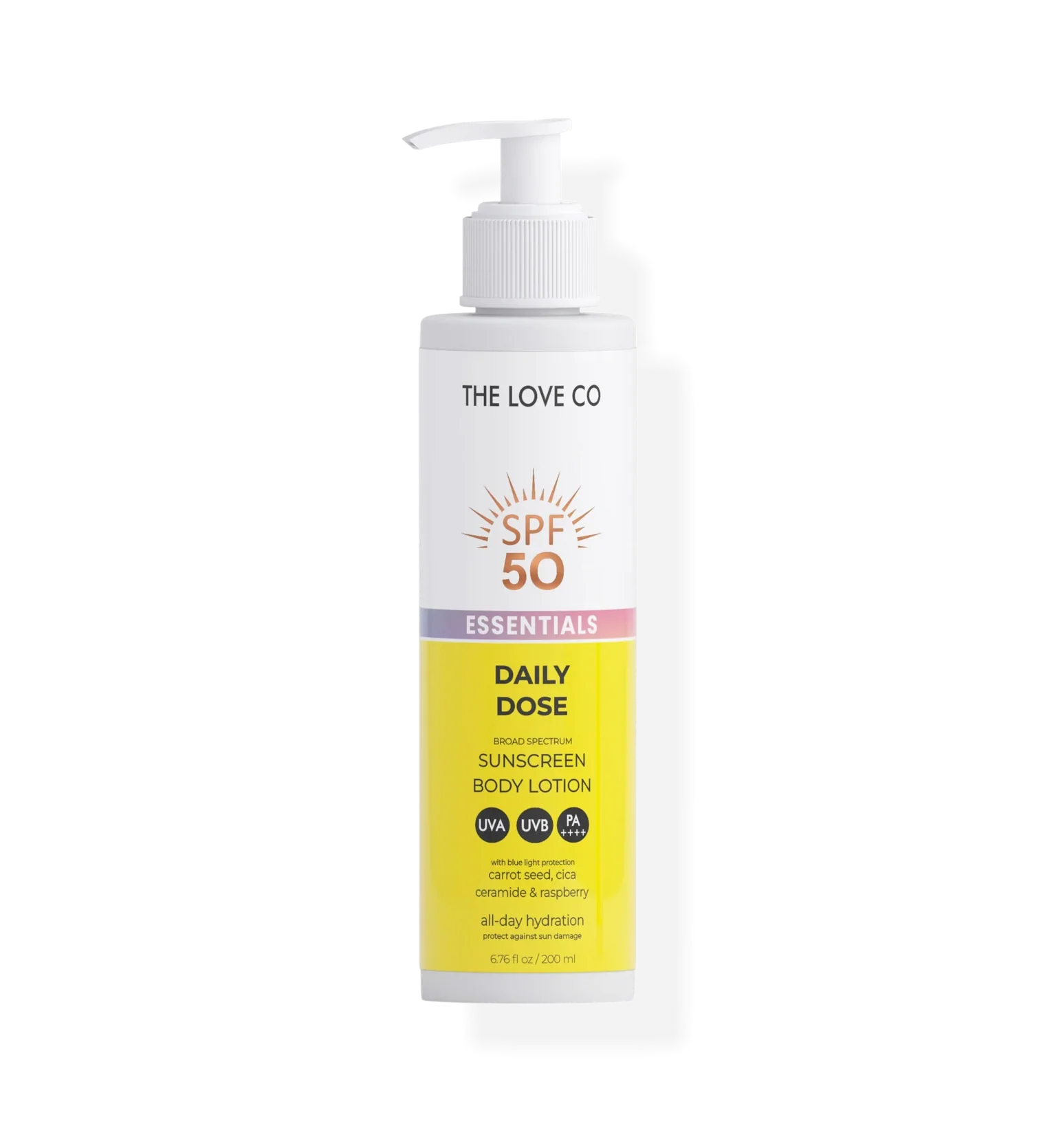
The final step in your routine is protection. Sun exposure can worsen acne marks, leading to dark spots known as post-inflammatory hyperpigmentation (PIH). It can also cause further skin irritation. Applying a lightweight sunscreen daily is essential, especially on areas with active breakouts.
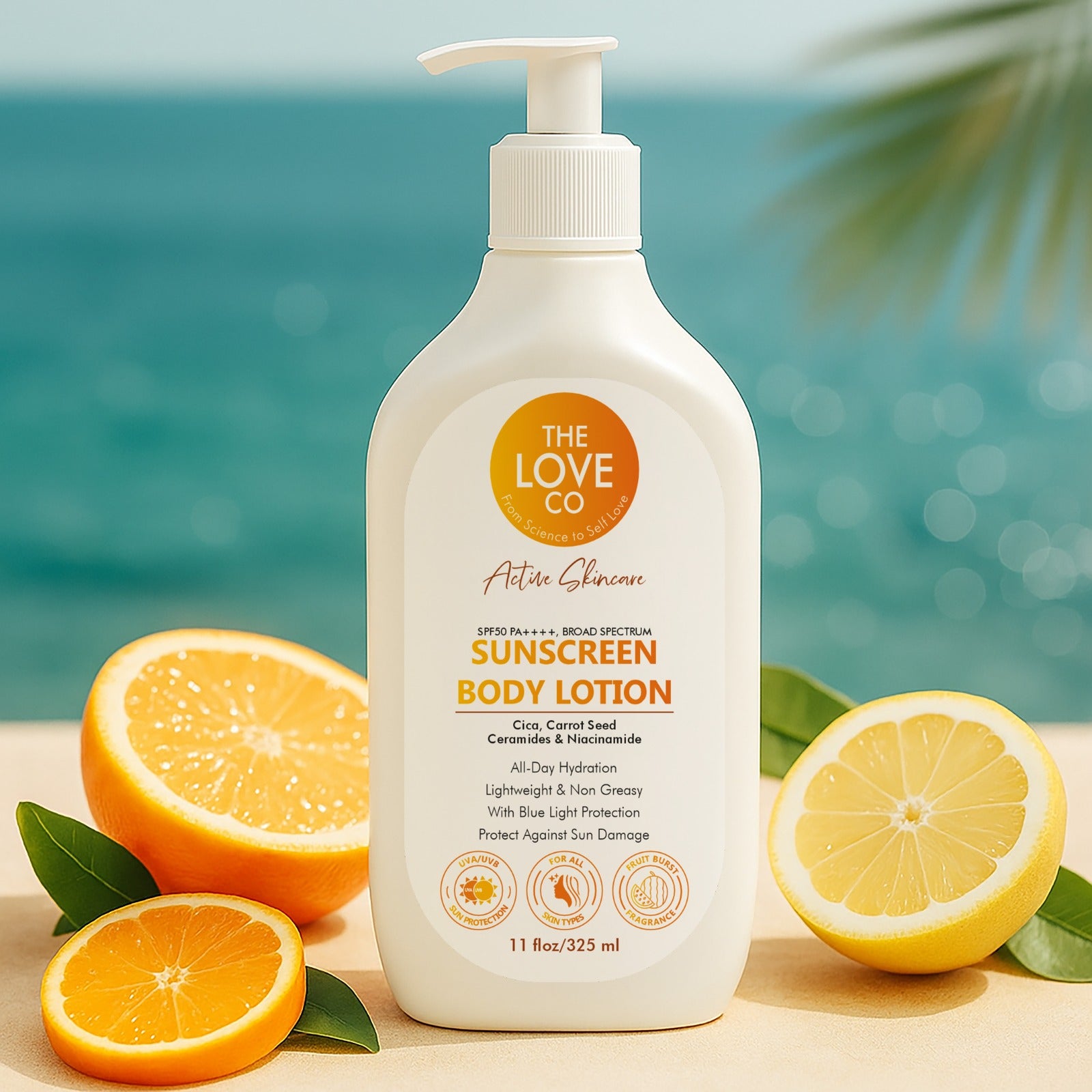
The Love Co SPF Sunscreen Body Lotion offers broad-spectrum protection without clogging pores. Its matte formula is perfect for active lifestyles, as it won't feel greasy or heavy on the skin. This step helps prevent long-term sun damage and ensures that once your acne clears, you're not left with lasting marks.
Why SPF is a must:
-
It prevents sun exposure from darkening acne scars.
-
It protects against skin irritation and sun damage.
-
A non-comedogenic formula ensures it won't contribute to new breakouts.
Frequently Asked Questions
Does sweating always cause body acne or are other factors involved?
Sweating doesn't automatically cause acne. It's the combination of sweat with oil, bacteria, and dead skin cells that clogs pores. Factors like friction from clothing, your skin type, and how quickly you shower after excessive sweating play a significant role in whether sweat pimples will form.
What’s the best way to prevent body acne after exercise?
The best way to prevent acne breakouts after exercise is to practice proper hygiene. Shower as soon as possible, use a clean towel, and change into clean clothes. Incorporating an acne-fighting body wash into your skincare routine will also help keep pores clear and prevent pimples.
Are The Love Co products safe to use for daily workouts?
Yes, The Love Co products are formulated to be gentle enough for daily use, even with an active lifestyle. The acne treatments are designed to target breakouts without overly drying or irritating the skin, making them a safe and effective part of your daily routine for maintaining healthy skin.
Leave a comment
All comments are moderated before being published.
This site is protected by hCaptcha and the hCaptcha Privacy Policy and Terms of Service apply.