

Introduction
Hydroxy acids, like AHAs and BHAs, have become very important in the world of skin care. They help deal with many common skin concerns. The acids can make the skin feel fresh and help the skin shed old cells from the surface of your skin. This new way to take care of your skin is now used by a lot of people.
But, knowing which type of acid fits your skin type best can be tricky. Do you want to fix acne? Or do you just want smoother skin? If you learn about the differences between AHAs and BHAs, you will be able to choose the right product for you. This will help you get brighter and healthier skin.
What Are AHAs and BHAs?
Alpha hydroxy acids (AHAs) and beta hydroxy acids (BHAs) are well-known as chemical exfoliants. You will find these in many skincare products. They work to take away dead skin cells, which can make your skin look and feel better. These hydroxy acids are used for many skin concerns, such as acne, wrinkles, dark spots, and even sun damage.
There are different types of hydroxy acids under AHAs found in various cosmetic products. These include glycolic acid, lactic acid, and citric acid. The most common BHA is salicylic acid. AHAs do most of their work on the surface of the skin, while BHAs go deeper and clean inside the pores. That’s why BHAs, especially salicylic acid, are good for helping with acne and oily skin.
Defining Alpha Hydroxy Acids (AHAs)
Alpha hydroxy acids, or AHAs, are types of hydroxy acids found in sugary fruits. Two common types are glycolic acid and tartaric acid. These acids mix well with water. They help remove dead skin cells from the surface of the skin. This helps the skin look smoother and makes the skin tone better. Many skincare products have AHAs because they can also help boost collagen production. This makes them an excellent choice for people who want to treat fine lines or sun damage. If you have sensitive skin, be careful with higher concentrations of AHAs. Using too much can lead to irritation.
Defining Beta Hydroxy Acids (BHAs)
Beta hydroxy acids, or BHAs, are a type of skin exfoliants that go deep into the skin and help reduce the appearance of wrinkles. These hydroxy acids are very helpful if you have oily skin or deal with acne breakouts. The most common type of BHA is salicylic acid, which is best known for clearing out your pores as it works to get rid of dead skin cells from inside your skin, not just on top.
Unlike AHAs, which mostly work on the surface, beta hydroxy acids can get into your pores and be strong fighters against skin concerns like excess oil and acne breakouts. If you use products with BHA often, they can help give you an even skin tone, make dark spots look less noticeable, and make your skin texture smoother. This way, you can work toward better, healthier-looking skin.
How Do AHAs and BHAs Work on the Skin?
AHAs and BHAs help get rid of dead skin cells and boost the making of new skin cells. This helps make the skin smoother, allowing other skin products to penetrate more effectively, and it looks brighter, too. AHAs, like glycolic acid, help raise collagen production. They also make the skin more firm.
BHAs go deeper in the skin. They get inside pores to clear out oil and help stop breakouts. These two together give a lot of skin benefits and help with things like aging and skin spots.
Impact on Different Skin Types
Choosing between AHAs and BHAs often starts with your skin type. If you have sensitive skin, you may need a gentle acid. This helps avoid irritation.
For dry skin, AHAs such as lactic acid can be good. They can both exfoliate and add moisture. This can help with rough spots and uneven skin tone. On the other hand, BHAs work well for oily skin. They go deep into pores to help reduce excess oil and cut down on acne breakouts.
People with darker skin tones could face their own set of problems with some acids. Certain products may cause irritation or changes in pigment. So, talking to a dermatologist can help you use these acids in the right way and keep your skin safe.
AHA vs BHA
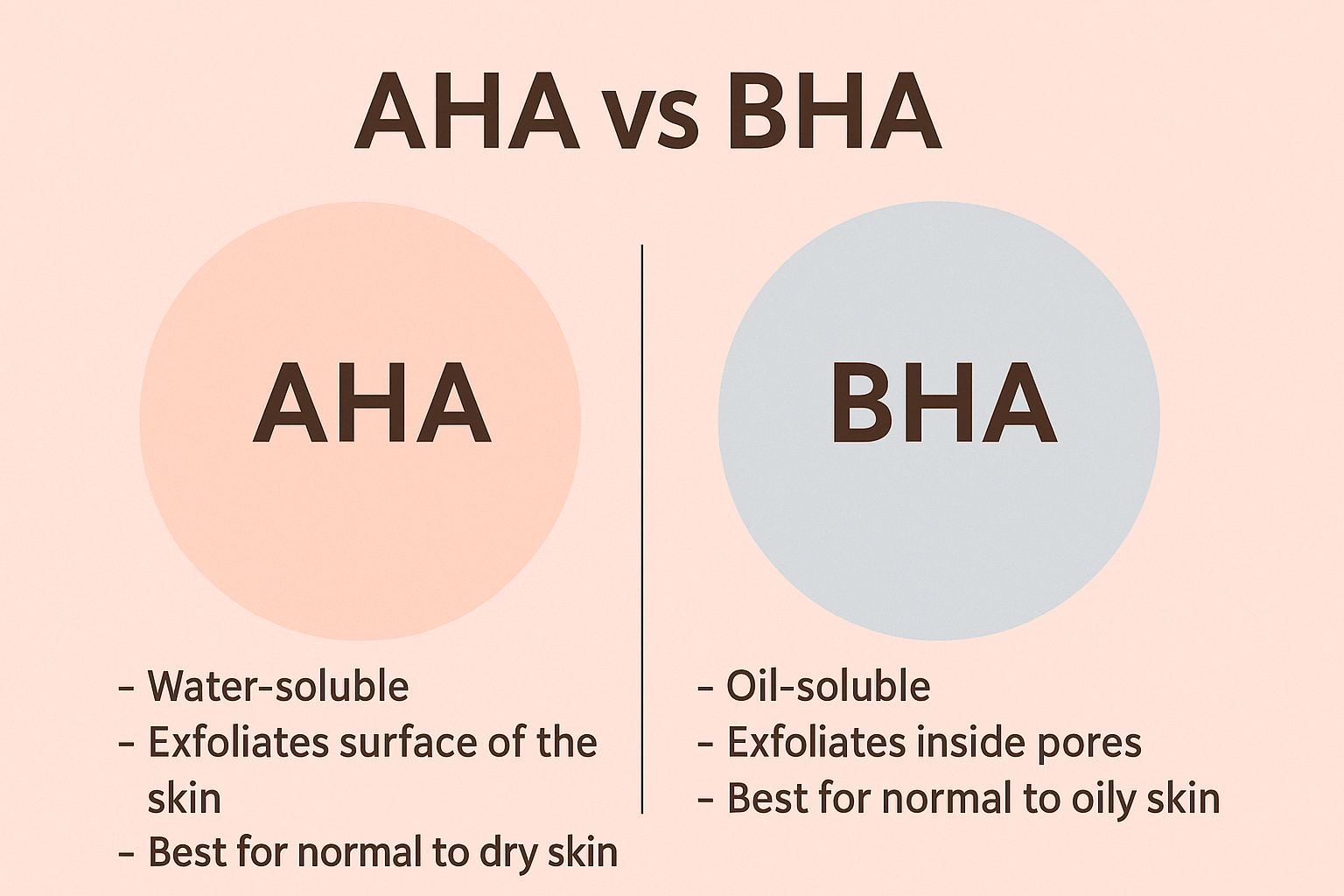
AHAs mix with water, so they work on the surface of the skin. They help get rid of dead skin cells and help with collagen production. BHAs mix with oil, so they go deeper in the skin. These acids work to clean out sebum and help clear clogged pores.
Both acids can be good for the skin, but they work in different ways. AHAs may raise your sun sensitivity, while BHAs are not as strong and might even fix some sun damage. Picking the best acid depends on your skin concerns and what your skin can handle, especially if you have skin sensitivity. It is important to balance how well they work with the chance of redness or sensitivity.
Water Solubility vs. Oil Solubility
The way AHAs and BHAs work shows how they help with different skin problems and various skin conditions. AHAs are water-soluble, so they work on the surface of the skin. They help remove rough areas and make the skin tone look better. BHAs, on the other hand, are oil-soluble. They go deeper into the pores and help with excess oil.
|
Property |
AHAs |
BHAs |
|---|---|---|
|
Exfoliation Level |
Surface of the skin |
Deep within pores |
|
Best for Skin Type |
Dry skin, mature skin |
Oily skin, acne-prone skin |
|
Sensitivity Risk |
More sun sensitivity |
Less risk of irritation |
Because of this, AHAs are good for dry skin if you want to improve the surface of the skin, while BHAs are best for oily skin or problems with excess oil. This helps you pick the right product for your skin type and lowers your risk of irritation or sun sensitivity.
What are the main differences between AHA and BHA?
AHA (alpha hydroxy acid) is water-soluble, making it ideal for exfoliating the skin's surface, while BHA (beta hydroxy acid) is oil-soluble, allowing it to penetrate deeper into pores. Both acids offer unique benefits for skincare, targeting different concerns such as dryness and acne. Understanding these differences can enhance your regimen.
Choosing the Right Acid
Finding the right acid for your skin depends on your skin type and what you want to fix. If you want to treat fine lines or rough skin, AHAs may be best for you. BHAs work well for people who have oily or acne-prone skin. When you add the right acid to your skincare routine, you can see clear changes in your skin tone and how your skin feels.
Each acid gives you its own set of benefits. So, matching your choice to your skin type and skin tone will help you get the best results. If you need help, a dermatologist can guide you. They can show you the safest way to use these acids for your skin.
Acne, Pigmentation, and Texture
For acne breakouts, BHAs like salicylic acid work well. They clear pores and calm red, swollen spots. These acids also help fight germs, so the pain and color from pimples go down.
AHAs, for example glycolic acid, help fade dark spots and patches on your face. They push your skin to make more collagen. This freshens up skin that looks tired and helps even out color changes from age spots or old acne.
If your skin feels rough, AHAs can help with that too. They gently take off old, damaged skin on the surface, which improves the absorption of active ingredients. This shows new and healthier skin below. With this, the dry patches turn into skin that is more smooth.
Anti-Aging and Sensitive Skin Considerations
AHAs are known for how they can help smooth out fine lines and wrinkles. They do this by helping your skin make more collagen. These acids also work on gentle skin exfoliation to clear away old skin, so you can see the fresher skin underneath. That is why many people use them to fight signs of getting older.
Sensitive skin types have to be more careful when they use AHAs. Products with higher concentrations can be tough on the skin and may cause irritation. To avoid this, choose products with a lower amount of acids, which can help cut down on unwanted reactions on a small area of skin.
If your skin gets easily irritated, BHAs can be a better pick. BHAs give a gentle exfoliation compared to AHAs. This makes them less harsh on sensitive skin, so you can use them more often without as much worry.
Frequently Asked Questions
Can I use AHAs and BHAs together in my routine?
While using AHAs and BHAs together can be good for the skin, putting both on at the same time may cause skin irritation. To help stop side effects, use one in the morning and the other one at night. For the best way to combine these in your skin care routine, talk to a dermatologist.
Which is better for oily and acne-prone skin: AHA or BHA?
BHA, especially salicylic acid, is a good option for people who have oily or acne-prone skin. Because it can mix with oil, it goes into the pores to help get rid of extra oil and cut down breakouts. If you use salicylic acid together with benzoyl peroxide, you can get even better results in treating acne.
Should I wear sunscreen when using AHAs or BHAs?
Yes! Both AHAs and BHAs can make your skin more sensitive to UV rays, increasing the risk of sun exposure and the risk of sunburn. It is a good idea to use sunscreen every day as a part of your skincare routine. This protects your skin from sunburn and other problems that chemical exfoliants can cause.


