Skip to content
The Love Co

Your wardrobe

The ritual starts with
the first product.

Continue shopping

Discount will be automatically applied at checkout.

ALL IN LOVE – 10% Off Entire Store

Click Here

Popular searches

trending products

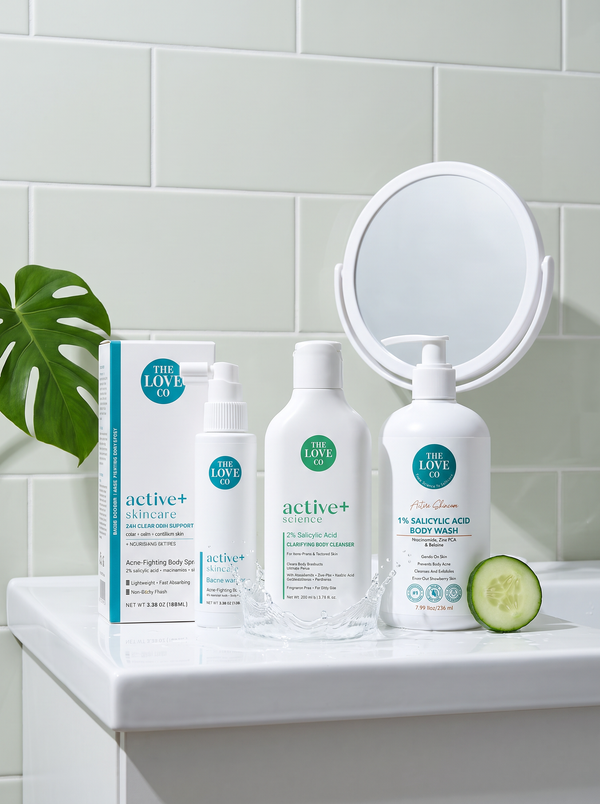
2% Salicylic acid Body Cleanser - The Love Co
2% Salicylic acid Body Cleanser

Active exfoliation · gentle daily clean · barrier-safe

Sale price₹359.00 Regular price₹399.00
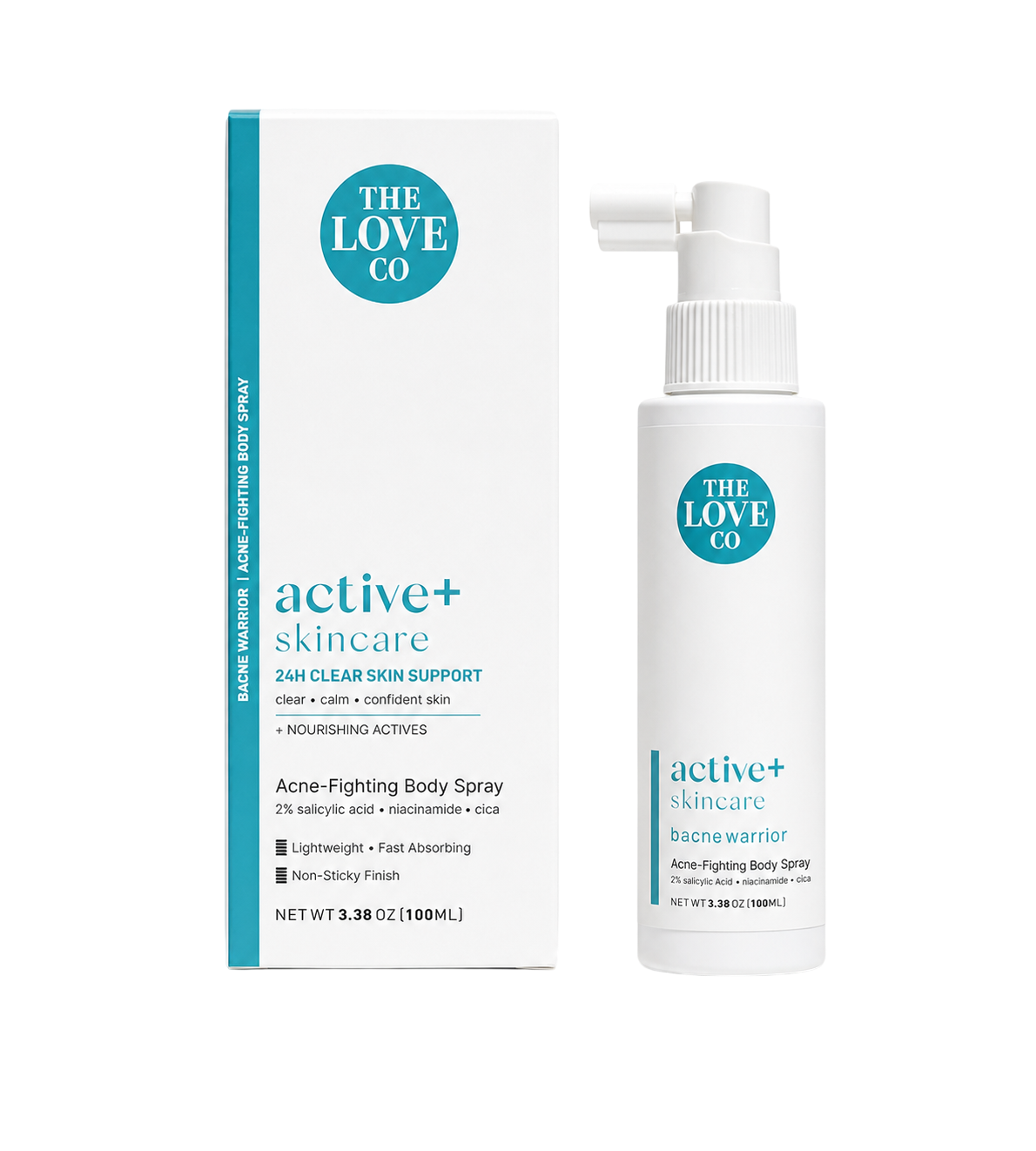
25% OFFAcne-Fighting Body Spray - The Love Co
Bacne Warrior — Acne-Fighting Body Spray

Targets body acne · India-made · dermatologist-tested

Sale price₹599.00
(5.0)
Fall in Love Body Lotion - The Love Co
Fall in Love Body Lotion

Warm amber rose · locks fragrance in for 12 hours

Sale price₹629.00 Regular price₹699.00
Ingredients We Love The Materials

India has been building with these ingredients for four thousand years.

We didn't discover them. We just gave them a new format.

6+
Indian origins
15
Scent Trails
400+
Years of Kannauj
100%
Traceable sourcing
Tamil Nadu VetiverKannauj Rose AbsoluteMysore SandalwoodAssam PatchouliMadurai JasmineTamil Nadu VetiverKannauj Rose AbsoluteMysore SandalwoodAssam PatchouliMadurai Jasmine
Oud of Love — cinematic editorial
Ingredient philosophy

We don't use ingredients because
they're trending.

Every TLC formula starts with a fragrance identity. But the ingredients that carry that identity are chosen for two reasons: what they do to the skin, and where they come from. India has one of the richest ingredient traditions in the world. We source them close to where they've always been grown — not because it's a story, but because origin quality is real.

"The formula is only as good as
what went into it."

Fragrance materials Origin sourcing

The materials behind the Scent Trails.

Where each ingredient comes from, and what it does inside the formula.

Tamil Nadu

Vetiver

Steam-distilled from the roots of Vetiveria zizanioides. Deep, smoky, earthy — the finest base note in perfumery. Gives a trail's dry-down its staying power. India is the world's largest producer.

Known as khus →
Kannauj, UP

Rose Absolute

Kannauj has been India's perfume capital for 400+ years. The attar tradition — distilling rose petals over sandalwood — originated here. Adds a depth and warmth no synthetic can replicate.

Dawn-harvested →
Mysore, Karnataka

Sandalwood

The gold standard of sandalwood. Creamy, meditative, slightly sweet. Higher santalol content than any synthetic alternative — it smooths, warms, and holds every trail it anchors.

Nothing like the synthetic →
Assam, NE India

Patchouli

Aged patchouli oil: dark, slightly fermented, with chocolate and woody richness. One of the most complex fixatives in perfumery. In Scarlett Love and Oud of Dubai, patchouli is what makes the trail last past midnight.

Extends every fragrance →
Fragrance materials Continued

Jasmine. And the most complex material in perfumery.

Two more ingredients that define TLC's Floral and Woody & Oriental worlds.

Madurai, Tamil Nadu

Jasmine Absolute

The jasmine of Madurai is harvested before dawn, when the flowers are closed and the scent is most concentrated. The absolute — solvent-extracted, not steam-distilled — preserves the full richness of the bloom. In TLC's floral Scent Trails, Madurai jasmine provides the creamy, warm heart note that other florals can't replicate.

Dawn-harvested →
Arabian Peninsula

Oud / Agarwood

Agarwood is the resin that forms inside Aquilaria trees when infected with a specific mould. The rarer the infection, the richer the oil. The oud used in TLC's Woody & Oriental trails is a carefully blended accord — bringing the smoky, leathery, slightly animalic depth of genuine oud without the prohibitive cost of pure agarwood oil.

The most complex base note →
Shades of Love — cinematic editorial
Deep dive · Vetiver

The root that India calls khus.

Steam-distilled. Tamil Nadu-grown. The world's finest base note.

Vetiver (Vetiveria zizanioides) has been used in Indian homes for centuries — as a cooling mat, as an air fragrance, in oils rubbed into the hair against summer heat. The essential oil is produced by steam-distilling the dried roots, a process that can take up to 24 hours per batch. India accounts for over 40% of global vetiver oil production, with Tamil Nadu's roots considered the richest in the key aroma compounds — khusimol and isovalencenol — that give vetiver its distinctive smoky, woody, earthy depth. In TLC formulas, Tamil Nadu vetiver appears as the base of several Scent Trails — particularly in Vetiver Smoke, where it is the lead note, not the supporting one.

Twilight Love — cinematic editorial
Deep dive · Sandalwood

Mysore sandalwood. The gold standard exists for a reason.

Santalum album — Indian sandalwood — has the highest santalol content of any sandalwood species. Santalol is the compound responsible for sandalwood's characteristic creamy, milky-sweet, faintly woody scent, and for its emollient properties on skin. The Mysore region of Karnataka has been the heartland of Indian sandalwood cultivation for centuries. The wood is steam-distilled to produce an oil that is richer, rounder, and more complex than Australian sandalwood (Santalum spicatum) or any synthetic alternative. In TLC formulas, Mysore sandalwood serves three functions: as a base note anchor in the fragrance, as an emollient in the formula, and as a skin-soothing active that supports barrier function.

"The synthetic alternatives have no business being in a formula that claims Indian heritage."

Skin actives

What the formula does
beyond the scent.

The actives and emollients that make the skin underneath the fragrance healthier with every use.

HA

Hyaluronic Acid

Holds up to 1,000x its weight in water. Draws moisture into skin — not just coats the surface. The reason skin feels soft hours after the shower, not just in it.

UR

Urea

A naturally-occurring skin component. At the concentrations used in TLC lotions, urea softens the stratum corneum and improves the skin's ability to hold moisture over time.

SB

Shea Butter

Cold-pressed shea: rich in oleic and stearic fatty acids that mirror the skin's own lipid structure. Absorbs without residue, repairs the barrier, and holds the Skin Lock fragrance deposit.

CC

Coconut Surfactants

Sodium cocoyl isethionate and coco glucoside — both coconut-derived. Clean effectively, produce stable lather, and don't strip the natural oils that fragrance clings to.

GL

Glycerin

The most well-researched moisturiser in cosmetic science. A humectant that draws water from the environment into the skin — works synergistically with hyaluronic acid. Appears in every TLC lotion and body butter as the hydration foundation.

NM

Niacinamide

Vitamin B3. Strengthens the skin barrier, reduces transepidermal water loss, and improves the skin's ability to hold fragrance over time. The reason TLC lotions don't just sit on the skin — they build the surface that holds everything else.

What's not in the formula

The ingredients we deliberately left out.

Not because a regulation requires it. Because the formula reads better, the skin barrier performs better, and the fragrance lasts cleaner.

SLS

Sodium Lauryl Sulphate

SLS is a cheap, effective foaming agent that also strips the skin's lipid barrier — the exact layer that holds fragrance in place. Removing SLS from a body wash formula is not a wellness trend. It's the correct choice if you want the fragrance to last beyond the shower.

Pb

Parabens

Methylparaben, ethylparaben and their relatives have raised enough questions in dermatological literature that modern preservative systems make them unnecessary. TLC uses phenoxyethanol and benzyl alcohol at globally-accepted thresholds — effective, well-studied, uncontroversial.

Ph

Phthalates

Diethyl phthalate and related compounds are still widely used as fragrance fixatives in Indian body care. We do not use them. The fragrance trail is built into the formula structure itself — the Cleanse Ritual system provides fixation through layering, not chemistry shortcuts.

MF

Mineral Oil & Silicones

Heavy mineral oils and silicones create a film on skin that initially feels like moisture — but blocks the skin's natural processes over time. TLC emollients are chosen for skin affinity: shea butter, plant-based glycols, and jojoba esters that work with skin rather than coating it.

Scarlett Love — cinematic editorial
The source

India grows the best fragrance ingredients in the world.

Vetiver. Rose. Sandalwood. Patchouli. Jasmine. All from the places they've always come from.

Tamil Nadu vetiver, Kannauj rose absolute, Mysore sandalwood, Assam patchouli, Madurai jasmine. These are not marketing claims — these are the actual growing regions for the ingredients in our formulas. Sourcing from origin means better quality, traceable supply chains, and direct investment in the farming communities that have grown these plants for generations. We do not use 'Indian-inspired' or 'derived-from' alternatives. The ingredient either comes from its origin region, or it doesn't make the formula.

◈ ◈ ◈
"The ingredient is the trail.
Get the ingredient right
and the rest follows naturally."
— The Love Co. · formulation principle
Ingredient questions answered

Everything you wanted to know about what goes into TLC

Use the FAQ section to answer your customers' most frequent questions.

What is vetiver and why is it used in body care?

Vetiver (Vetiveria zizanioides) is a perennial grass native to India, where it has been used for centuries as a cooling agent, an air freshener, and a fragrance material. The essential oil is steam-distilled from the plant's roots — a process that takes up to 24 hours per batch. The resulting oil is deep, earthy, smoky, and slightly woody, making it one of the most valued base notes in perfumery. In body care, vetiver's value is twofold: as a fragrance anchor that extends the wear of other notes, and as a skin-compatible ingredient with mild anti-inflammatory properties. Tamil Nadu, India, produces some of the world's finest vetiver oil — richer in key aroma compounds (khusimol, isovalencenol) than other growing regions.

What makes Mysore sandalwood different from other types?

Santalum album (Indian sandalwood) has the highest santalol content — typically 90%+ — of any sandalwood species. Santalol is the primary aroma compound responsible for sandalwood's creamy, sweet, woody scent. Mysore in Karnataka has historically produced the finest Indian sandalwood due to soil composition and climate. In comparison, Australian sandalwood (Santalum spicatum) has lower santalol content and a slightly drier, more camphoraceous scent. Synthetic sandalwood alternatives (Javanol, Sandalore) are effective but lack the complexity of natural Mysore sandalwood, particularly in the base-note behaviour over hours of wear on skin. TLC uses Mysore sandalwood as both a fragrance note and a skin emollient in select formulas.

What is Kannauj rose absolute, and how is it different from regular rose fragrance?

Kannauj, in Uttar Pradesh, is India's oldest centre of fragrance production — a 400+ year tradition of attar-making (distilling botanicals over sandalwood in copper stills). Kannauj rose absolute is the solvent-extracted concentrate of Rosa damascena petals, harvested at dawn when aromatic intensity peaks. The result is a thick, waxy material intensely rich in citronellol, geraniol, and phenylethyl alcohol — the core compounds of rose fragrance. Compared to synthetic rose (usually just phenylethyl alcohol), Kannauj rose absolute has hundreds of trace compounds that give it depth, warmth, and complexity synthetic versions cannot replicate. In TLC formulas, this means the rose heart note continues to evolve on skin over hours, rather than smelling identical to its first impression.

What does patchouli smell like in body care, and is it overwhelming?

Raw patchouli oil (fresh) can be polarising — sharp, herbal, slightly chemical. But aged patchouli — oil stored for 1–3 years — undergoes a chemical transformation that mellows these harsh edges, producing a rich, dark, slightly sweet, chocolate-and-wood quality that is far more wearable. The patchouli used in TLC formulas (sourced from Assam) is used as an aged fixative — its role is to extend the wear of other notes rather than project on its own. In the Oud and Scarlett trails, patchouli is why the fragrance still registers at midnight. At the concentrations used in body care, patchouli is not the dominant note — it's the ingredient that makes everything else last.

What is Madurai jasmine and why harvest it at dawn?

Madurai jasmine (Jasminum sambac) is harvested before sunrise, when the flowers are still closed — this is when volatile aroma compounds are most concentrated inside the bud. After sunrise, as the flower opens and the temperature rises, compounds begin to evaporate. Dawn harvesting is labour-intensive but produces significantly richer jasmine material. The absolute (solvent-extracted) preserves compounds that are lost in steam distillation, including indole — the slightly animalic compound that gives jasmine its characteristic depth and sensual quality. Madurai, in Tamil Nadu, has a centuries-old jasmine cultivation tradition and produces some of the finest Jasminum sambac in India.

Why do TLC products use coconut surfactants instead of SLS?

Sodium lauryl sulphate (SLS) strips the skin's natural lipid layer — the thin film of oils and ceramides that forms the moisture barrier. When this barrier is disrupted, skin loses water faster (increased transepidermal water loss), feels tight after washing, and — critically for fragrance — cannot hold the scent deposit from the body wash. TLC uses sodium cocoyl isethionate and coco glucoside, both derived from coconut. These surfactants clean effectively and produce a stable, rich lather, but have a much milder action on the lipid barrier. The practical result: skin feels softer after the shower, the fragrance deposit from the wash is preserved on skin, and the Cleanse Ritual's layering system works as intended.

Does hyaluronic acid actually work in a body wash if it rinses off?

A common question. Hyaluronic acid functions as a humectant — it binds water molecules to the skin surface. In a rinse-off formula like body wash, a portion of the HA does rinse off with the water, but research shows that some deposition occurs on the skin surface, particularly with higher-molecular-weight HA that does not penetrate deeply. The larger benefit in TLC body wash formulas is that HA keeps the wash itself in a format that is mild on skin: hydrophilic (water-loving) molecules in the formula moderate the drying action of even the mildest surfactants. The full hydration benefit of HA comes from the Skin Lock step (lotion or body butter), where the HA is in a leave-on format and has time to work.

Is shea butter good for all skin types, including oily skin?

Cold-pressed shea butter is rich in oleic acid (40–60%) and stearic acid (20–50%) — fatty acid ratios close to the skin's own sebum composition. Because of this structural affinity, shea butter absorbs into skin without the greasy residue associated with mineral oil or heavier synthetic emollients. For oily skin, the concern is comedogenicity (pore-clogging). Shea butter has a low comedogenic rating (0–2 on the 0–5 scale) and is generally well-tolerated. In TLC body care formulas, shea butter appears at concentrations designed for absorption — not the heavy, occlusive amounts in face products. For body use on oily skin, TLC body lotions are typically lighter than body butters and may be preferable.

What makes TLC ingredients better for fragrance longevity on skin?

Fragrance longevity on skin is primarily a function of two things: the quality and structure of the fragrance accord itself, and the condition of the skin surface it's applied to. Dry, barrier-compromised skin absorbs and loses fragrance quickly — the lipid layer that 'holds' fragrance molecules in place is absent. TLC formulas address both sides. The fragrance accords use high-quality base notes (vetiver, sandalwood, patchouli, oud) that are inherently long-lasting. The formula actives (hyaluronic acid, shea butter, glycerin, urea in the lotion) build and maintain the skin barrier that holds those notes. The Cleanse Ritual's layering system — wash, lock, mist, trail — compounds this effect, with each step building on the fragrance deposit of the one before it.

Are TLC formulas safe for sensitive skin?

All TLC formulas are dermatologist-tested for skin compatibility and daily use safety. The SLS-free, paraben-free, phthalate-free formulation approach is specifically designed to reduce irritation risk for sensitive skin types. The surfactant blend (sodium cocoyl isethionate + coco glucoside) is among the mildest available in body wash formulation. That said, fragrance — even high-quality, IFRA-compliant fragrance — can cause reactions in individuals with specific fragrance sensitivities or allergies. Anyone with known fragrance allergies should check the full INCI list on the pack before use. The INCI list for every TLC product is available on the product page and on the product packaging.

What is sodium cocoyl isethionate (SCI) and is it safe?

Sodium cocoyl isethionate is a mild surfactant derived from coconut oil and isethionic acid. It is one of the gentlest foaming agents used in body care — used in baby products, sensitive skin formulas, and solid shampoo bars. SCI has a very low skin irritation profile, does not strip the skin's natural oils at typical use concentrations, and is biodegradable. The 'cocoyl' prefix indicates the fatty acid chain comes from coconut. It is approved for use in cosmetics across all major regulatory frameworks (EU Cosmetics Regulation, US FDA, Indian Cosmetics Rules 2020) with no currently known safety concerns at cosmetic use levels.

Where are all TLC ingredients sourced from?

Fragrance materials: Tamil Nadu (vetiver), Kannauj UP (rose absolute), Mysore Karnataka (sandalwood), Assam (patchouli), Madurai Tamil Nadu (jasmine). These are the actual origin regions — not 'inspired by' or 'derived from' alternatives. Skin actives (hyaluronic acid, shea butter, glycerin, niacinamide) are sourced from globally certified cosmetic ingredient suppliers that provide full safety and origin documentation. Surfactants (sodium cocoyl isethionate, coco glucoside) are sourced from certified cosmetic grade suppliers. All ingredients are processed and formulated in our Ambala, Haryana facility under BIS-certified conditions. Full ingredient traceability is maintained at batch level.

Go deeper

Smell the ingredients in use.

Every Scent Trail is built from these materials. The best way to understand the ingredients is to wear the formula.