
Hormonal Body Acne: Signs You’re Dealing With It
Quick answer: Hormonal body acne has a signature you can spot. It’s cyclical (worse before periods), the cysts are deep and painful, and the distribution favours jawline, chin, chest, and upper back. Topical salicylic acid helps the surface — but if cysts keep returning in the same pattern every month, you’re treating downstream of the actual problem. Here’s how to identify it, how to manage the topical side, and when to see a doctor.
What makes acne “hormonal”?
All acne involves hormones at some level — androgens (testosterone, DHEA-S, and their derivatives) drive sebum production in everyone. But when we say “hormonal acne,” we mean acne that’s primarily driven by androgen fluctuations rather than friction, hygiene, or fabric.
Two things make hormonal body acne distinct:
- Cyclical timing. It flares predictably with the menstrual cycle — typically the week before periods, sometimes mid-cycle around ovulation.
- Cyst-dominant lesions. Hormonal flares produce fewer surface bumps and more deep, painful cysts that sit under the skin for 1–3 weeks before resolving.
If your breakouts follow this pattern, friction-acne advice (cotton blouses, fast post-sweat showers) helps but won’t fix the root cause.
The 5 signs of hormonal body acne
- It comes in waves with your cycle. Usually 7–10 days before periods. Some women also flare around ovulation.
- The lesions are deep, not surface. Painful when you press on them. Often no visible “head.”
- Same spots, every month. Jawline, chin, chest centre, upper back near the bra line. The repeat-pattern is diagnostic.
- It started or worsened in your 20s/30s — not adolescence. Teenage acne is mostly oil-driven; adult acne is mostly androgen-driven.
- It responds slowly or not at all to standard topicals. Salicylic and benzoyl peroxide work on the aftermath (the clogged plug), not the cause (the sebum surge).
If three or more of these apply, you’re likely dealing with hormonal acne — and the management plan changes.
What topical treatment can and can’t do
Topicals address two of the three steps in acne formation: the keratin plug and the inflammation. They can’t change how much sebum your glands produce.
That means a leave-on 2% salicylic acid spray will:
- Reduce surface breakouts and post-acne marks
- Speed resolution of cysts that do form
- Prevent new clogging on non-cystic areas
It won’t:
- Stop the cyclical surge in oil production
- Prevent deep cysts from forming during the worst week
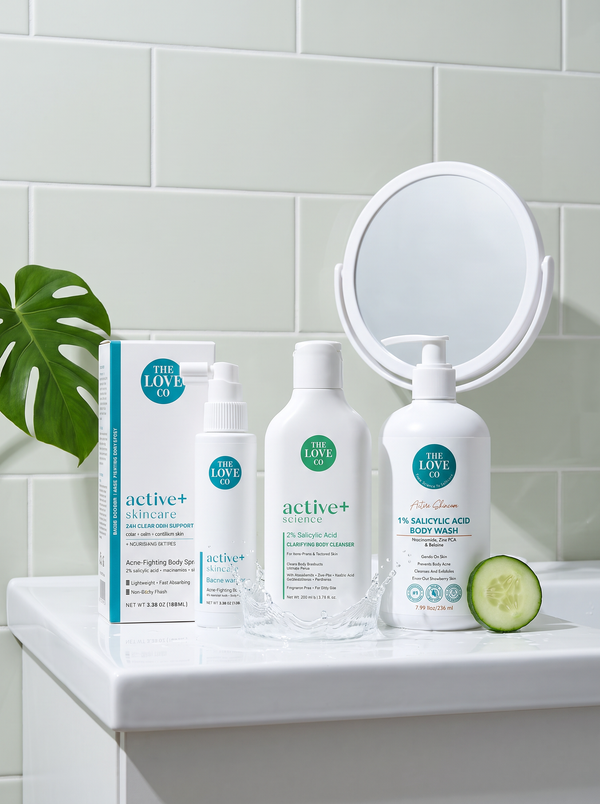
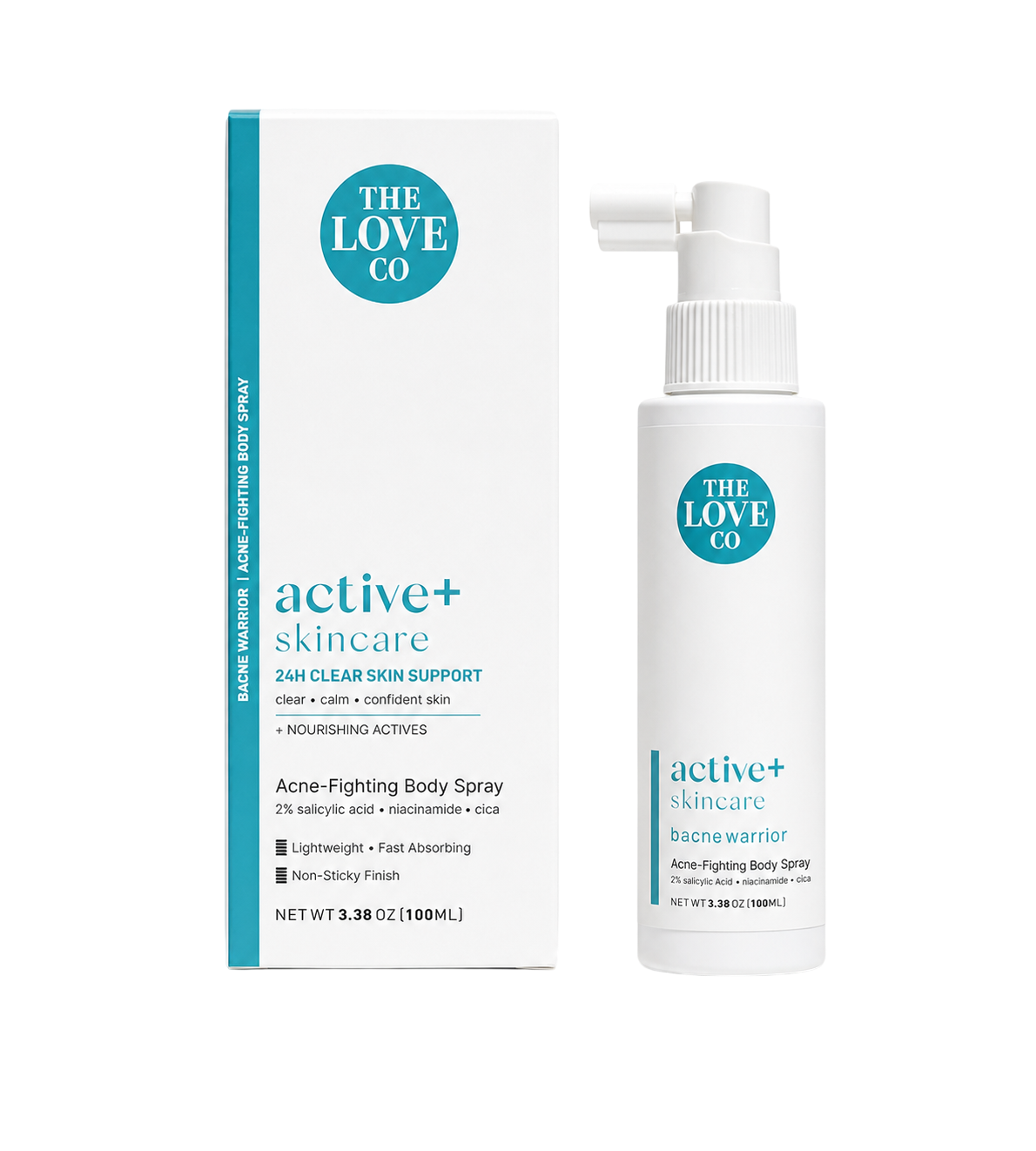
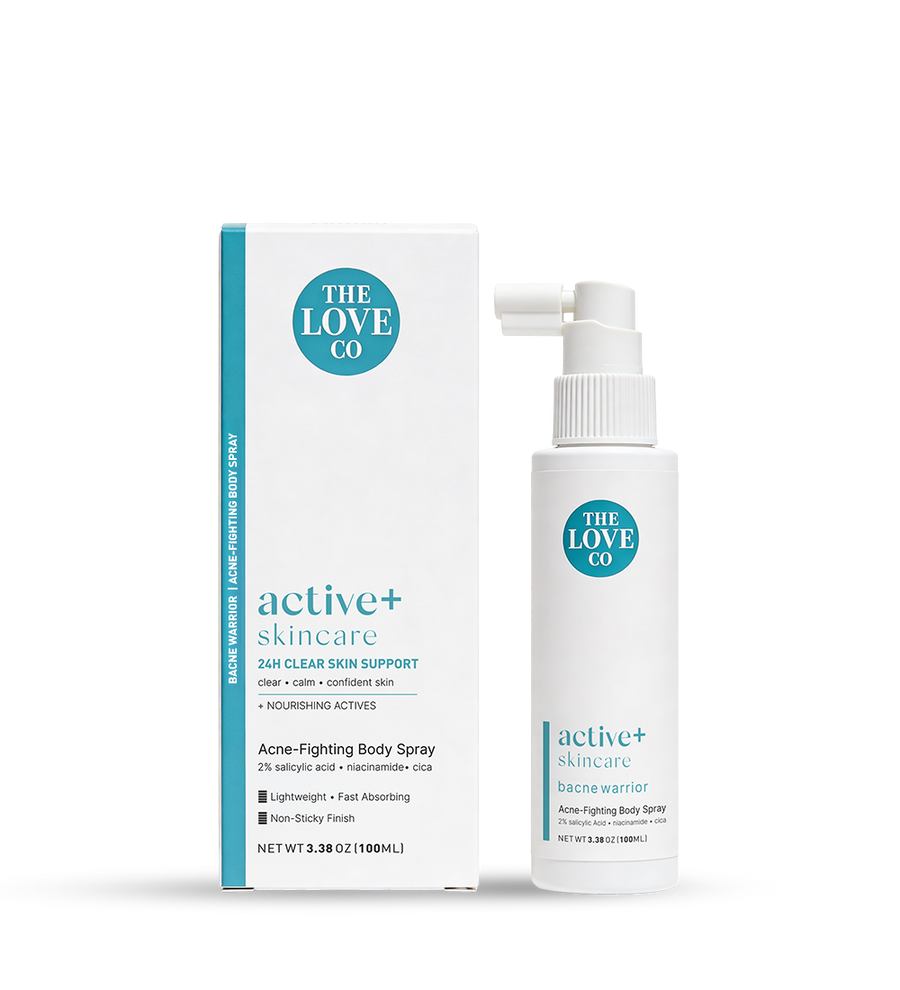
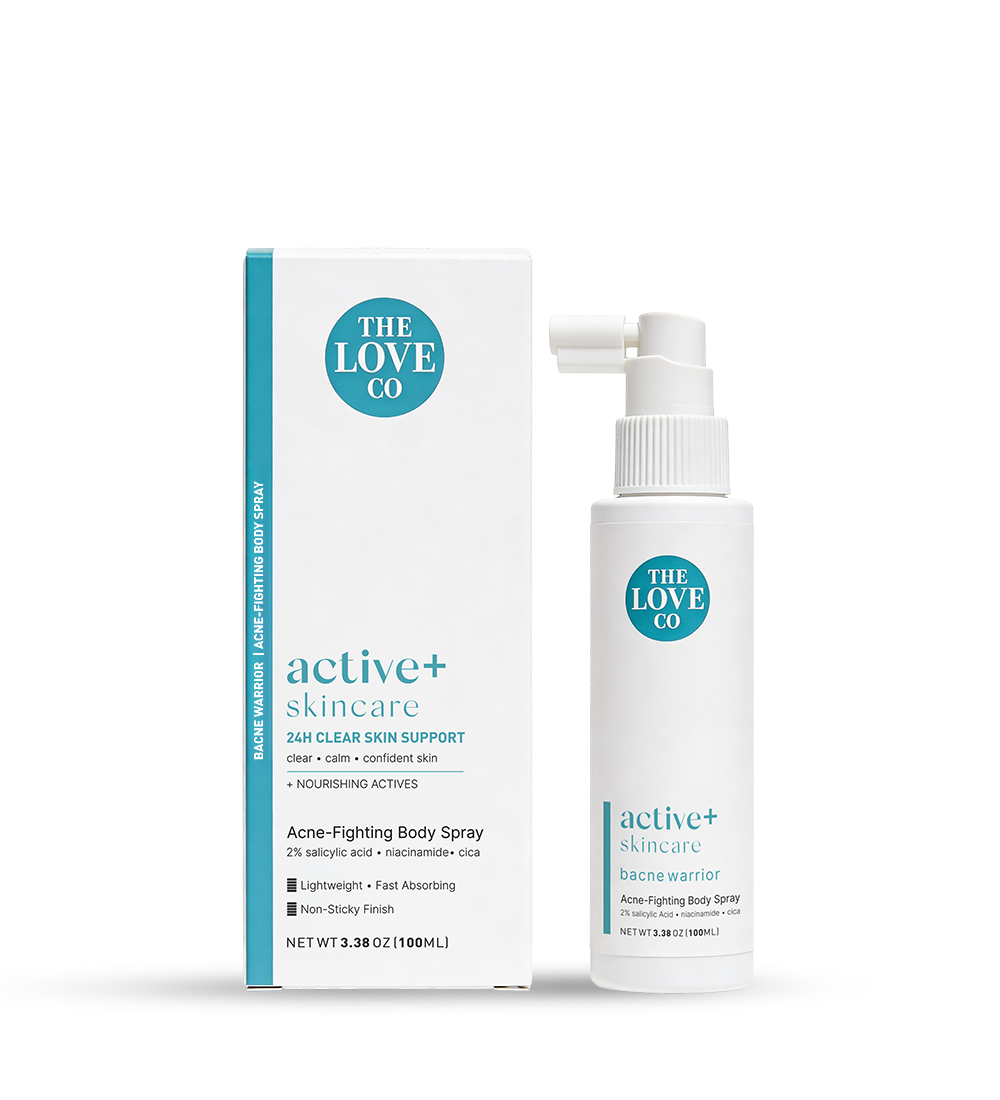
The right approach for hormonal body acne is layered: topical for daily maintenance + medical management for the hormonal driver. Bacne Warrior by The Love Co — 2% salicylic acid + 4% niacinamide + zinc PCA + cica handles the topical layer; the systemic layer needs a doctor.
What a doctor can prescribe
If your cyclical pattern is clear, an OBGYN or dermatologist may consider:
| Option | What it does | Typical use |
|---|---|---|
| Spironolactone | Blocks androgen receptors → less sebum | Adult women with cyclical cystic acne |
| Oral contraceptive pills | Stabilises hormone fluctuations | Women not trying to conceive, no thrombosis risk |
| Metformin / inositol | If PCOS-driven, addresses insulin resistance | PCOS-confirmed cases |
| Short oral isotretinoin | Shrinks sebaceous glands | Severe scarring cystic acne |
This is not something to self-prescribe or order from a chemist. The first step is a workup — fasting insulin, testosterone, DHEA-S, LH/FSH ratio, sometimes pelvic ultrasound. Most well-trained Indian dermatologists and OBGYNs run this panel routinely.
The honest part: when “hormonal” is being blamed for something else
Not every chronic body breakout is hormonal. We see two common misattributions:
- Friction acne dismissed as hormonal. If your breakouts are exactly where your bra band and blouse hooks sit, that’s friction, not hormones. Treating it as hormonal will frustrate you.
- Fungal acne dismissed as hormonal. Itchy, uniform pinhead bumps that flare in monsoon are likely fungal. See body acne vs fungal acne.
If your acne isn’t cyclical and isn’t deep cysts — it’s probably not hormonal. Re-read why back acne happens to rule out the more common causes first.
When to see a doctor
- Cysts that last 2+ weeks
- Acne accompanied by irregular periods, weight gain, or excess facial hair (PCOS workup)
- Acne that started suddenly in your 30s or 40s (rule out other endocrine causes)
- Painful cysts leaving permanent dark marks or scars
Don’t wait — Indian skin scars deeper and longer from untreated cystic acne. Eight weeks of monthly cysts can leave year-long pigmentation.
FAQ
Q: Can I use Bacne Warrior alongside spironolactone or birth control? A: Yes. Topical salicylic is compatible with all oral hormonal treatments. Use it for the surface acne while the systemic medication addresses the driver.
Q: How long until hormonal treatment works? A: 3 months minimum, often 6. The first month can be worse before better. Track with photos in the same light.
Q: Is hormonal acne the same as PCOS acne? A: PCOS acne is hormonal acne with a specific cause. All PCOS acne is hormonal; not all hormonal acne is PCOS. See PCOS and body acne.
TLC signature line
“My wife is a dermatologist and her PCOS patients are the ones who taught us that topical alone wasn’t going to cut it for everyone. Bacne Warrior — 2% salicylic + 4% niacinamide + zinc PCA + cica — is the topical layer she trusts; the systemic side belongs in a clinic. Pair it with the body wash from your TLC ritual; keep the mist for the neck.”
— Hemang Jain, Founder, The Love Co.
→ Get Bacne Warrior → · ₹449 · ships in 24h.
See also: - The full back & body acne guide → - PCOS and body acne → - Why do I get back acne →
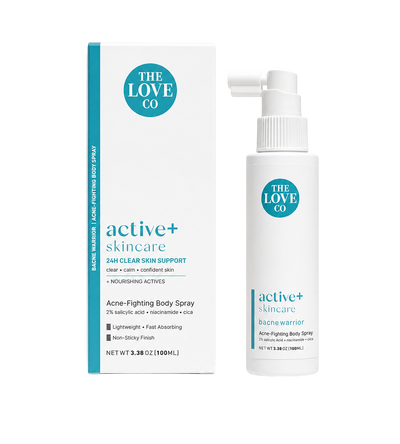
Bacne Spray – 2% Salicylic Acid Body Spray
A leave-on 2% salicylic acid body spray for back, chest, shoulder, and post-workout body acne. Designed for hard-to-reach zones, fast absorption, and daily use under clothes without a...
A ritual is the smallest love you give yourself, daily.
— Hemang Jain · 28 May 2026