

By The Love Co · Reviewed by Dr. Tanvi Sehgal, MD · Last updated: 2026-08-26
What is fragrance layering?
Fragrance layering is the practice of applying scent in multiple formats, in order of weight, so that each layer slows the evaporation of the one above it.
It is borrowed directly from how fine perfumery works internally. A perfumer uses fixatives — resins, mosses, heavy woods — inside a formula to hold the lighter materials in place. Layering does the same thing from outside: a lotion becomes a fixative for a mist, and a body oil becomes a fixative for the lotion.
This is why the ritual has an order, and why the order is not negotiable.
The four steps, in order
Heaviest closest to the skin. Lightest last.
| Step | Product | When | What it does |
|---|---|---|---|
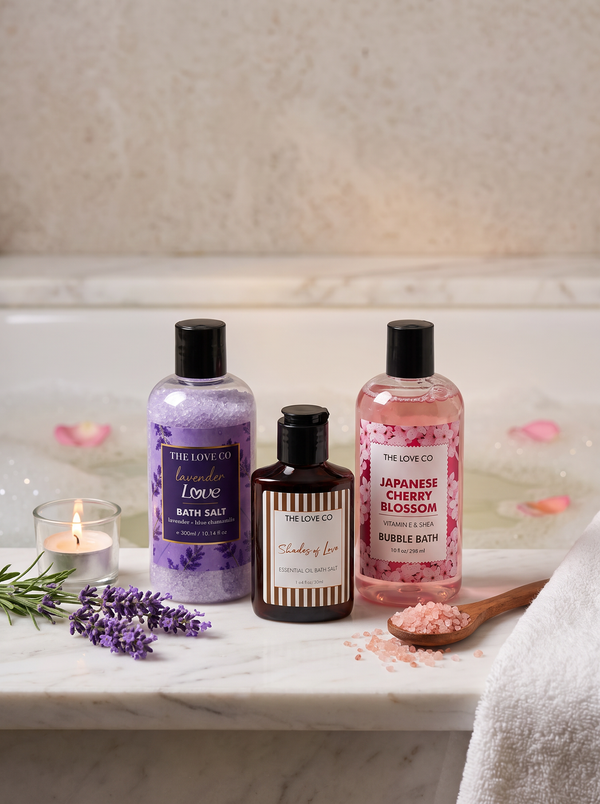
| 1 | Fragranced body wash | In the shower | Deposits a base of the same fragrance world; sets the skin's pH if it is SLS-free |
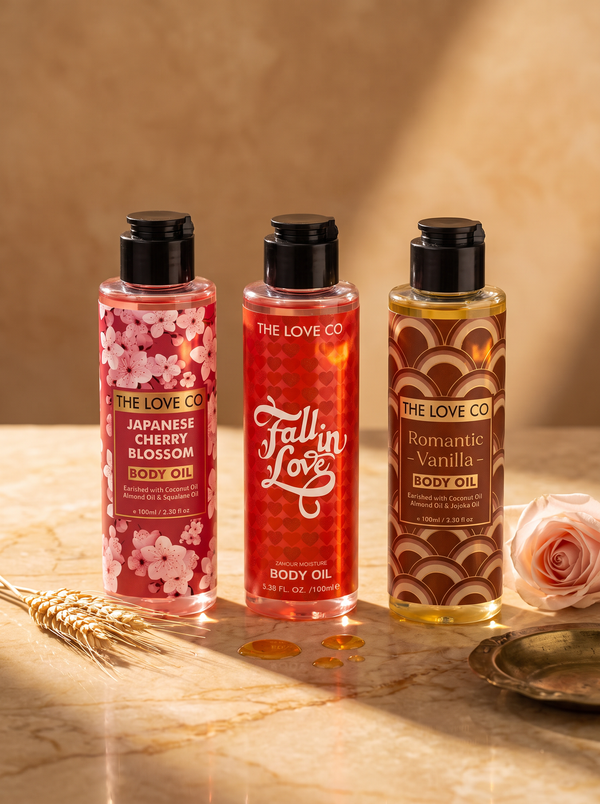
| 2 | Body oil (optional) | On damp skin, straight out | The heaviest fixative layer — for very dry skin or maximum hold |
| 3 | Body lotion | On damp skin, within 3 minutes | The essential layer. The lipid film fragrance binds to |
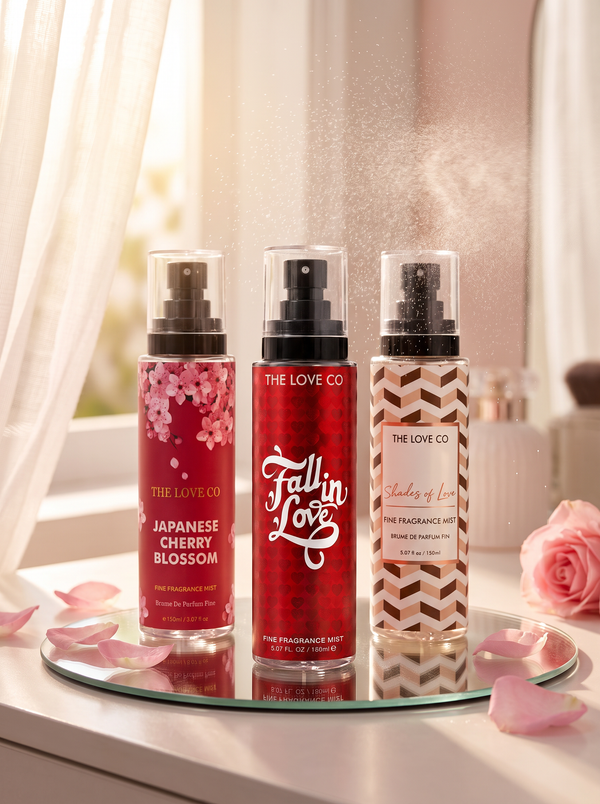
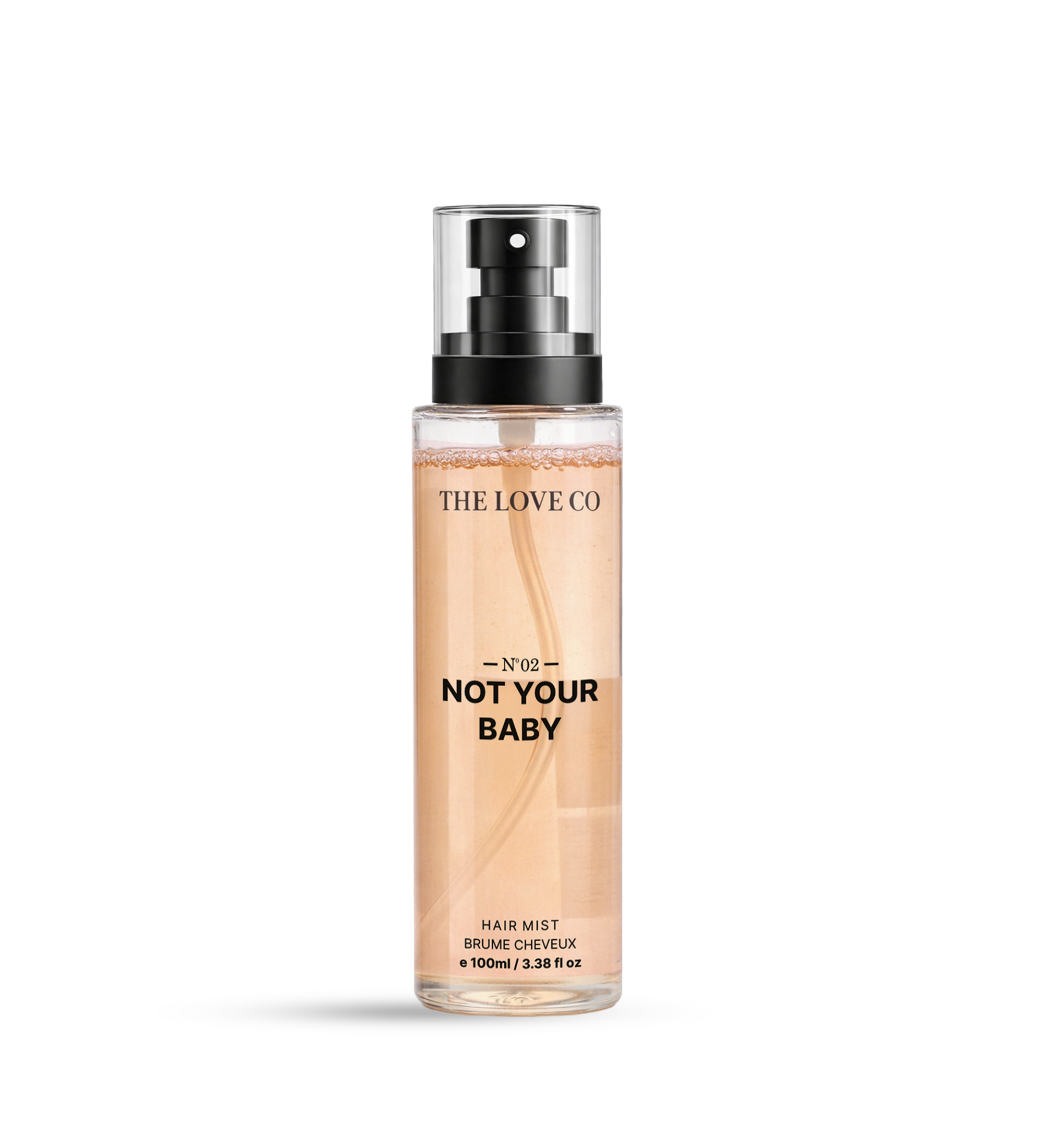
| 4 | Body mist | Once the lotion has absorbed, ~1 minute | The fragrance you actually smell. Six sprays, torso, arms, back of neck |

Why damp skin matters
The three-minute window after a shower is the most useful thing in body care, and almost nobody uses it.
Straight out of the shower, the outer layer of skin is hydrated and swollen with water, and its surface is permeable in a way it will not be again for hours. An emollient applied now is absorbed into that layer. The same emollient applied to fully dry skin twenty minutes later largely sits on top of it.
For fragrance, the difference is structural. Absorbed lotion builds a lipid film that fragrance oils dissolve into and cling to. Surface lotion is a layer that will rub off on your clothes within the hour, taking the fragrance with it.
Pat dry — do not rub — and apply while your skin is still cool and slightly damp.
Staying inside one fragrance world
Layering works hardest when every layer carries the same fragrance oils.
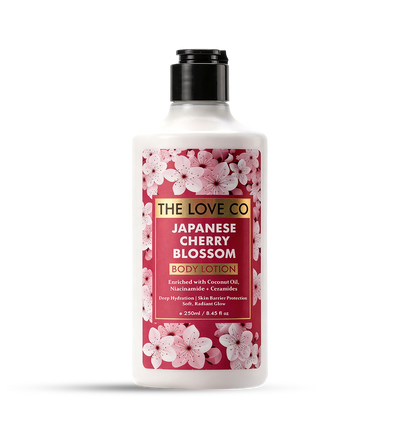
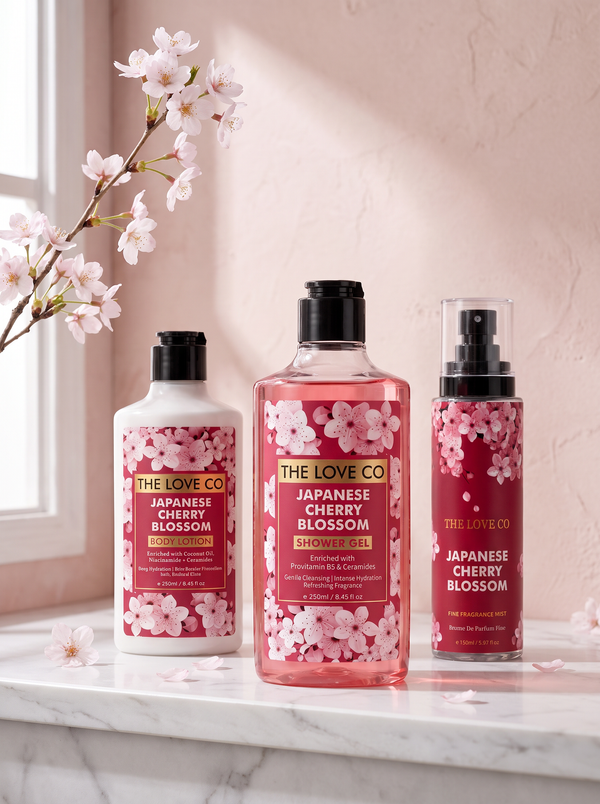
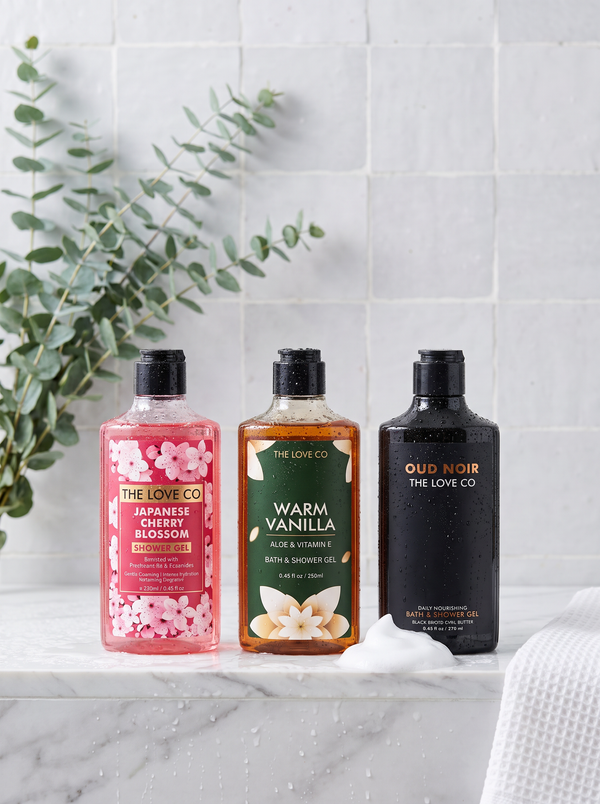
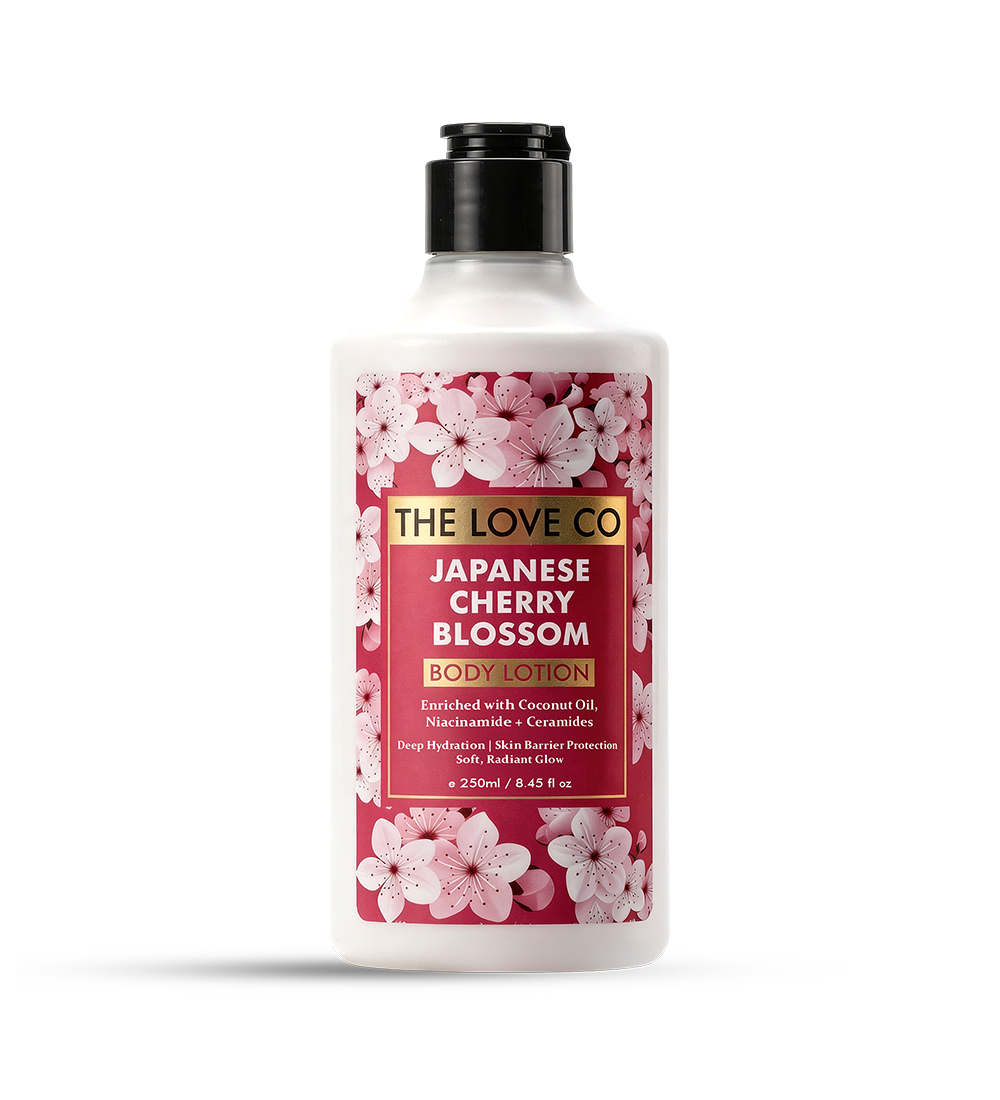
When your wash, lotion and mist are all Japanese Cherry Blossom, you are not simply slowing evaporation. You are rebuilding the same pyramid three times — cherry blossom, pear and mimosa at the top, plum, white tea and sandalwood through the heart, vanilla, cedarwood and soft musk at the base — so that as the mist's top notes burn off, the lotion underneath is still presenting the same heart. The scent does not thin. It deepens.
This is the difference between the 4–6 hour result and the 8–12 hour one.
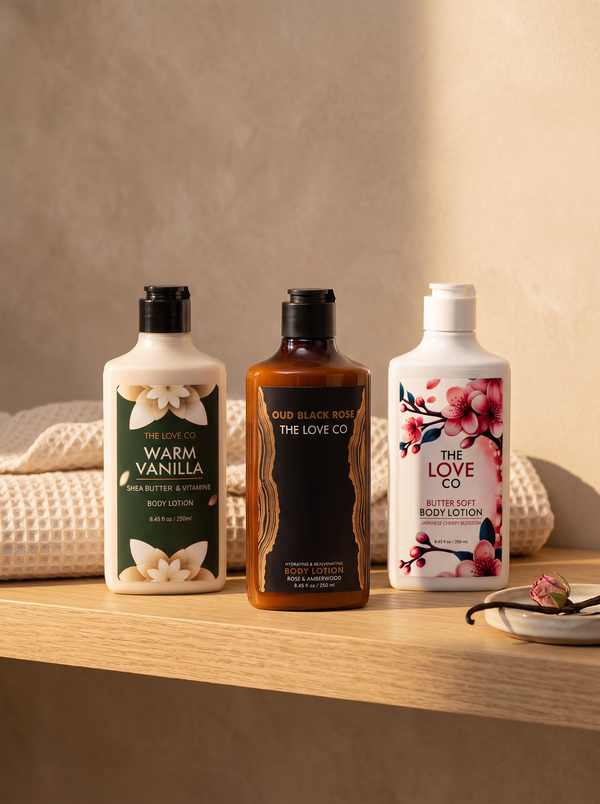
Cross-world layering can work, but it needs a rule: one layer carries the character, the other is a soft neutral base. Warm Vanilla under almost anything works, because whipped sugar, vanilla, coconut, sandalwood and musk are all supporting materials. Two opinionated worlds — oud and cherry blossom, say — will simply argue.
Common layering mistakes
Misting first, then moisturising. This is the order reversed, and it dilutes and smears the fragrance rather than fixing it. Fragrance goes on last, always.
Not waiting between lotion and mist. Give the lotion sixty seconds. Misting onto a wet lotion film means the mist sits in the lotion rather than on top of it.
Layering three different fragrance worlds. Each has its own three-tier structure. Three pyramids at once is not complexity, it is noise.
Using a stripping body wash as step one. If your wash is removing the lipids you are about to replace, you are working against yourself before you leave the bathroom.
Quick questions
What order should I layer fragrance in?
Heaviest to lightest: fragranced body wash, then body oil if you use one, then body lotion on damp skin, then body mist last. Each layer acts as a fixative for the one above it.
Does body lotion really make body mist last longer?
Yes, and it is the single highest-impact step. The lotion's lipid film gives fragrance oils something to bind to, taking a mist from roughly 90 minutes on bare skin to 4–6 hours, or 8–12 hours when both are from the same fragrance world.
Can I layer two different fragrances?
Yes, if one of them is a soft base like vanilla, musk or sandalwood. Two strongly characterful worlds layered together usually muddy each other.
How long should I wait between layers?
Apply lotion within three minutes of the shower while skin is still damp, then wait about a minute for it to absorb before misting.
Should I layer in summer too?
Yes — layering matters more in heat and humidity, not less, because evaporation is faster. Use a lighter lotion rather than skipping the step.
Do I need the body oil step?
Only if your skin is very dry or you want maximum hold. For most people the lotion-plus-mist pairing is enough.
The TLC Pick
Build one world all the way through. Japanese Cherry Blossom Body Mist over its matching lotion and wash is the easiest place to start — soft enough for daily wear, with a sandalwood-and-musk base that holds through an Indian afternoon.
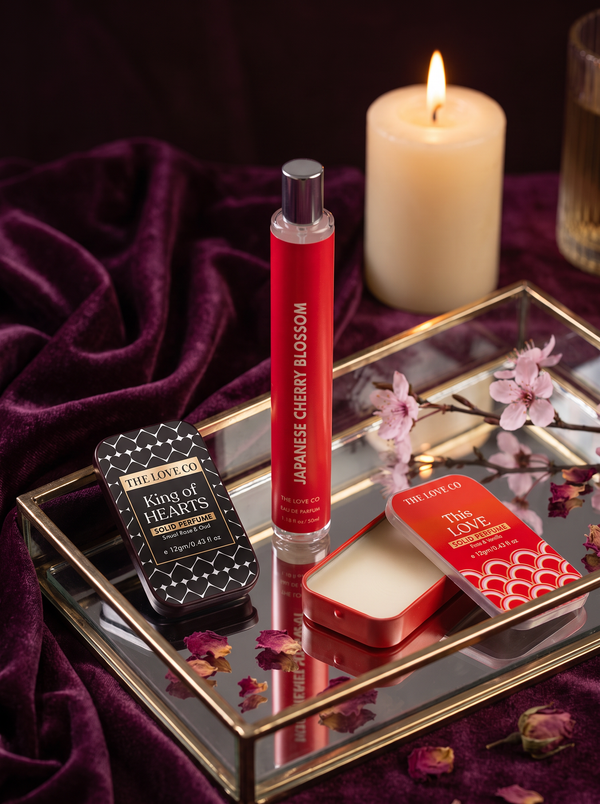
Shop the pieces: body wash, body oil, body lotion, body mist.
Her flatmate walked into the bathroom an hour after she left for work, stopped, and stood there a second longer than she meant to.
Keep reading
- Body Mist Longevity: Why It Fades and How to Fix It
- Body Mist: The Complete India Guide
- The 70% Humidity Problem
- Olfactive Families: Find Your Scent World
- Does Body Mist Stain Clothes?
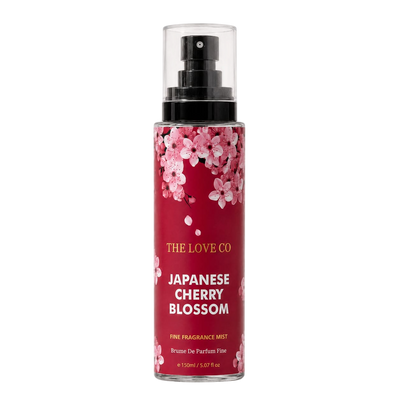
Japanese Cherry Blossom Body Mist
Cherry blossom + plum + sandalwood · Spritz, linger The Sakura signature. Bottled. A soft, fresh, feminine body mist inspired by Yoshino-valley cherry blossoms — the same petals...
A ritual is the smallest love you give yourself, daily.
— Sweety Jarota · 26 Aug 2026