



How to Treat Post-Acne Dark Marks on the Body
Quick answer: Post-acne dark marks on the body — the brown, grey, or red flat patches left behind after a pimple heals — are called post-inflammatory hyperpigmentation (PIH). On Indian skin, they pigment deeper and last longer than on lighter skin types: 6–12 months untreated is common. The safe, evidence-backed fade protocol is 4% niacinamide + 2% salicylic acid applied twice daily, with SPF 30+ on exposed zones, over 12 weeks. Avoid kojic acid and hydroquinone on body skin without a dermatologist’s supervision — they’re harsher than the marks they’re meant to fix.
The marks are not scars. They’re temporary. They just take longer than anyone tells you.
Why do body acne marks last so long on Indian skin?
Three reasons, all biological:
1. Melanocytes are more reactive in Type IV–VI skin. Indian skin has more active pigment-producing cells than lighter skin types. When inflammation hits a follicle — which is exactly what an acne lesion is — those cells overproduce melanin, deposit it in the surrounding tissue, and leave a flat dark mark even after the pimple itself has healed.
2. Body skin turns over slower than facial skin. The epidermis on your back is thicker than on your face, and cell turnover takes longer. A PIH mark on the cheek may fade in 4–8 weeks; the same mark on the back can take 12–24 weeks to clear on its own.
3. Sun exposure compounds it. Even mild UV through a sheer top deepens existing PIH within hours. Most Indians don’t apply sunscreen to the chest or shoulders, which means every monsoon walk and every outdoor lunch is undoing the natural fade.
These are not scars. Scars are textural — indented (atrophic) or raised (hypertrophic/keloid). PIH is flat. If you can run your finger over the mark and it’s smooth, you have PIH, which is fadeable. If it’s pitted or raised, that’s a scar — different treatment entirely.
What actually fades PIH on body skin?
Most ingredients marketed for “dark marks” were never tested on body skin, and several common ones make Indian skin worse. Here’s what works, what doesn’t, and what’s actively risky:
| Ingredient | Effect on body PIH | Safety on Indian skin |
|---|---|---|
| 4% niacinamide | 🟢 Measurably reduces PIH in 8–12 weeks | 🟢 Safe, daily-use, no rebound |
| 2% salicylic acid (leave-on) | 🟢 Removes the dead-skin cap hiding fading pigment | 🟢 Safe at this concentration |
| Azelaic acid 10–20% | 🟢 Effective adjunct | 🟢 Safe, derm-prescribed |
| Vitamin C (10–15%) | 🟡 Effective on face, harder to formulate stably for body | 🟡 OK, but unstable in humidity |
| Kojic acid | 🟡 Effective but irritating | 🔴 High rebound pigmentation risk — derm-supervised only |
| Hydroquinone | 🟡 Strongest fader | 🔴 Banned in many cosmetic markets; ochronosis risk on darker skin — Rx only |
| Lemon juice / DIY | ❌ Photosensitising | 🔴 Causes more pigmentation than it fixes |
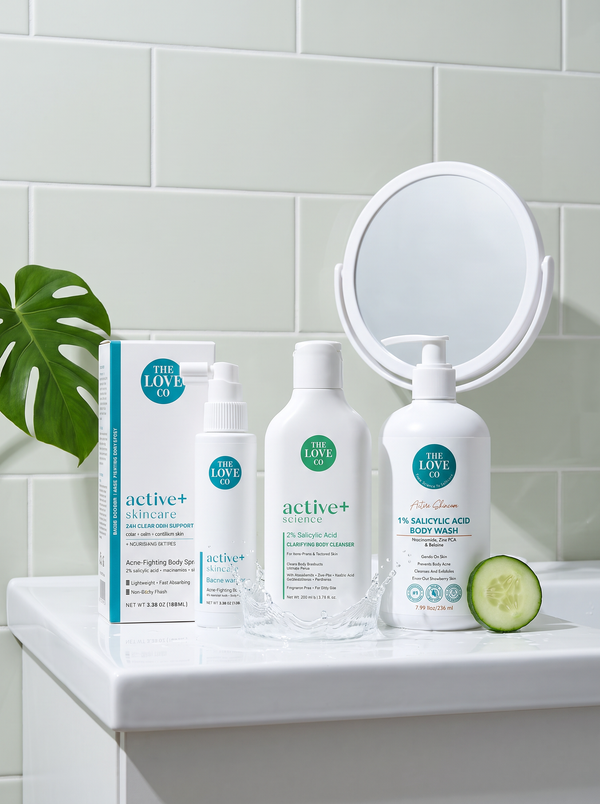
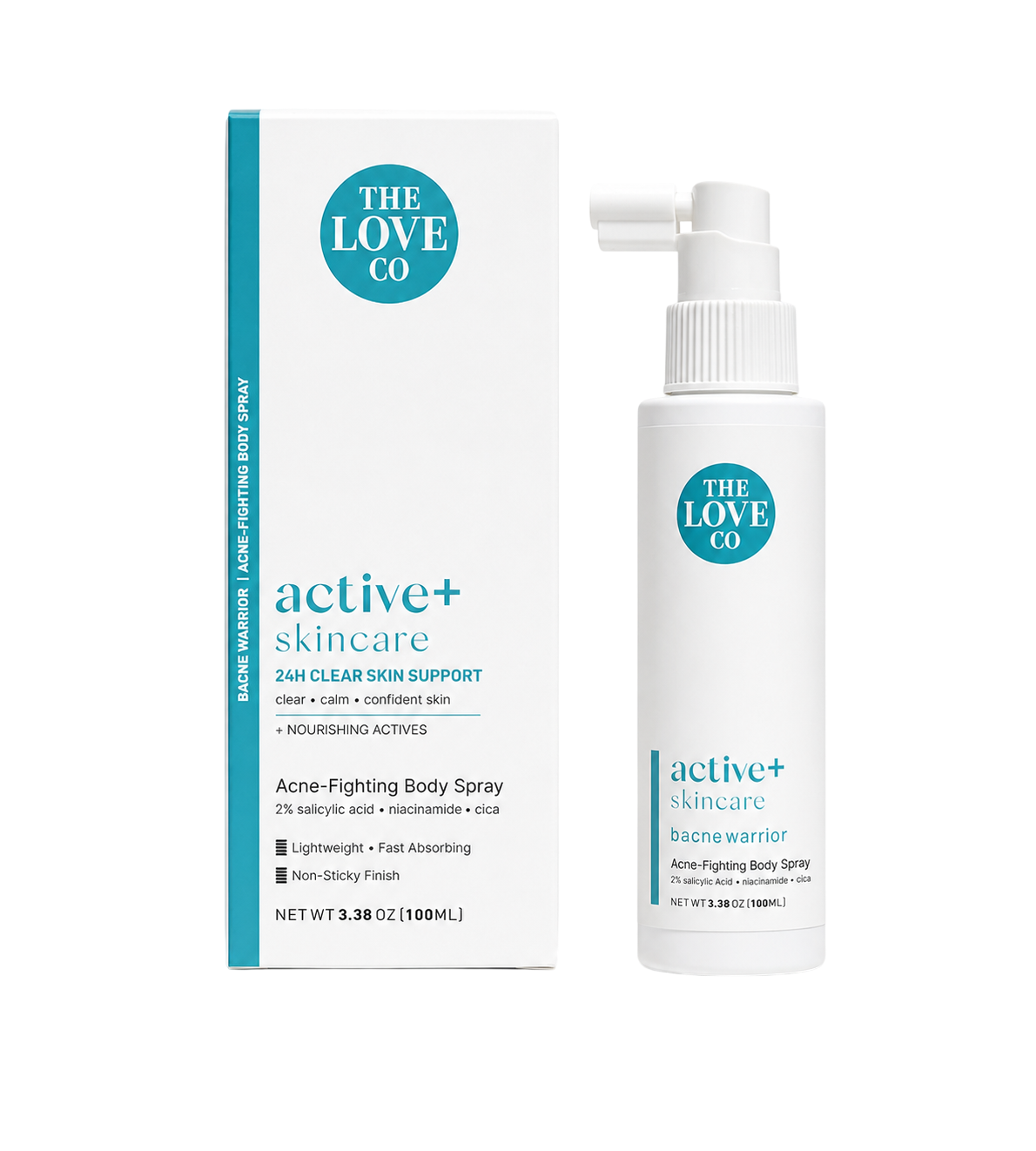
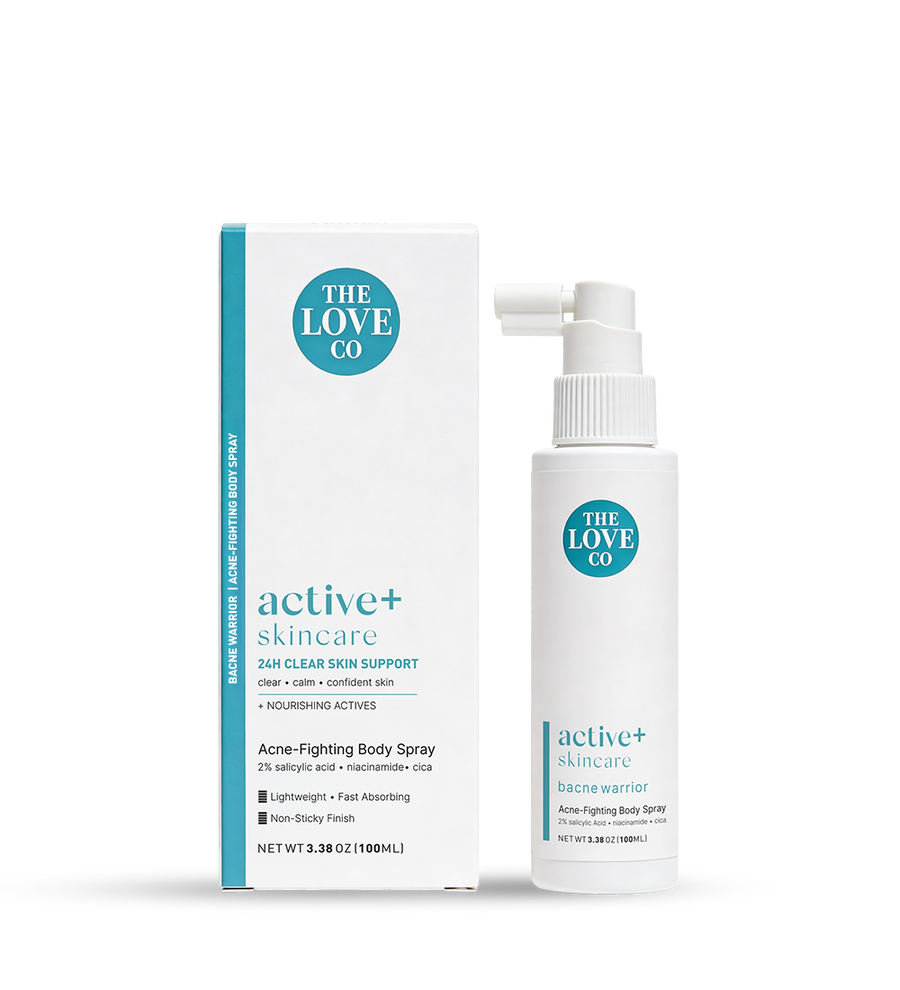
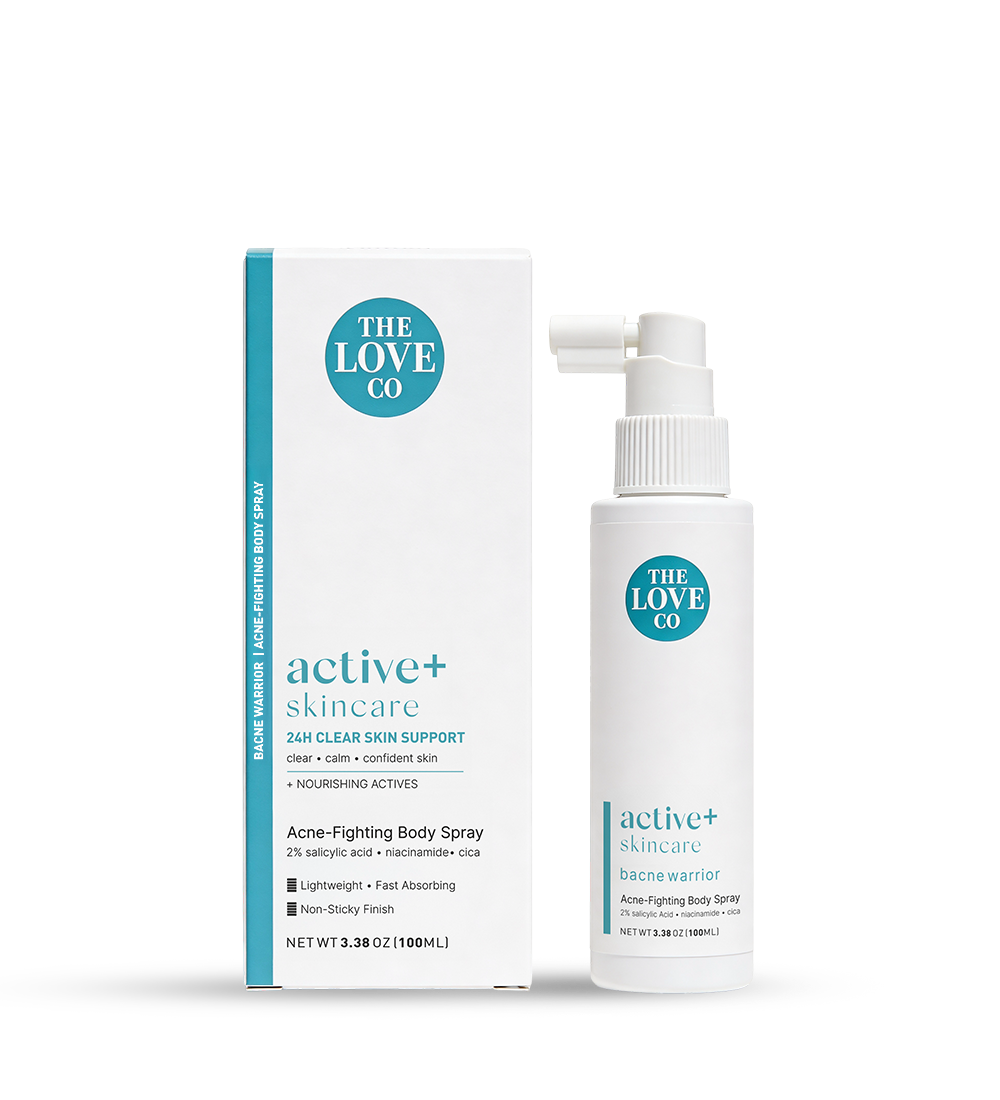
This is the precise reason Bacne Warrior by The Love Co — 2% salicylic acid + 4% niacinamide + zinc PCA + cica — was built around the two ingredients that are both effective and safe for unsupervised daily use on Indian body skin. Everything stronger belongs in a dermatologist’s hands.
The 12-week PIH fade protocol
Be honest with yourself about the timeline. PIH on the body takes 12 weeks minimum on Indian skin. Anyone selling you “2-week dark spot removal” for body acne is either lying or selling you hydroquinone you shouldn’t be using unsupervised.
Weeks 1–4 — Stop the source
You cannot fade marks while new pimples keep forming. Phase one is clearing the active acne.
- Apply Bacne Warrior twice daily on the entire affected zone — not just the worst spots. Marks form in zones, not points.
- Add SPF 30+ on chest and shoulders if any sun exposure happens. This is the single biggest mistake people make — they treat the marks without protecting them, and UV deepens new PIH faster than the niacinamide can fade the old.
- What you’ll notice: Active breakouts down 50%+. Marks themselves haven’t moved yet — that’s expected. The niacinamide is shifting sebum and inflammation first.
Weeks 5–8 — Marks start to fade
- Same protocol. Twice daily, every day. Niacinamide’s effect on melanin transfer is cumulative — skipping days resets the timeline more than it should.
- Photograph at week 4 and again at week 8 in the same light, same time of day.
- What you’ll notice: Marks visibly lighter. Skin tone evening out across the back. Newer marks (less than 8 weeks old) fading faster than older ones — that’s also expected.
Weeks 9–12 — Full fade
- Continue. This is when most people quit because progress feels slow — but the deepest pigment fades in this window.
- If you’ve been inconsistent with SPF, this is the recovery window. Daily SPF on exposed zones makes a measurable difference in the final 4 weeks.
- What you’ll notice at week 12: 50–70% reduction in mark visibility. Skin tone substantially more even. Older marks may still be faintly visible — those take 4–8 more weeks to finish.
What if my marks don’t fade by week 12?
Three possibilities, in order of likelihood:
1. You were inconsistent with application or sunscreen. Niacinamide on alternate days doesn’t work. Sunscreen “only when sunny” doesn’t work. The protocol is twice daily + daily SPF for the entire 12 weeks. If you skipped, extend by another 4 weeks before judging the result.
2. The pigment is dermal, not epidermal. Deeper pigment (sitting in the dermis rather than the upper epidermis) doesn’t respond to topical niacinamide alone. A dermatologist can confirm with a Wood’s lamp and add adjunct treatment — azelaic acid 20%, low-dose oral tranexamic acid, or a series of low-strength chemical peels designed for darker skin types.
3. You have a different condition. Confluent and reticulated papillomatosis, pityriasis versicolor, and friction-induced melanosis can look like PIH but aren’t. If the marks are scaly, itchy, or in unusual patterns (under the arms, in symmetrical waves across the upper back), see a dermatologist for a diagnosis.
The sunscreen mistake that wastes the entire protocol
Every dermatologist sees this weekly: someone applies the right active for 12 weeks, sees no progress, and assumes the product failed. Then it turns out they skipped SPF on the chest because “it’s only marks, not sunburn.” UV doesn’t need to burn you to deepen pigment — it just needs to reach melanocytes that are already over-active from inflammation. On Indian skin, even 20 minutes of midday sun on an unprotected chest can darken existing PIH by a visible shade.
The non-negotiables during fade-out:
- SPF 30+ on chest, shoulders, and upper back any day you’re stepping out — including cloudy and monsoon days. UVA penetrates cloud cover.
- Non-occlusive formulations. Heavy zinc-based body sunscreens clog body skin. Look for fluid or gel SPFs labelled non-comedogenic for body use.
- Reapply every 3 hours if outdoors. Once-a-day SPF is enough for indoor days; outdoor activity needs the same reapplication discipline as the face.
- Cover-up alternatives. If you can’t apply SPF (visiting a temple, a beach saree day), a light cotton dupatta over the shoulders does the job mechanically.
What about chest, shoulder, and upper-arm marks?
Identical protocol, identical timeline. Chest marks often fade slightly faster because chest skin is thinner. Shoulder marks can be slower if there’s ongoing bra-strap or bag-strap friction — fix the friction source while running the protocol, or new marks will keep forming alongside the fading old ones.
When to skip the protocol and book a derm
- Marks older than 18 months that haven’t faded at all. These are likely deeper than topical can reach.
- Marks that come with itching or scaling. Not PIH.
- Indented or raised marks. True scars — need procedural treatment (microneedling, subcision, fractional laser), not topicals.
- You’re prepping for a wedding in under 8 weeks and need faster fade. A dermatologist can layer a peel or laser series alongside the niacinamide protocol.
FAQ
Q: Will niacinamide lighten my actual skin tone or just the dark marks? A: Only the marks. Niacinamide works by reducing the excess melanin deposited by inflammation — it doesn’t affect baseline pigment. Your unaffected skin stays exactly the colour it is.
Q: Can I use vitamin C body lotion alongside Bacne Warrior? A: You can, but it’s rarely necessary at 4% niacinamide. Most body-formulated vitamin C is unstable in Indian humidity and degrades within weeks of opening. The 4% niacinamide is the workhorse — adding vitamin C is a small marginal benefit at best.
Q: Is 12 weeks really the minimum? Other sites say 4 weeks. A: 4 weeks is the facial PIH timeline. Body skin is thicker, turns over slower, and pigments deeper on Indian skin. 12 weeks is the honest answer for the body.
Q: I have melasma on my face — is body niacinamide safe? A: Yes. Niacinamide is one of the few actives derms actively recommend in melasma protocols. Body application is even safer because body skin is less hormonally reactive.
Q: How much does the 12-week course cost? A: Two bottles of Bacne Warrior at ₹449 each = ₹898 total. Plus a body-suitable SPF (₹400–800 depending on brand). Total around ₹1,300–1,700 for a full course — versus ₹15,000+ for a derm-led peel series for the same result.
TLC signature line
“My wife is a dermatologist and sees this every week in clinic — Indian women carrying body acne marks for a year because nobody told them niacinamide is the safe answer and kojic acid is the unsafe one. That conversation became Bacne Warrior. Pair it with the body wash from your TLC ritual; keep the mist for the neck.”
— Hemang Jain, Founder, The Love Co.
→ Get Bacne Warrior → · ₹449 · ships in 24h.
See also: - The full back & body acne guide → - Niacinamide for body acne: benefits, how to use, results → - How to get rid of back acne in 4 weeks →
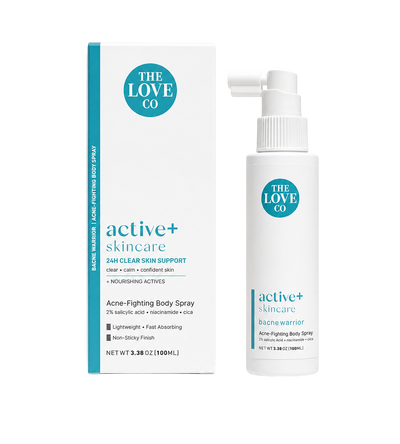
Bacne Spray – 2% Salicylic Acid Body Spray
A leave-on 2% salicylic acid body spray for back, chest, shoulder, and post-workout body acne. Designed for hard-to-reach zones, fast absorption, and daily use under clothes without a...
A ritual is the smallest love you give yourself, daily.
— Hemang Jain · 28 May 2026