



The acne is finally clearing. The breakouts have calmed. And then you catch your reflection in a backless blouse and realise the cysts have been replaced by something almost as frustrating — a constellation of dark brown spots and uneven texture across your shoulders and upper back. Welcome to the second half of the bacne journey: scars and post-inflammatory hyperpigmentation (PIH).
Let's be honest upfront. Bacne scars don't disappear overnight, and any product or treatment that promises a two-week reset is overselling. What does work is a patient, layered approach over four to six months. Here's what to actually do.
What "Bacne Scars" Really Are
Most people use "scars" as a catch-all, but there are three different problems on Indian skin and they need different fixes:
1. Post-Inflammatory Hyperpigmentation (PIH)
The brown or dark purple marks left behind after a pimple heals. Indian skin tones (Fitzpatrick IV-V) produce more melanin in response to inflammation, which is why our PIH lasts longer than it does on lighter skin. The good news: PIH is a pigment problem, not a structural one — it fades with consistent care.
2. Post-Inflammatory Erythema (PIE)
The red or pink marks. Less common on darker Indian skin tones than PIH, but possible on lighter complexions. Fades on its own over a few months.
3. True Atrophic or Hypertrophic Scars
Indented (icepick, boxcar, rolling) or raised (keloid-prone) scars from severe cystic acne. These are structural changes to the skin and don't fade with topical care alone — they need in-clinic procedures.
The strategy depends on which one you're dealing with. PIH is the most common on Indian backs and shoulders, and it's the most treatable at home.
The Home Routine for PIH on Indian Skin
Step 1: Stop New Acne From Forming
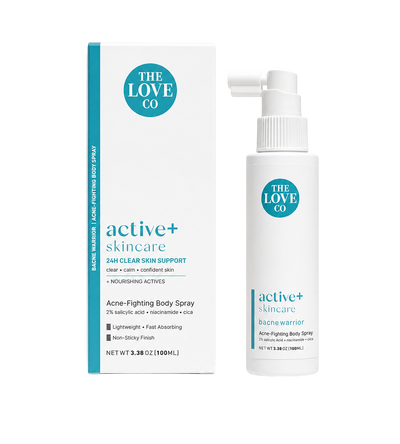
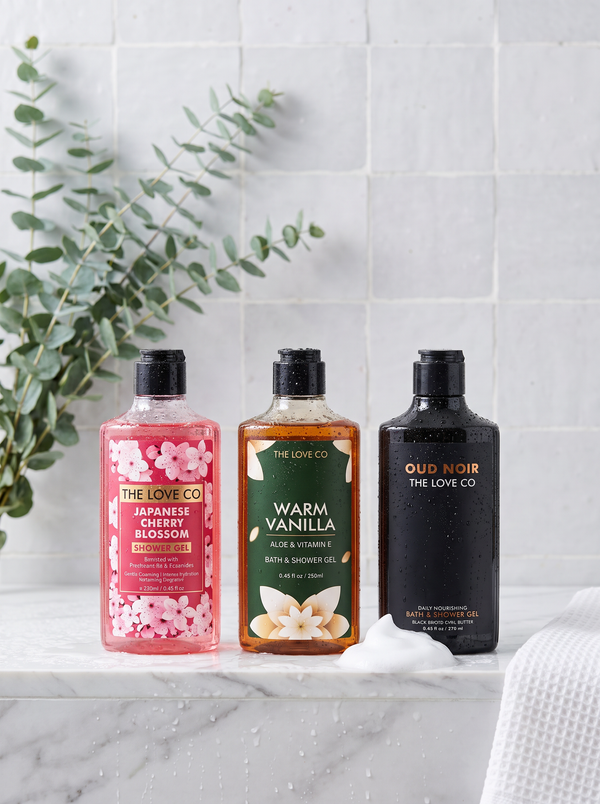
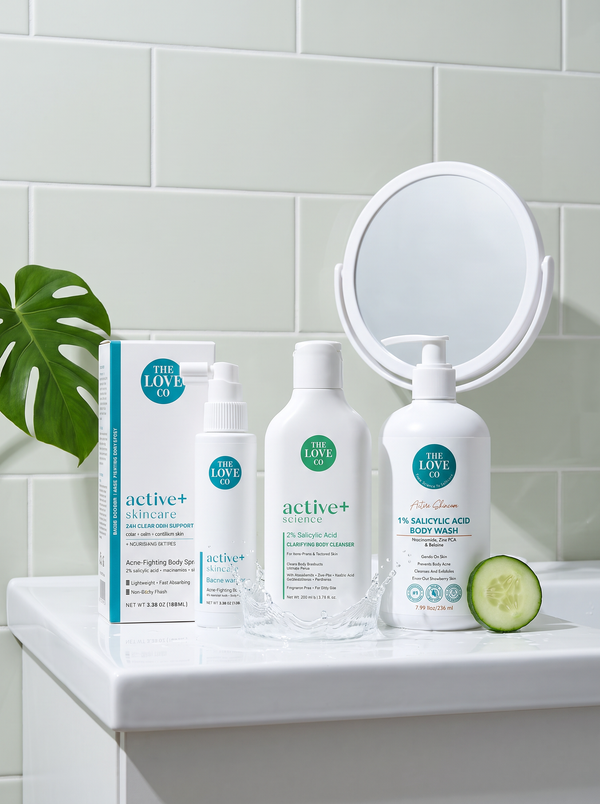
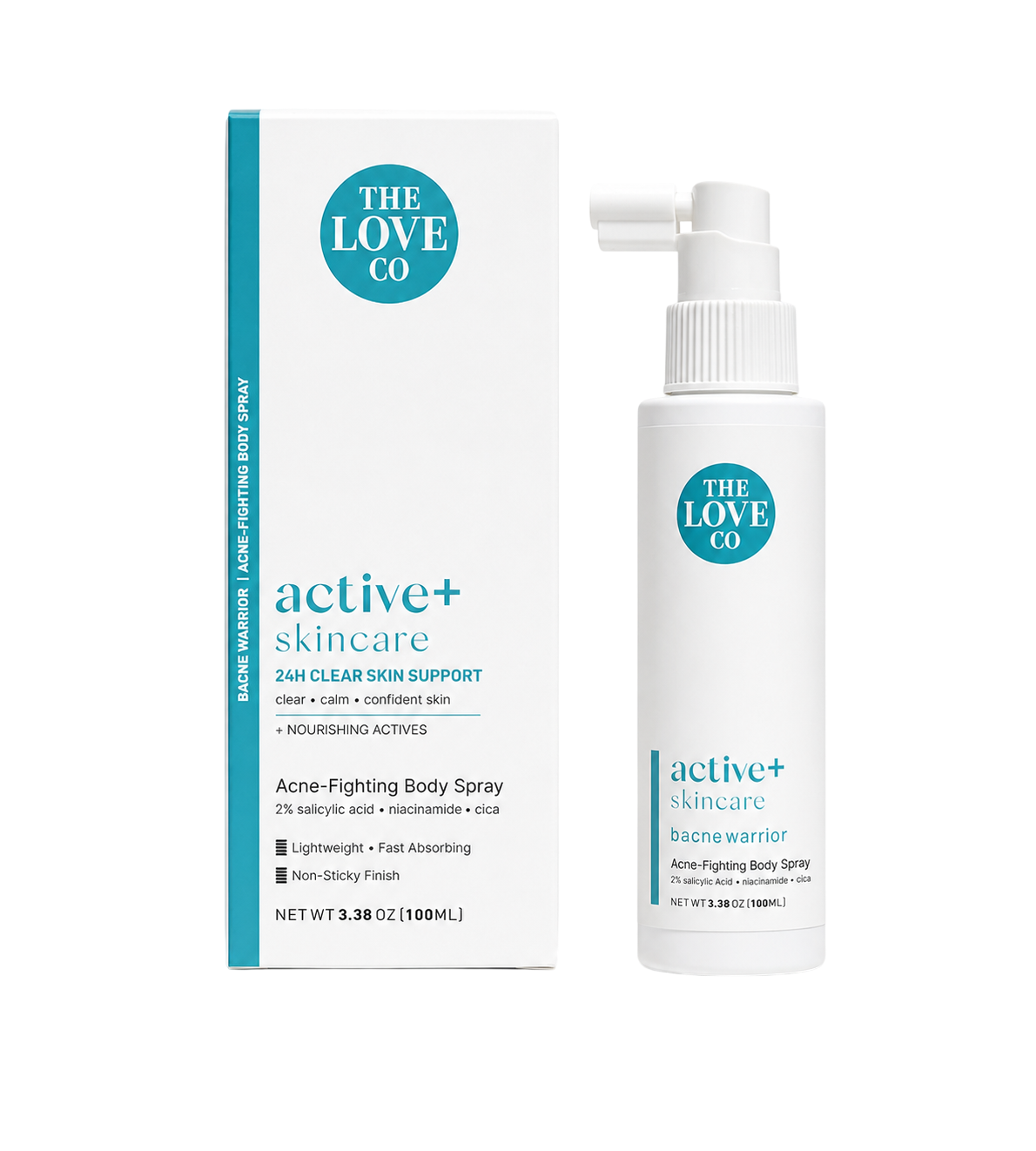
You can't fade old marks while new ones are appearing on top of them. Get the active acne under control first with an SLS-free, salicylic acid body wash. Our AHA wash guide covers the right percentages.
Step 2: Daily SPF on Visible Body Skin
This is the single biggest mistake we see — Indian women treat back and shoulder PIH for months without applying SPF, then wonder why it isn't fading. UV exposure deepens PIH on every single uncovered day. If your shoulders are visible in your daily wear (saris, tank tops, sleeveless office wear), they need SPF 30+ every morning.
Step 3: AHA Body Wash 3 Times a Week
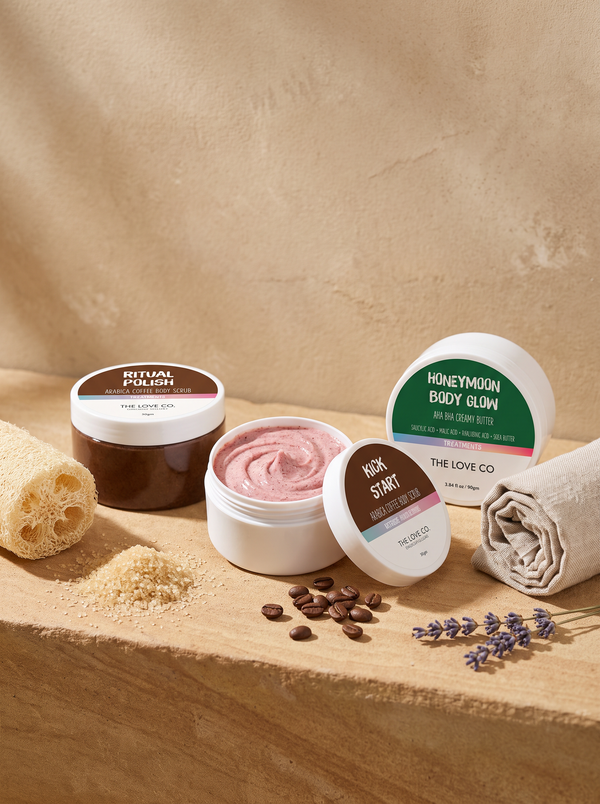
Glycolic acid 5–8% or lactic acid 8–10% in a body wash format gently lifts the pigmented top layer of skin over time. Browse the exfoliating range. Use it on shoulders, upper back, and chest — not on freshly broken skin.
Step 4: A Pigment-Targeting Body Lotion or Serum
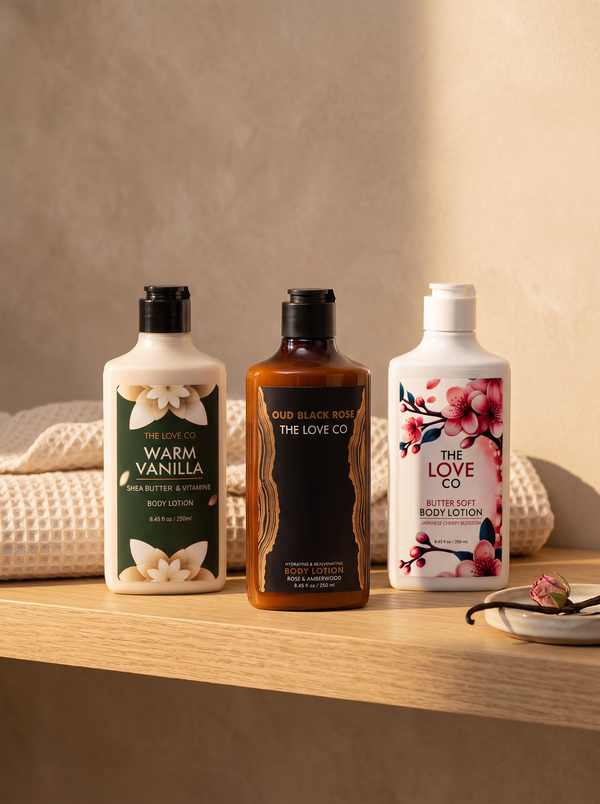
After your shower, on damp skin, apply a body lotion with niacinamide (4–10%), alpha-arbutin, or kojic acid. These ingredients interrupt the melanin production cycle. Niacinamide is the safest, gentlest, and best researched for Indian skin.
Step 5: Patience and Consistency
Four to six months of daily, boring consistency outperforms any aggressive in-clinic treatment done sporadically. Take a photo every four weeks in the same lighting — the slow progress only becomes visible in comparisons.
"I tell every patient with bacne PIH the same thing: the marks fade. They always fade. But the timeline on Indian skin is four to six months, not four to six weeks. The women who finish this protocol are the ones who stopped looking at the mirror every day and started taking monthly photos." — Dr. Tanvi Sehgal, MD, Dermatologist
What About True Indented or Raised Scars?
If you have actual depressed scars — small pits or rolling texture — topical products will not fix them. They need:
- Microneedling with or without PRP — typically 4–6 sessions
- Subcision for tethered rolling scars
- TCA cross or fractional CO2 laser for deeper icepick scars
For raised or keloid scars (more common in Indian and South Asian skin), see a dermatologist before doing anything — wrong treatment can make keloids worse. Silicone sheets, intralesional steroid injections, and pulsed dye laser are the typical paths.
What to Avoid While Fading PIH
- Lemon juice, baking soda, turmeric paste — popular DIY remedies that disrupt the skin barrier and often deepen pigmentation on Indian skin
- Aggressive scrubs — they create micro-inflammation, which produces more melanin
- Skipping SPF on overcast days or "winter" — UV penetrates clouds and the Indian winter sun is still strong
- Hydroquinone without dermatological supervision — effective but can cause ochronosis with prolonged unsupervised use
FAQs
Will bacne scars fade completely?
PIH almost always fades fully with the right routine and time. True structural scars don't fade completely on their own — they need procedures, and even then they improve rather than disappear.
How long does PIH take to fade on Indian skin?
Mild PIH: 2–3 months. Moderate: 4–6 months. Severe: 6–12 months with consistent SPF and actives. Without SPF, double those timelines.
Is vitamin C body lotion useful for bacne marks?
Yes. Stable vitamin C derivatives (ascorbyl glucoside, sodium ascorbyl phosphate) reduce pigmentation and protect against UV damage. Pair with niacinamide for compounded effect.
Can I use retinol on my back?
Yes, retinol body lotions exist and are excellent for both acne and PIH — but start at low concentrations (0.1–0.3%) twice a week. Always layer SPF in the morning.
What's the single most underrated step?
SPF on the body. Indian women are excellent at facial SPF and almost universally skip it on the body. PIH on the back and shoulders needs the same UV protection as the face.
Bacne scar fading is a long, patient project — not a sprint. Build the daily routine with an SLS-free wash from the body wash range, add an AHA wash from the exfoliating collection, layer pigment-targeting actives, and don't skip SPF. Four to six months from now, you'll be glad you started today.
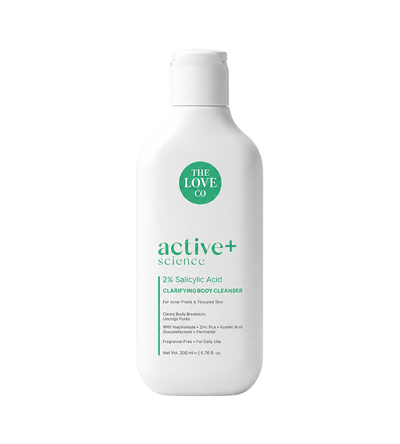
2% salicylic acid body cleanser
The step-up salicylic cleanser for skin that has tolerated 1% BHA and needs stronger pore-clearing support for stubborn bacne, clogged pores, and KP-prone texture. How To Use Start...
A ritual is the smallest love you give yourself, daily.
— Hemang Jain · 02 May 2026