

By Hemang Jain · Reviewed by Dr. Tanvi Sehgal, MD · Last updated: 2026-05-02
What this means for you
Check the back-of-pack ingredients list for 'sodium lauryl sulfate' or 'sodium laureth sulfate' in the top five — if either appears, the formula is built around a known irritant.
Indian women have been told to scrub their bodies harder for smoother skin. The walnut shells, the pumice stones, the abrasive loofahs — they all leave skin tight, red, and microtorn. There is a better way.
AHA body wash dissolves the bond between dead skin cells, letting them shed without scrubbing. The result: smoother, brighter, more even-toned body skin in 2 to 4 weeks. No abrasion. No microtears. No SLS stripping.
Here is what to know before you switch.
What are AHAs and how do they work on body skin?
Alpha hydroxy acids (AHAs) are a family of mild acids that perform chemical exfoliation. The three you will see in body wash labels:
What this means for you
Check the back-of-pack ingredients list for 'sodium lauryl sulfate' or 'sodium laureth sulfate' in the top five — if either appears, the formula is built around a known irritant.
- Glycolic acid — derived from sugarcane; the smallest molecule, deepest penetration, most effective for stubborn body texture issues
- Lactic acid — derived from milk; gentler than glycolic, also acts as a humectant (hydrates while exfoliating)
- Mandelic acid — derived from bitter almonds; the gentlest AHA, suited for sensitive or pigmentation-prone skin
The mechanism is simple: AHAs dissolve the protein bonds (called desmosomes) that hold dead skin cells onto the surface. Without those bonds, the dead cells simply lift away with the next rinse. No friction, no microtears, no irritation if dosed correctly.
Body skin needs a different concentration than facial skin. The body's stratum corneum (outer skin layer) is thicker and more keratinised — particularly on knees, elbows, and the upper arms. Facial AHA products at 5% would barely register on body skin. Effective body AHAs work in the 5% to 12% range.
The visible result over 2 to 4 weeks of consistent use:
- Smoother surface texture (especially on the upper arms and thighs)
- Brighter overall tone — old, hyperpigmented dead cells slough off
- Reduced "chicken skin" bumps (keratosis pilaris)
- Better absorption of body lotion afterward
- Less product needed to feel hydrated, because the dead-cell barrier is no longer blocking penetration
AHA body wash vs a physical scrub — what's the real difference?
Both promise smoother skin. Only one is safe for daily use.
What this means for you
Check the back-of-pack ingredients list for 'sodium lauryl sulfate' or 'sodium laureth sulfate' in the top five — if either appears, the formula is built around a known irritant.
Physical scrubs (walnut, sugar, salt, pumice):
- Abrasive particles physically dislodge dead cells
- Risk of microtears in the skin barrier — especially with walnut shell scrubs (banned in some markets for this reason)
- Can worsen acne and inflammation if used on already-irritated skin
- Recommended frequency: maximum once per week
AHA body wash:
- Chemical action — no friction, no abrasion
- Even, gentle exfoliation across all body skin
- Safe to replace your daily body wash entirely (with proper dosing)
- Compatible with all skin types if pH and concentration are formulated correctly
One myth worth correcting: AHA body washes can absolutely be fragrance-led. The AHA does the chemical work; the fragrance is independent. A pH-balanced, SLS-free AHA body wash with a long-lasting scent does both jobs simultaneously — no compromise needed.
AHA body wash for specific skin concerns in India
Keratosis pilaris (chicken skin) on the upper arms: Lactic acid is the dermatology first-line recommendation for KP. The bumps are caused by keratin plugs trapped in hair follicles, and AHAs dissolve those plugs over weeks. Daily use for 4 to 8 weeks typically clears most KP. Glycolic acid works too, but lactic acid is gentler for the long-term routine KP treatment requires.
Dull, uneven body tone: Indian women carrying years of sun damage on the arms, chest, and back see the most dramatic results from glycolic acid. A 5% to 10% glycolic body wash used 4 to 5 times a week delivers visible brightness in 2 to 4 weeks — particularly on the upper back and chest where pigmentation accumulates.
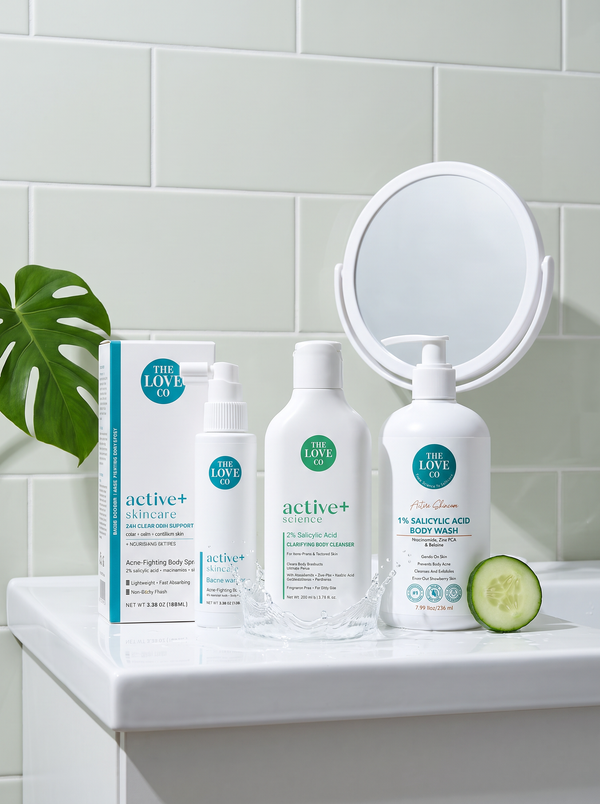
Body acne and bacne: AHA removes the dead-cell buildup that traps oil and bacteria in body pores. AHA is great for surface exfoliation. But for deep pore cleansing, salicylic acid (BHA) penetrates inside the pore in a way AHA cannot. The two work together: read our guide to salicylic acid body wash for back acne if breakouts are your primary concern.
Rough elbows, knees, and heels: Apply the AHA body wash directly to dry skin in these spots, leave for 60 seconds before stepping into the shower water, then rinse. The longer contact time at higher concentration handles the toughest patches without needing a separate scrub.
What to look for in an AHA body wash in India
Three things have to be true for an AHA body wash to actually work:
1. Concentration in the 5–12% range. Below 5% is marketing — too dilute to do measurable work on body skin. Above 12% on daily-use body wash risks irritation, especially in twice-daily showering climates.
2. The right pH window. AHAs are only chemically active below pH 4.5. So the body wash itself needs to be formulated below 4.5 for the AHA to function — but the rinse phase should bring skin pH back to its natural 5.5. This is a formulation tightrope. Most cheap AHA body washes either get the pH wrong (no exfoliation) or leave skin pH disrupted (acid mantle damage).
3. SLS-free formulation. This is non-negotiable for AHA body wash. AHA already increases skin sensitivity slightly during the exfoliation phase. Stack SLS on top and you double-hit the barrier — trans-epidermal water loss measurably exceeds either ingredient alone. Read more on why SLS damages the acid mantle for the underlying chemistry.
The Love Co's exfoliating body wash range combines AHA (in the 8% range, lactic and glycolic blend) with SLS-free, pH-controlled formulation. Fragrance-led, dermatologist-tested, made for Indian skin and Indian climate.
How to use an AHA body wash correctly
Frequency: Start at 3 times a week. If your skin is comfortable after 2 weeks (no redness, no peeling, no stinging), build up to daily use. Most Indian skin tolerates daily AHA body wash within a month, but it is not a race.
Technique: Lather and leave on skin for 60 seconds before rinsing. AHAs need contact time to work. A 5-second wash-and-rinse delivers minimal exfoliation. The 60-second hold is what makes the difference.
SPF is non-negotiable. AHAs increase photosensitivity — your freshly exfoliated skin is more vulnerable to UV damage. If you are using AHA body wash on your arms, chest, or legs, sunscreen on those areas every morning is mandatory. Skip this and you accelerate the exact pigmentation you are trying to clear.
Layering rules: Do not use AHA body wash and a high-strength vitamin C body serum on the same day until you know how your skin reacts. Same for retinol body products. Either alternate days or stick to one active at a time.
Related concepts
- Sodium lauryl sulfate (SLS) — Anionic detergent prized for cheap foam; flagged by the EU Scientific Committee on Consumer Safety as an irritant above 2%.
- Coco-glucoside — Mild non-ionic surfactant from coconut fatty alcohol and glucose; biodegradable and pH-compatible with skin.
- Ceramide — Lipid molecule that holds skin cells together in the stratum corneum; depleted by harsh detergents.
- Patch test — Standard dermatological method to measure irritation potential of a topical ingredient under occlusion for 24–48 hours.
- Anionic surfactant — Surfactant class with a negatively charged head group; effective cleansers but typically more disruptive than non-ionics.
FAQ
Is AHA body wash safe for daily use in India?
Yes, if it is formulated correctly. The right combination is 5-10% AHA + pH-balanced rinse + SLS-free base. Indian climate (twice-daily showering, sun exposure) makes the SPF discipline more critical than in cooler climates, but daily use is safe and often necessary for visible results within 4 weeks.
Can I use AHA body wash on my face?
Generally no. Body AHA concentrations (5-12%) are too high for facial skin (which tolerates 2-5% maximum). Use a face-specific AHA cleanser or toner for the face. The exfoliation principle is the same; the dosing is different.
What is the difference between AHA and BHA body wash?
AHAs (glycolic, lactic, mandelic) are water-soluble — they exfoliate the surface of the skin. BHAs (salicylic acid is the most common) are oil-soluble — they penetrate inside oil-clogged pores. AHA is best for surface texture and brightness. BHA is best for body acne, blackheads, and oil-prone skin.
Does AHA body wash help with dark underarms?
Yes — and it is one of the most underrated treatments for the issue. Dark underarms in Indian women are often caused by dead-cell buildup, friction pigmentation from waxing/shaving, and incomplete deodorant residue. AHA body wash addresses the first two. Daily AHA use under the arms typically lightens visible darkness in 4 to 8 weeks.
Is glycolic acid body wash the same as AHA body wash?
Glycolic acid is the most common AHA, so a "glycolic acid body wash" is a type of AHA body wash. AHA body washes can also use lactic acid, mandelic acid, or a blend. If you have sensitive skin, lactic-acid-based AHA body wash is gentler. If you want maximum brightening and texture work, glycolic-acid-based is more aggressive.
Medically Reviewed
Dr. Tanvi Sehgal, MD
Dermatologist · Indian skin formulation specialist · The Love Co clinical advisor
Dr. Tanvi reviews every TLC body care formulation for Indian skin types, climate compatibility, and pH stability. Verify credentials →
Switch to chemical exfoliation. Without the scrubbing.
Shop SLS-free, AHA body wash →
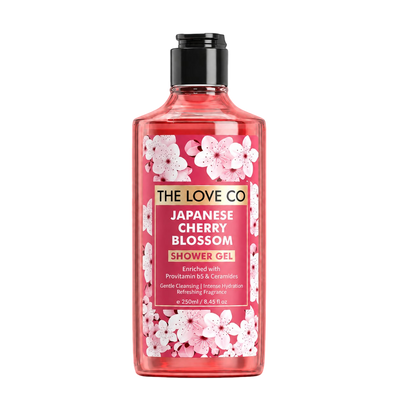
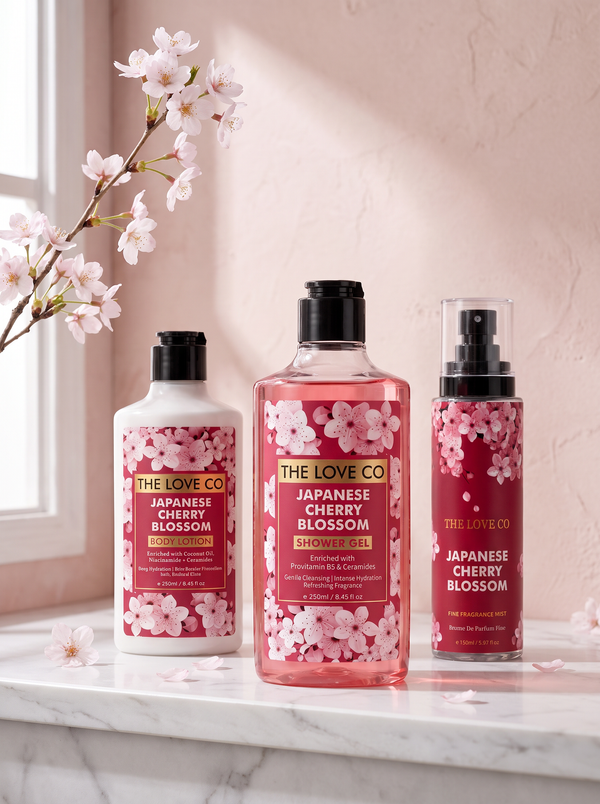
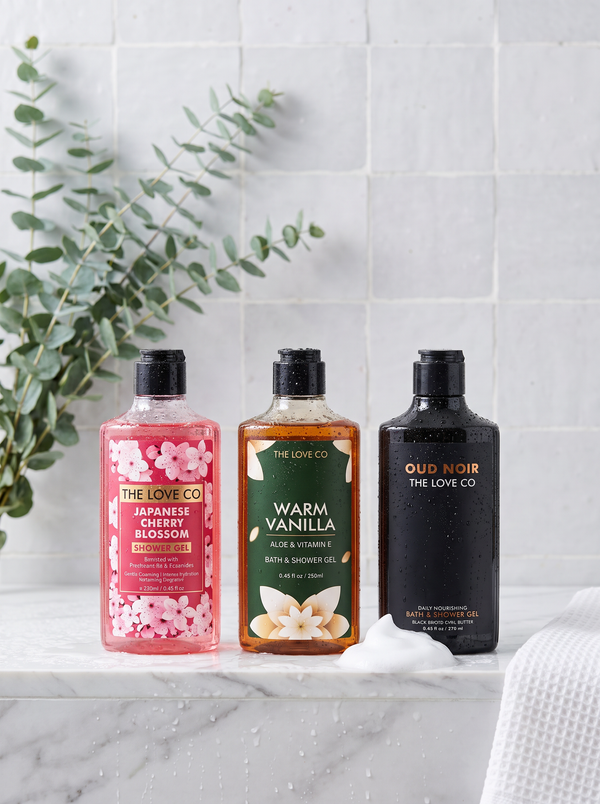
Japanese Cherry Blossom Shower Gel
Scent Trail Step 1 · soft floral body wash Start the Scent Trail here. A pH 5.5, SLS-free cleanser that protects your skin barrier while it washes —...
A ritual is the smallest love you give yourself, daily.
— Hemang Jain · 01 May 2026