

By Hemang Jain · Reviewed by Dr. Tanvi Sehgal, MD · Last updated: 2026-05-02
What this means for you
Check the back-of-pack ingredients list for 'sodium lauryl sulfate' or 'sodium laureth sulfate' in the top five — if either appears, the formula is built around a known irritant.
You have been using the same body wash for years. It lathers beautifully. But your skin feels dry, tight, and dull after every shower. That is not your skin type — that is SLS.
Most Indian women blame their skin for being "too dry" or "too sensitive." The honest truth is that the body wash is doing it. Specifically, an ingredient called sodium lauryl sulfate, present in roughly 9 out of 10 conventional body washes sold in India.
This guide explains what SLS actually does to your skin, why Indian skin is hit harder than most, and what to use instead.
What exactly is SLS — and why is it in almost every body wash?
Sodium lauryl sulfate (SLS) is a chemical surfactant. In plain language, it is the ingredient that creates that thick, satisfying lather you have come to associate with "feeling clean."
What this means for you
Check the back-of-pack ingredients list for 'sodium lauryl sulfate' or 'sodium laureth sulfate' in the top five — if either appears, the formula is built around a known irritant.
It is also extraordinarily cheap. SLS costs formulators a fraction of what gentler alternatives do, which is why it became the default cleansing agent in body wash from the 1970s onward.
The marketing problem it solved was simple: consumers equate lather with effectiveness. A body wash that does not foam aggressively feels like it is not working. SLS gave brands a cheap way to deliver the lather customers expected, even though the foam itself does nothing for cleansing.
The result: SLS appears in 90%+ of conventional body wash SKUs sold in Indian supermarkets and pharmacies today. Look at the back of any drugstore body wash and you will likely find it listed as the second or third ingredient, right after water.
What SLS actually does to your skin
Healthy skin has a thin protective layer called the acid mantle — a slightly acidic film (pH 4.5 to 5.5) made of natural oils, sweat, and good bacteria. This barrier is what keeps moisture in and irritants out.
What this means for you
Check the back-of-pack ingredients list for 'sodium lauryl sulfate' or 'sodium laureth sulfate' in the top five — if either appears, the formula is built around a known irritant.
SLS does not just clean the surface. It actively strips the lipid layer that holds your acid mantle together.
Here is what happens in a single shower:
- SLS-based body washes typically have a pH of 7 to 9 — far above your skin's natural 5.5
- A wash with SLS raises skin pH for up to 2 hours afterward, breaking down the acid mantle
- The skin barrier takes 4 to 6 hours to recover — and that is only if you do not shower again
- For twice-daily showerers (most Indian adults in summer), the barrier never fully recovers
The visible result: skin that feels tight after the shower, looks dull instead of glowing, gets reactive to products that used to feel fine, and develops dry patches that no body lotion seems to fix permanently.
"SLS is not dangerous in the toxicology sense. The problem is what it does to the skin barrier over months and years. I see patients in their 30s with chronic xerosis (dry skin) who have been using high-pH sulfate body washes daily for a decade. The fix is rarely a moisturizer. It is switching the cleanser."
— Dr. Tanvi Sehgal, MD, Dermatologist
Why Indian skin is especially vulnerable to SLS
Three compounding factors make SLS more damaging in the Indian context than in Western markets where most studies are run:
1. Hard water. Most Indian cities — Delhi, Mumbai, Bangalore, Chennai, Hyderabad — have hard water. Hard water already disrupts the skin barrier on its own. Combine it with SLS and you get compounded stripping that is measurably worse than soft-water regions.
2. Twice-daily showering norms. Indian climate (40°C+ summers, 80%+ humidity in monsoon) means most adults shower twice a day. Western dermatology research is mostly based on once-daily shower assumptions. Doubling the SLS exposure halves the barrier recovery time.
3. Skin tone biology. Darker Indian skin tones have a denser stratum corneum (the outermost layer), which sounds protective. But damaged darker skin is also more prone to post-inflammatory hyperpigmentation — those dark patches that linger for months after irritation. SLS damage does not always show up as redness; it shows up as uneven tone weeks later.
A 2021 study published in the Indian Journal of Dermatology, Venereology and Leprology (IJDVL) found that 62% of Indian patients presenting with chronic dry-skin conditions used high-pH, sulfate-containing body washes daily. The correlation was statistically significant even after controlling for age and climate.
The takeaway: SLS is not more chemically aggressive on Indian skin. It is that the daily exposure pattern in India — hard water, twice-daily showering, dense pigmented skin — means the barrier never gets a chance to recover.
SLS vs SLES — is one safer than the other?
You will often see "SLS-free" body washes that contain sodium laureth sulfate (SLES) instead. Here is the honest comparison:
SLES is the ethoxylated cousin of SLS. Adding ethylene oxide molecules during manufacturing makes it slightly milder — bigger molecules do not penetrate the skin barrier as deeply. So in head-to-head dermatology testing, SLES is genuinely less stripping than SLS.
But there are two catches:
First, SLES still raises skin pH above the healthy range and still disrupts the acid mantle. The damage is slower but the direction is the same. For daily use on already-dry or sensitive skin, SLES is not the answer either.
Second, SLES manufacturing can leave trace amounts of 1,4-dioxane (a contaminant, not an ingredient) in the final product. The amounts are within most regulatory limits but rigorous brands either ethically purify their SLES or skip it entirely.
A genuinely SLS-free, SLES-free body wash uses gentler surfactants instead — and that is where the conversation changes.
What to use instead of SLS in a body wash
Modern formulation chemistry has solved the lather-without-stripping problem. The gentler surfactants that should be on your body wash label:
- Sodium cocoyl isethionate (SCI) — derived from coconut, mild, generates rich lather
- Coco glucoside — sugar-based, non-ionic, particularly gentle on sensitive skin
- Decyl glucoside — similar to coco glucoside, slightly more foam
- Lauryl glucoside — the workhorse mild surfactant in modern dermatologist-approved formulations
These ingredients clean effectively, lather adequately (though less aggressively than SLS), and do not disrupt the acid mantle.
What "SLS-free" should actually mean on a label:
- No sodium lauryl sulfate
- No sodium laureth sulfate (SLES) either
- The pH should be 5.5 to match your skin's natural pH
- Bonus: dermatologist-tested, ideally on Indian skin
The pH point matters more than most people realize. The right cleansing pH preserves the acid mantle even when you shower twice a day. Read our complete guide to pH 5.5 body wash and why your skin's acid mantle depends on it.
If you are moving away from SLS, the order of priority for your skin's barrier is:
- For dry skin: look for SLS-free body wash for dry skin with added humectants like glycerin or hyaluronic acid
- For sensitive skin: choose a SLS-free body wash for sensitive skin with low or no added fragrance
- For everyday use: browse the full range of SLS-free body wash and shower gel — pH 5.5, dermatologist-tested, made for Indian skin
For the deeper read on why pH matters as much as the surfactant choice, see our complete guide to the best SLS-free body wash in India.
Related concepts
- Sodium lauryl sulfate (SLS) — Anionic detergent prized for cheap foam; flagged by the EU Scientific Committee on Consumer Safety as an irritant above 2%.
- Coco-glucoside — Mild non-ionic surfactant from coconut fatty alcohol and glucose; biodegradable and pH-compatible with skin.
- Ceramide — Lipid molecule that holds skin cells together in the stratum corneum; depleted by harsh detergents.
- Patch test — Standard dermatological method to measure irritation potential of a topical ingredient under occlusion for 24–48 hours.
- Anionic surfactant — Surfactant class with a negatively charged head group; effective cleansers but typically more disruptive than non-ionics.
FAQ
Is SLS safe to use every day?
Safe in the toxicology sense — yes. SLS is approved by every major regulator including FDA and CDSCO. The issue is barrier health: daily SLS use measurably disrupts the skin's protective acid mantle over weeks and months, leading to chronic dryness, dullness, and reactivity in many users.
Does SLS cause skin darkening?
Not directly. SLS does not pigment skin. But by damaging the barrier, it makes skin more reactive to sun, friction, and other irritants — and on darker Indian skin tones, that reactivity often shows up weeks later as post-inflammatory hyperpigmentation (uneven dark patches).
Is SLS-free body wash better for oily skin?
Counter-intuitively, yes. Many people with oily skin think they need stripping cleansers. But over-stripping triggers the skin to produce more oil to compensate, creating a cycle. A pH 5.5, SLS-free wash cleans without overcompensating sebum.
How do I know if my body wash has SLS?
Read the ingredient list (back of the bottle). Look for "sodium lauryl sulfate" or "SLS" — usually listed in the first five ingredients if present. Also watch for "ammonium lauryl sulfate" (similar concerns) and "sodium laureth sulfate" or "SLES" (milder but related).
Is sulphate-free the same as SLS-free?
Sulphate-free is the broader claim — it excludes both SLS and SLES. SLS-free could technically still contain SLES. If your label says "sulphate-free," that is the cleaner formulation. If it only says "SLS-free," check the ingredients for SLES.
Ready to switch?
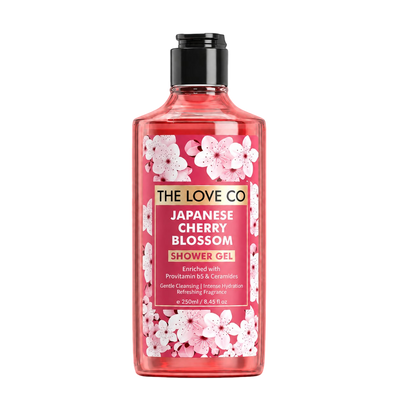
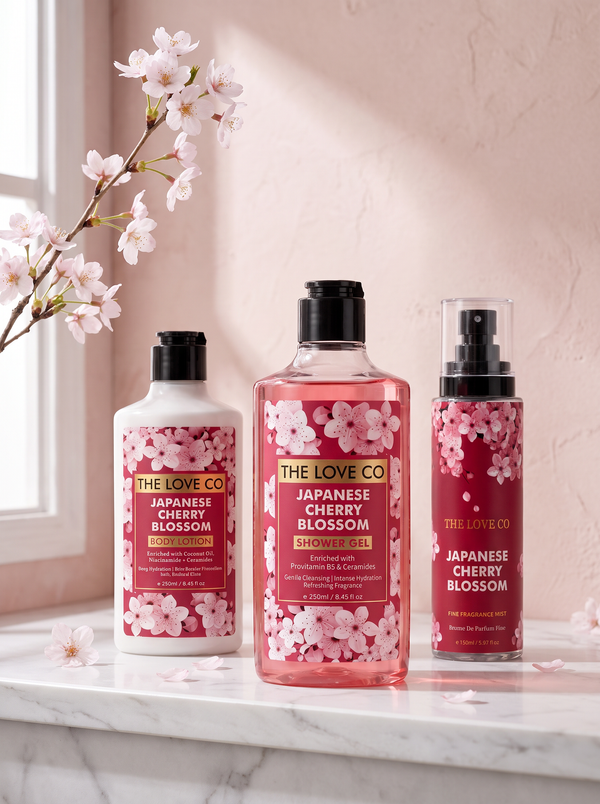
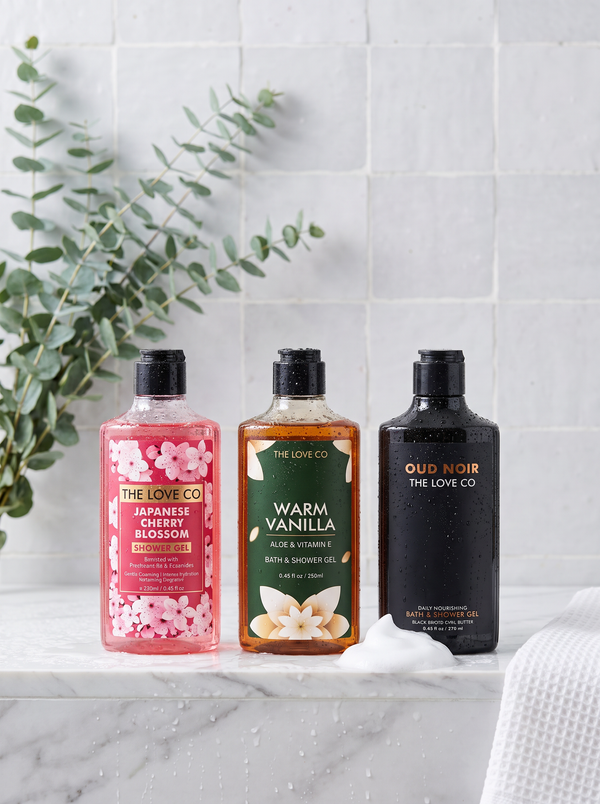
Japanese Cherry Blossom Shower Gel
Scent Trail Step 1 · soft floral body wash Start the Scent Trail here. A pH 5.5, SLS-free cleanser that protects your skin barrier while it washes —...
A ritual is the smallest love you give yourself, daily.
— Hemang Jain · 01 May 2026