Tea Tree Oil for Body Acne: Does It Actually Work?
Quick answer: Yes — but slower and with more risk than the alternatives. A landmark 1990 trial in the Medical Journal of Australia showed 5% tea tree oil was clinically comparable to 5% benzoyl peroxide for mild-to-moderate acne, with fewer side effects. The catch: tea tree is an essential oil that must be diluted, can sensitise skin over time, and the smell doesn’t pair with anything else in a body routine. For convenience and tolerability on body skin, salicylic acid wins.
Does tea tree oil actually clear acne?
Yes, with caveats. The active in tea tree oil (Melaleuca alternifolia) is terpinen-4-ol, which is antibacterial against Cutibacterium acnes and mildly anti-inflammatory. Clinical evidence:
- 5% tea tree gel vs 5% benzoyl peroxide (1990, Bassett et al.): both reduced acne lesions; tea tree took longer to show effect but caused less scaling and dryness.
- 5% tea tree gel vs placebo (2007, Enshaieh et al.): tea tree group showed significantly fewer lesions over 45 days.
So the question is not whether it works. The question is whether it’s the right tool for body acne.
What tea tree oil is genuinely good for
| Use case | Why tea tree fits |
|---|---|
| Single spot treatment, occasional pimple | Targeted antibacterial action; small surface area, low exposure |
| Scalp pimples / dandruff overlap | The smell is less disruptive in a shampoo than on bare skin |
| People who want zero-synthetic skincare | A genuine plant active with clinical evidence |
It’s a useful tool. It’s just not the best tool for a large surface area like the back.
Tea tree vs salicylic acid for body acne
| Factor | Tea tree oil (5%) | Salicylic acid (2%) |
|---|---|---|
| Mechanism | Antibacterial only | Keratolytic + mild antibacterial |
| Speed of result | 4–8 weeks | 2–4 weeks |
| Risk of contact dermatitis | Moderate (sensitises ~5% of users) | Low |
| Dilution required | Yes — undiluted causes burns | No — formulated at use-strength |
| Smell | Strong medicinal eucalyptus | Neutral |
| Pairs with fragrance/body mist | No — clashes | Yes |
| Practical for full back | No — application is messy | Yes — designed for it |
| Comedogenicity | Low | None |
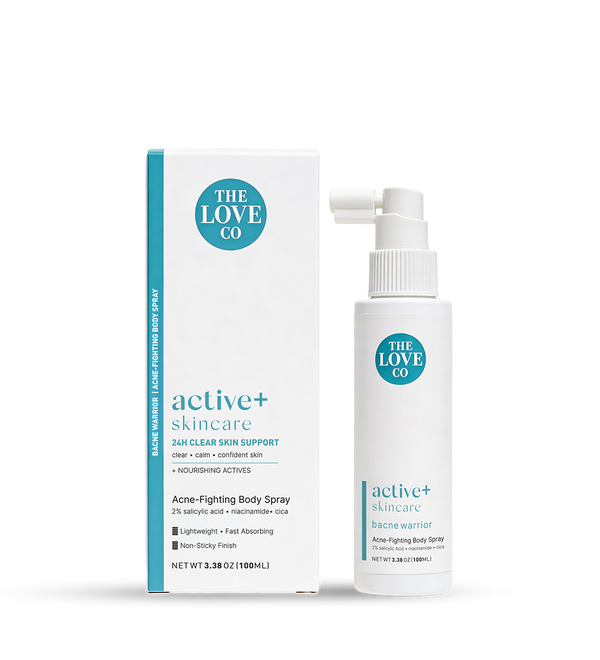
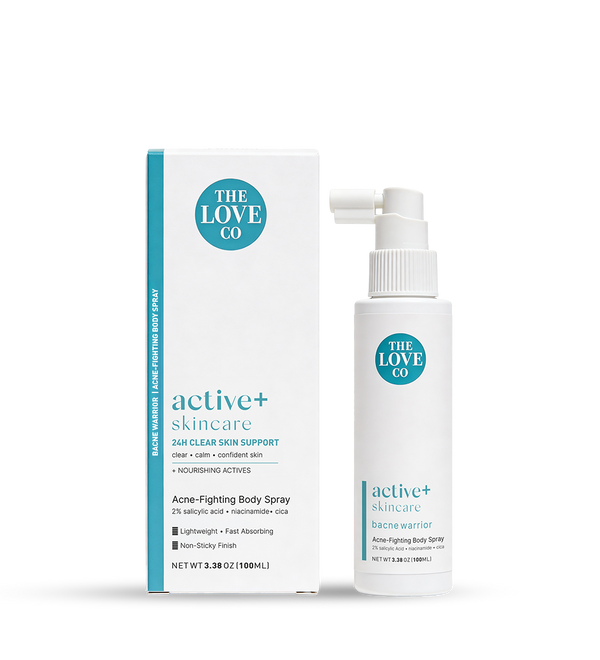
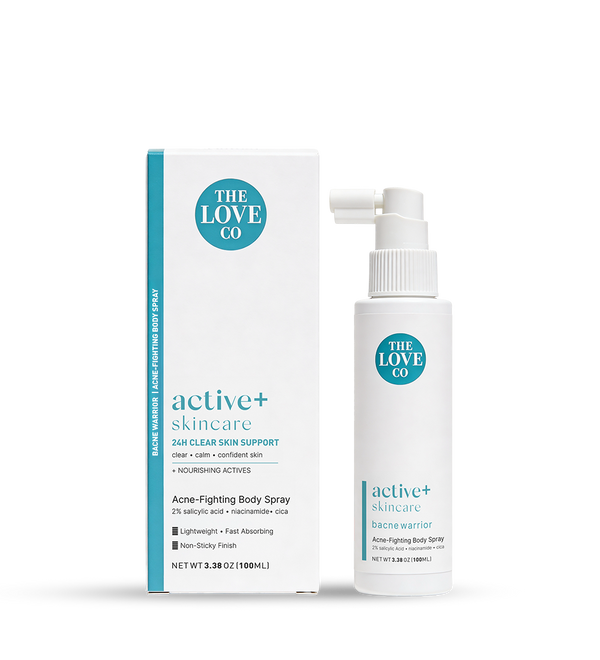
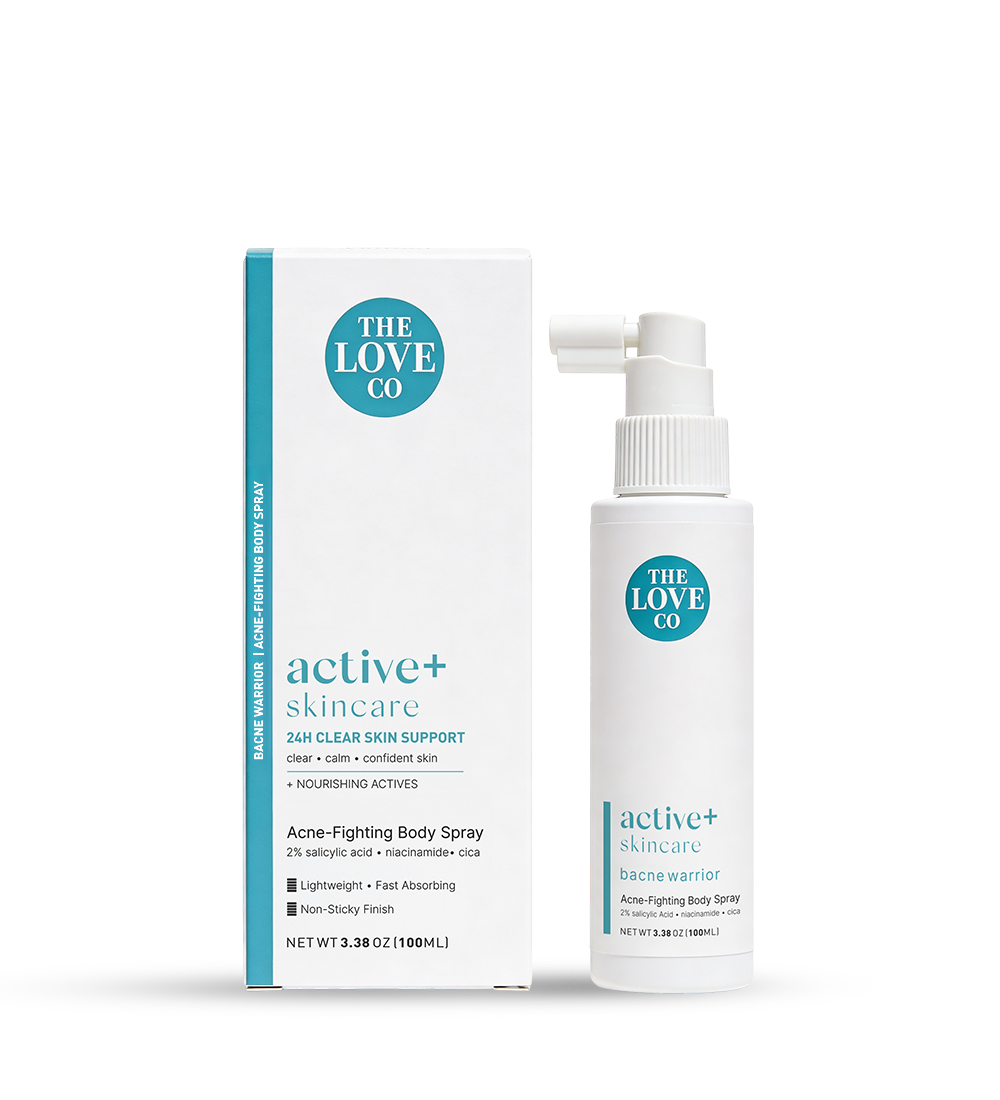
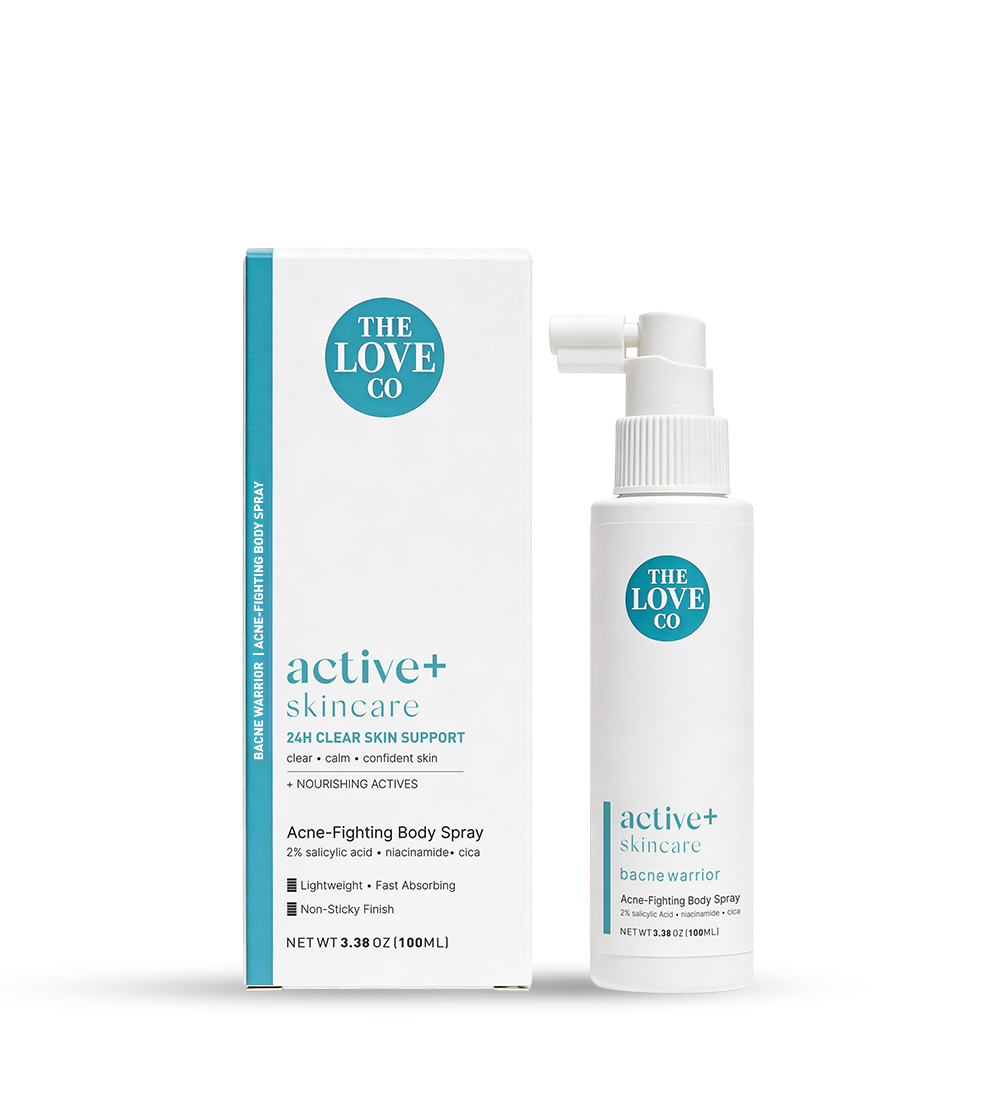
This is why Bacne Warrior by The Love Co — 2% salicylic acid + 4% niacinamide + zinc PCA + cica doesn’t include tea tree oil. The 2% salicylic does the same job (and more — keratolysis as well as antibacterial action), without the dilution math and without the smell.
The dilution problem
Pure tea tree oil is 100% concentration. Effective treatment concentration is 5%. That means you have to dilute it 1:20 in a carrier oil before any skin contact. Most people don’t measure correctly:
- Too dilute: no acne effect, just smells of tea tree
- Too concentrated: contact dermatitis, redness, peeling, sometimes blistering
In tropical Indian humidity, sweat further dilutes whatever you applied. So your 5% morning application might be 2% by lunchtime — below the effective threshold. A pre-formulated leave-on product avoids the entire dilution game.
When tea tree oil causes more problems than it solves
- Frequent allergic contact dermatitis. Tea tree is one of the more common essential-oil allergens. The longer you use it, the higher the chance of sensitisation — meaning skin that was fine for the first 3 weeks suddenly reacts in week 4.
- Photo-irritation. Some users report increased sun sensitivity, especially on body skin that’s been treated.
- Pregnancy uncertainty. Topical tea tree in pregnancy has limited safety data; most dermatologists default to advising against, especially first trimester. Salicylic at 2% body-area use is generally considered safer (confirm with your obstetrician).
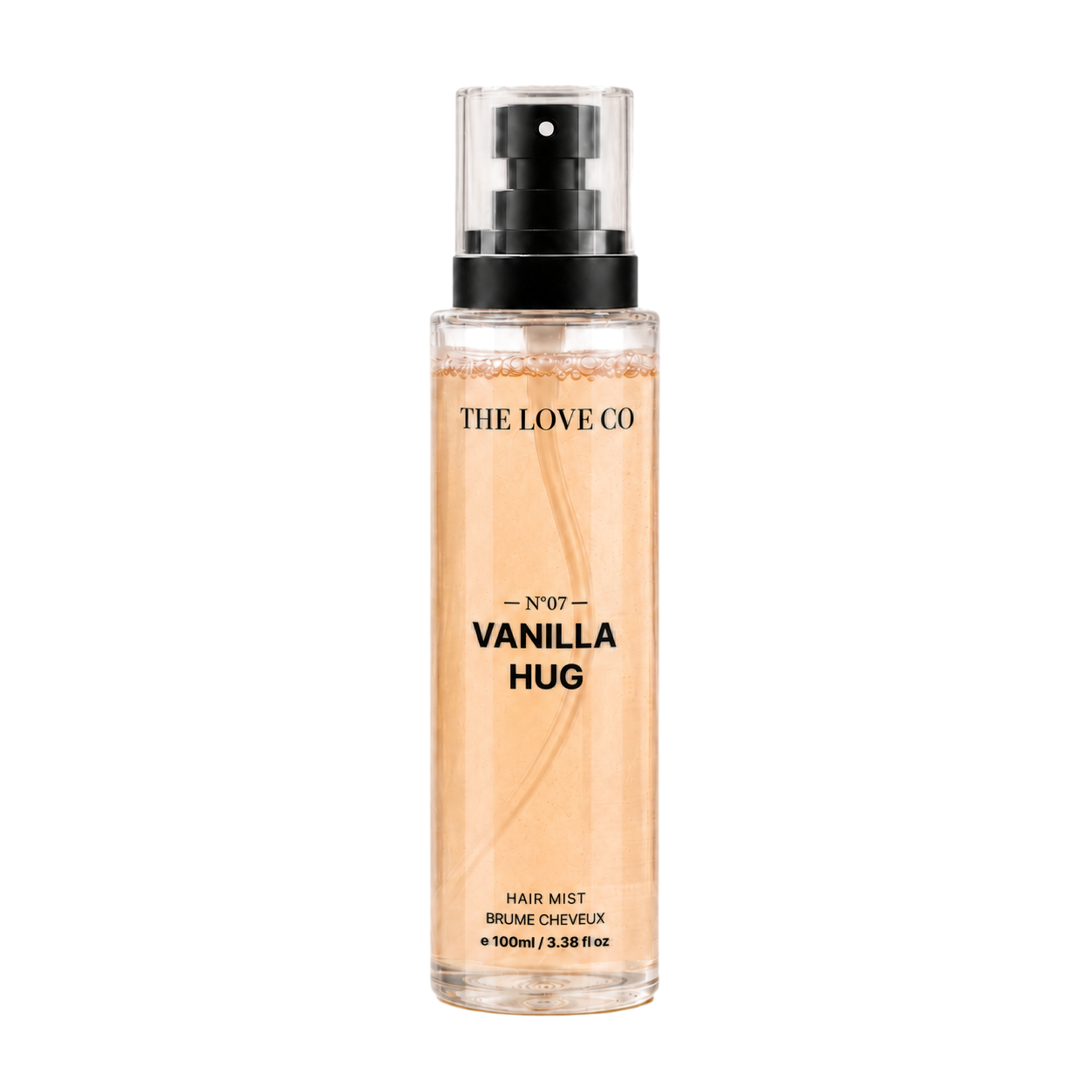
- Fragrance interference. If you use a body mist, perfume, or a scented body wash, tea tree oil clashes with everything. There’s no version of this routine where the scent is pleasant.
What about tea tree in cleansers and washes?
This is actually where tea tree shines on the body. A tea tree body wash (60-second contact time, rinsed off) gives you the antibacterial benefit with much lower irritation risk than leave-on essential oil. If you love tea tree, this is the format that makes sense:
- Tea tree body wash → antibacterial cleanse
- Bacne Warrior (leave-on) → keratolytic + sebum regulation + anti-inflammatory
That stacking gives you the tea tree benefit and the gap-closing actives. You don’t have to choose.
When to skip tea tree entirely
- You have eczema or atopic dermatitis — essential oils trigger flares
- You’ve already had a reaction to peppermint, eucalyptus, or lavender essential oils — likely cross-reactive
- You’re pregnant or breastfeeding unless cleared by your obstetrician
- You wear fragrance daily and don’t want a competing scent on your back
FAQ
Can I add tea tree oil to my body lotion? You can, but the lotion’s emulsifier system can deactivate the active. Better to use a properly formulated 5% tea tree gel from a brand that’s tested the stability.
Is tea tree oil safer than benzoyl peroxide? For most people, yes — less drying, less barrier damage, no fabric bleaching. But it’s slower, and the allergy risk is higher than benzoyl peroxide’s. For body acne specifically, 2% salicylic outperforms both on tolerability.
Will tea tree oil fade dark marks? No. Tea tree treats active acne; it doesn’t reduce post-inflammatory hyperpigmentation. For pigment fading you need niacinamide (in Bacne Warrior), azelaic acid, or vitamin C.
Can I use both tea tree and Bacne Warrior? You can, but layer them carefully — apply Bacne Warrior first on dry skin, let it absorb 10 minutes, then a 5% tea tree spot-treat on individual cysts if needed. Don’t apply both across the same large area; you’ll over-strip the barrier.
TLC signature line
“My wife is a dermatologist — she sees one or two tea-tree-allergy patients every month. The plant works, it just isn’t the right tool for a large surface area like the back. Pair Bacne Warrior with the body wash from your TLC ritual; keep the mist for the neck.”
— Hemang Jain, Founder, The Love Co.
→ Get Bacne Warrior → · ₹449 · ships in 24h.
See also: - The full back & body acne guide → - Salicylic acid vs benzoyl peroxide for body acne → - Zinc PCA for acne: how it works →
A ritual is the smallest love you give yourself, daily.
— Hemang Jain · 28 May 2026