Walk down any beauty aisle in India and you'll see them side by side: AHA body wash on one shelf, gritty walnut body scrubs on the next. Both promise smoother, brighter, healthier-looking skin. Both call themselves "exfoliators." But they work in completely different ways — and choosing the wrong one for your skin can mean weeks of dullness, micro-tears, or even pigmentation.
This is the chemical-vs-physical exfoliation debate, settled.
What "exfoliation" actually means
Your skin sheds about a million dead cells every day. Most of them flake off on their own. But heat, humidity, hard water, sunscreen, sebum and clothing friction all slow that natural shedding — leaving a dull, rough, sometimes patchy layer on top. Exfoliation just means speeding that shedding up.
The two ways to do it:
- Physical exfoliation uses friction — particles, beads, brushes — to mechanically scrape dead cells off.
- Chemical exfoliation uses acids — AHAs, BHAs, PHAs — to dissolve the bonds between dead cells so they release on their own.
One is a spatula. The other is a solvent. Same goal, very different journey.
How a body scrub (physical) works
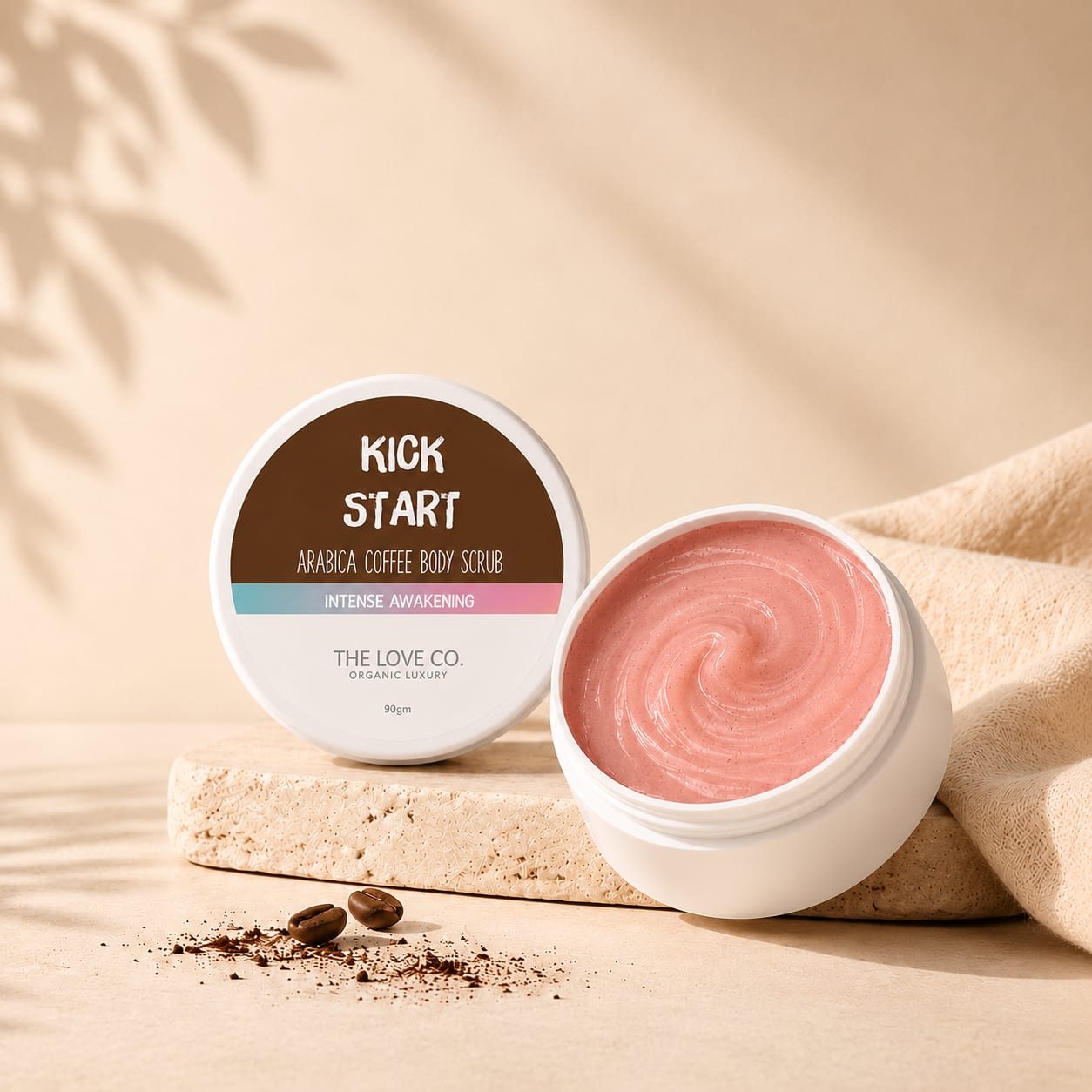
A body scrub uses abrasive particles — sugar, salt, walnut shell, coffee, polyethylene microbeads (now banned in many markets) — combined with friction from your hand or a loofah. As you rub, the particles physically dislodge dead cells.
The good: instant smoothness, satisfying scrub-feel, cheap, mood-boosting (the friction stimulates blood flow).
The bad: very hard to control intensity. Walnut shell, in particular, has jagged edges that create microscopic tears in skin — a documented cause of post-inflammatory pigmentation in Indian skin tones. Sensitive skin and broken-out skin can also worsen with scrubbing.
How an AHA body wash (chemical) works
An AHA body wash uses glycolic, lactic or mandelic acid at 5–10% to break down the "glue" between dead skin cells. No friction needed. The acid sits on skin during your shower, dissolves the bonds, and dead cells rinse away in the lather.
The good: even, controlled exfoliation across the entire body. No micro-tears. Penetrates more uniformly into uneven texture (KP bumps, ingrowns, dark patches). Easier on sensitive skin if dosed correctly.
The bad: results are gradual (3–6 weeks for visible change vs instant smoothness from a scrub). Can sting on freshly shaved skin. Requires SPF if you're using a high-strength formula.
Side-by-side comparison
| Body scrub (physical) | AHA body wash (chemical) | |
|---|---|---|
| Mechanism | Friction | Acid dissolves cell bonds |
| Speed of result | Instant | 3–6 weeks for visible change |
| Evenness | Depends on technique | Uniform across all skin |
| Risk for Indian skin | Micro-tears → PIH | Sun sensitivity if overused |
| Frequency | 1–2× per week max | 3–5× per week |
| Best for | Rough heels, elbows, occasional treat | Daily-ish body care, KP, dullness, dark patches |
| Bad fit for | Active acne, sensitive skin, post-shave | Compromised skin barrier, very dry skin |
When to choose which (or both)
For most people, an AHA body wash is the better everyday choice. It does more, with less risk, and across the whole body. But there's a place for a physical scrub once a week — particularly on heels, elbows and knees, where the skin is thicker and benefits from a proper buff.
If you're going to combine, here's the rule: never on the same day. AHA + scrub = compromised barrier, redness, possible pigmentation flare-up.
What about PHAs and "gentle scrubs"?
Polyhydroxy acids (gluconolactone, lactobionic acid) are the newest category — even gentler than AHAs because the molecule is too large to penetrate deeply. They're a good entry point for very sensitive skin or first-time chemical exfoliators. "Gentle scrubs" with rounded jojoba beads or rice powder are a safer physical option than walnut shell — but the AHA-still-wins logic applies.
Dr. Tanvi's take
"In Indian skin, I almost always recommend chemical exfoliation over physical. Our melanin-rich skin reacts to even mild trauma with pigmentation — and a vigorous walnut scrub is exactly the kind of trauma it doesn't need. A 5–7% AHA body wash, three times a week, achieves more in a month than weekly scrubbing achieves in a year. Save scrubs for heels and elbows; use acids everywhere else."
— Dr. Tanvi Sehgal, Consultant Dermatologist
Frequently asked questions
Is chemical exfoliation safe for sensitive skin?
Yes, when chosen correctly. Start with lactic or mandelic acid (gentler than glycolic), once a week, and build up. Avoid combining with retinoids on the body.
Can I use both AHA and a body scrub in the same week?
Yes, but on different days — and ideally 48 hours apart. AHA Monday, scrub Thursday is a typical safe split.
Which works better for keratosis pilaris (KP)?
AHA body wash, hands down. The little bumps of KP are caused by keratin plugs deep in the pore — chemical exfoliation reaches them; scrubbing only flattens the surface temporarily and often inflames KP further.
Will an AHA body wash make me more sensitive to the sun?
Slightly, yes. Use SPF on exposed areas (arms, chest, neck) when using AHA body wash regularly, especially in summer.
What about coffee scrubs — they're "natural"?
"Natural" doesn't mean "safe for skin." Coffee grounds have sharp edges; the same micro-tear risk applies. If you love the ritual, use them on heels only.
Where TLC fits in
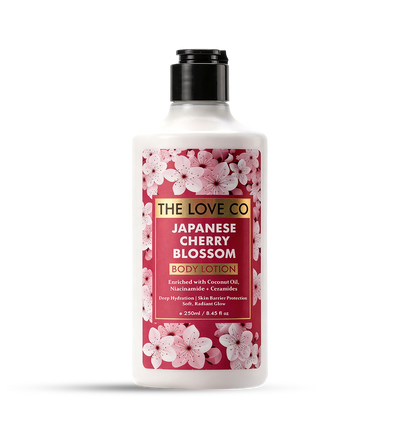
If you're choosing between, start with The Love Co's AHA body wash collection — chemical exfoliation calibrated for Indian skin and humidity. Reserve our body scrubs for weekly heel-and-elbow attention. Layer with a barrier-supporting body lotion and explore the full body care edit for a complete routine.
Smoother, brighter, no micro-tears. Shop the AHA collection.
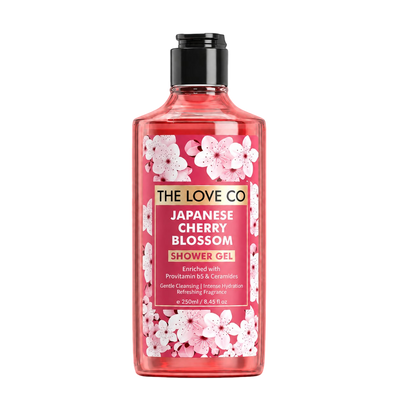
Japanese Cherry Blossom Shower Gel
Scent Trail Step 1 · soft floral body wash Start the Scent Trail here. A pH 5.5, SLS-free cleanser that protects your skin barrier while it washes —...
A ritual is the smallest love you give yourself, daily.
— Hemang Jain · 03 May 2026