You have been using a salicylic acid body wash for six weeks. Your skin barrier is fine, your hygiene is dialled in, you shower twice a day — and yet the small, uniform, slightly itchy bumps across your chest, shoulders, and upper back will not clear. You are doing everything right for body acne, and it is not working. There is a reason: what you have is probably not body acne. It is fungal acne, and the standard treatment does not always work because the cause is fundamentally different.
This is the honest guide to fungal acne — formally known as pityrosporum folliculitis or malassezia folliculitis — for Indian skin and Indian climate. Upfront: TLC does not currently sell a dedicated antifungal body wash. We will tell you what to look for, where the standard salicylic routine helps and where it does not, and when to see a dermatologist instead of buying another body wash.
What Fungal Acne Actually Is
Fungal acne is not acne. It is an overgrowth of Malassezia yeast — a fungus that lives on everyone's skin in small amounts — inside the hair follicle, causing inflammation. It looks deceptively similar to bacterial acne but behaves differently. The yeast feeds on skin lipids and thrives in warm, humid, occluded conditions, which is exactly why fungal acne is so common in Indian climate.
Critically: standard salicylic acid does not always treat fungal acne. Salicylic acid targets bacterial acne and pore congestion. Malassezia yeast needs antifungal treatment. This is the most important fact in this article. If you have been using a salicylic body wash without improvement for 6+ weeks, fungal acne is the leading suspect.
How to Tell Fungal vs Bacterial vs Hormonal Acne
| Feature | Fungal Acne | Bacterial Acne | Hormonal Acne |
|---|---|---|---|
| Cause | Malassezia yeast | C. acnes bacteria + clogged pores | Androgen-driven sebum |
| Appearance | Uniform, small (1-2mm), pus-filled bumps | Mixed sizes, blackheads, whiteheads, papules, cysts | Deep, painful papules and cysts |
| Itch | Yes, often | Rare | Rare |
| Common locations | Chest, shoulders, upper back, hairline | Face, chest, back, shoulders | Jawline, chin, lower face, sometimes chest |
| Comedones | No (no blackheads/whiteheads) | Yes | Sometimes |
| Responds to salicylic acid | Partially / often not | Yes | Partially |
| Responds to antifungals | Yes (ketoconazole, zinc pyrithione) | No | No |
| Worse in | Humidity, sweat, occlusion | Sebum overproduction, friction | Hormonal cycles, stress |
What to Look for in a Fungal Acne Body Wash
The active ingredient matters more than anything else here. Effective antifungal washes for malassezia folliculitis contain one of these:
- Ketoconazole 1-2% — most evidence-based, often available as a medicated shampoo (ketoconazole shampoo) used as a body wash.
- Zinc pyrithione — found in anti-dandruff shampoos. Used as a body wash, it reduces yeast load.
- Selenium sulphide 2.5% — prescription strength, dermatologist-recommended.
- Honokiol or piroctone olamine — newer antifungal actives in a handful of specialist body washes.
The standard protocol: lather on affected areas, leave on for 5-10 minutes, then rinse. Use 3-4 times a week for 4-6 weeks. Fungal acne does not always respond to once-daily quick lathering — contact time matters significantly more than for bacterial acne.
What TLC Can and Cannot Do for Fungal Acne
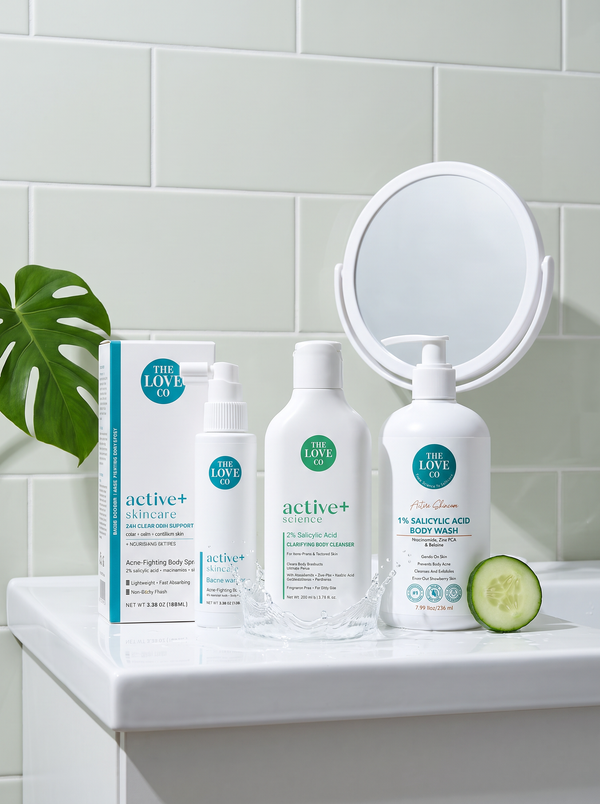
We are honest: our current exfoliating range is built around salicylic acid and AHAs for bacterial acne and surface texture. It will not be a primary treatment for confirmed fungal acne. However, our SLS-free, pH 5.5 body washes are valuable as a supportive daily cleanser alongside an antifungal wash, because SLS-free formulation protects the barrier while you are using a more aggressive medicated cleanser 3-4 times a week. For sensitive, reactive skin during fungal acne treatment, our sensitive skin collection is gentler.
"The biggest mistake I see in Indian fungal acne patients is buying their fifth salicylic body wash. Fungal acne is yeast, not bacteria. If a standard acne routine has not worked in six weeks and the bumps are uniform and itchy, you need an antifungal — and you often need a dermatologist to confirm and prescribe at the right strength. This is the case where over-the-counter is sometimes not enough."
— Dr. Tanvi Sehgal, MD, Dermatologist
Lifestyle Habits That Reduce Fungal Acne
- Shower within 30 minutes of sweating — yeast thrives on sweat-soaked skin.
- Change out of damp gym clothes immediately.
- Wash bedsheets every 5 days in summer and monsoon.
- Avoid heavy oils on the chest and back — malassezia feeds on certain oils, particularly oleic-acid-rich oils like coconut, olive, and avocado oil.
- Look for "fungal acne safe" or "malassezia safe" lotions — these avoid the fatty acids the yeast feeds on.
When to See a Dermatologist
If you suspect fungal acne, especially if it is widespread, persistent, or recurring, see a dermatologist. They can confirm with a simple in-office test and may prescribe oral antifungals (itraconazole or fluconazole) for stubborn cases. This is the category of body acne where standard products often do not work, and where professional guidance saves you months of frustration.
Frequently Asked Questions
Why does my acne come back every summer?
If the bumps are uniform, itchy, and concentrated on the chest, shoulders, and upper back, it is likely fungal acne. Malassezia thrives in heat and humidity and quietens in cooler seasons.
Can I use anti-dandruff shampoo as a body wash?
Yes — many dermatologists actually recommend this. Ketoconazole or zinc pyrithione anti-dandruff shampoos used as body washes (5-10 minutes contact time, 3-4x weekly) treat fungal acne effectively.
Will salicylic acid harm fungal acne?
It usually does not harm — it just often does not help, or helps only partially. Some patients see modest improvement because salicylic acid reduces follicular blockage, but the underlying yeast is not addressed.
Is fungal acne contagious?
No. Malassezia is a normal resident of human skin. The overgrowth is environmental and personal — not transmitted between people.
How long until fungal acne clears?
With a proper antifungal routine, visible improvement usually begins in 2-3 weeks. Full clearance takes 6-8 weeks. Recurrence is common, so maintenance use 1-2x weekly during high-humidity months helps.
For the daily-driver part of your routine. Browse our SLS-free, pH 5.5 body wash collection — gentle on the barrier while you treat fungal acne with a medicated wash 3-4x weekly. And if standard products are not working, please see a dermatologist.
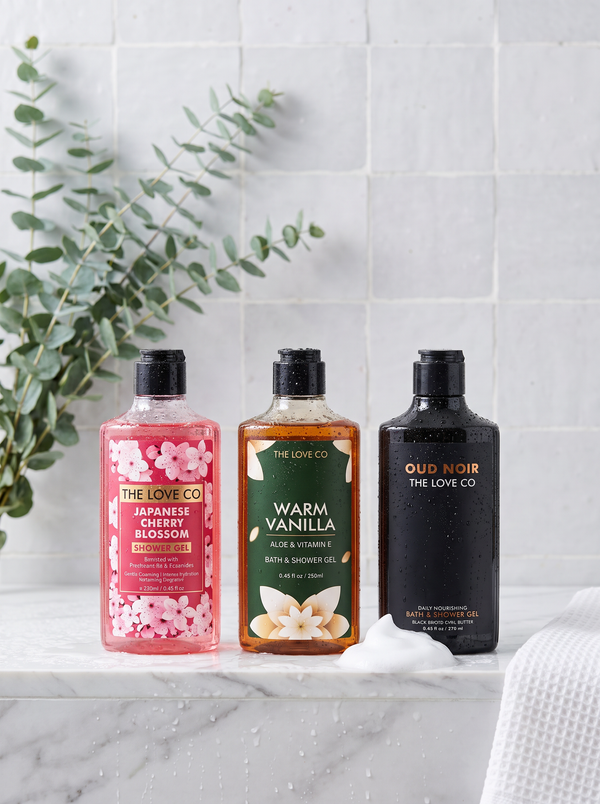
Japanese Cherry Blossom Shower Gel
Scent Trail Step 1 · soft floral body wash Start the Scent Trail here. A pH 5.5, SLS-free cleanser that protects your skin barrier while it washes —...
A ritual is the smallest love you give yourself, daily.
— Hemang Jain · 03 May 2026