


Body Acne in Pregnancy: What’s Safe to Use
Quick answer: Topical 2% salicylic acid on a limited body area is rated FDA category C — generally considered low-risk in pregnancy, but always requires your obstetrician’s explicit sign-off before use. The safer alternative if your OB says no is azelaic acid 10-20%. Strictly avoid oral isotretinoin, high-dose benzoyl peroxide, retinoids (tretinoin, adapalene), and hydroquinone for the full 9 months and through breastfeeding. Below: what’s safe, what’s not, and how to manage flare-ups across the trimesters.
This article is not medical advice. Every pregnancy is different. Always confirm any topical product with your obstetrician before applying. The information below is informational only.
Why does body acne flare in pregnancy?
Pregnancy hormones drive two simultaneous shifts:
- Androgen elevation in the first and second trimester. Sebum production increases — the same mechanism as teen acne, on a different timeline.
- Immune system modulation. The skin’s inflammatory response changes; existing acne can worsen unpredictably.
Most women see body acne flares in the first trimester (weeks 6-14), with some clearing in trimester 2 and a second flare possible in trimester 3 or postpartum.
What’s safe to use — and what’s not
| Active | Safety in pregnancy | Notes |
|---|---|---|
| Topical 2% salicylic acid (limited area) | 🟡 Likely safe, OB sign-off required | FDA category C; topical use on limited body area is generally considered low-risk |
| Azelaic acid 10-20% | 🟢 Safest mainstream option | OB still confirms; the go-to alternative |
| Niacinamide | 🟢 Safe | Calms inflammation; well-tolerated |
| Zinc PCA | 🟢 Safe | Sebum-regulating |
| Glycolic acid (low %) | 🟡 Generally safe topical | Confirm with OB |
| Benzoyl peroxide (low % topical) | 🟡 Limited use only | OB sign-off required; many derms avoid |
| Retinoids (tretinoin, adapalene) | 🚫 Strictly avoid | Linked to birth defects |
| Oral isotretinoin (Accutane) | 🚫 Strictly contraindicated | Causes severe birth defects |
| Hydroquinone | 🚫 Avoid | High systemic absorption |
| Kojic acid (body, high dose) | 🚫 Avoid | Insufficient safety data |
| Tetracycline / doxycycline (oral) | 🚫 Avoid | Affects fetal bone development |
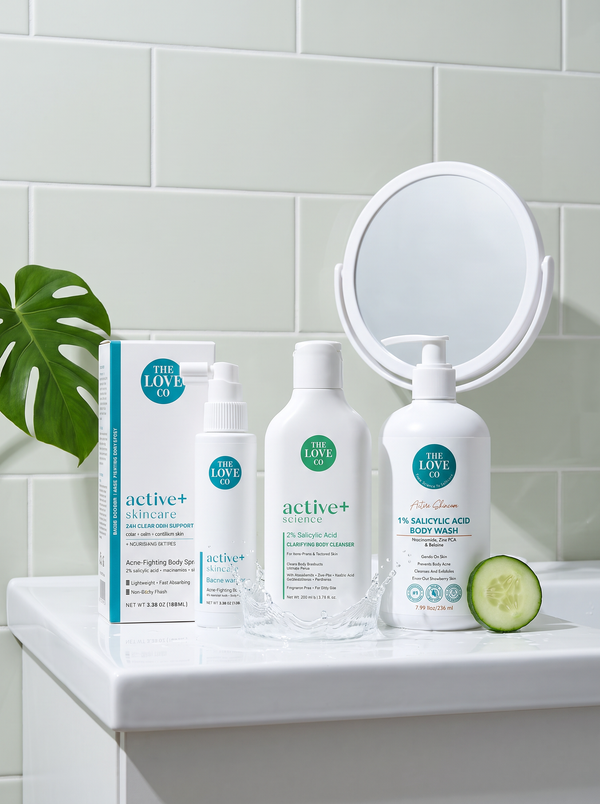
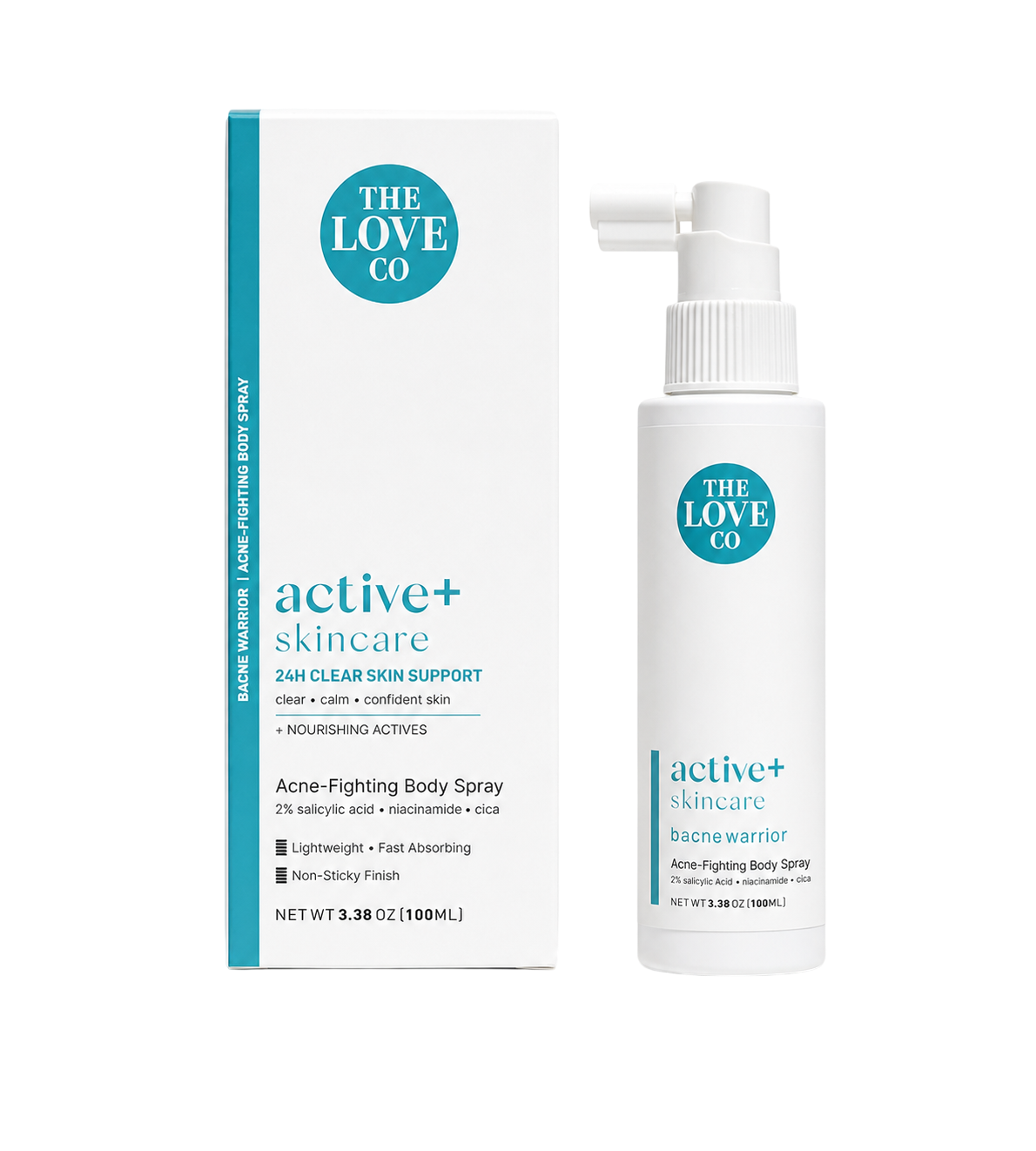
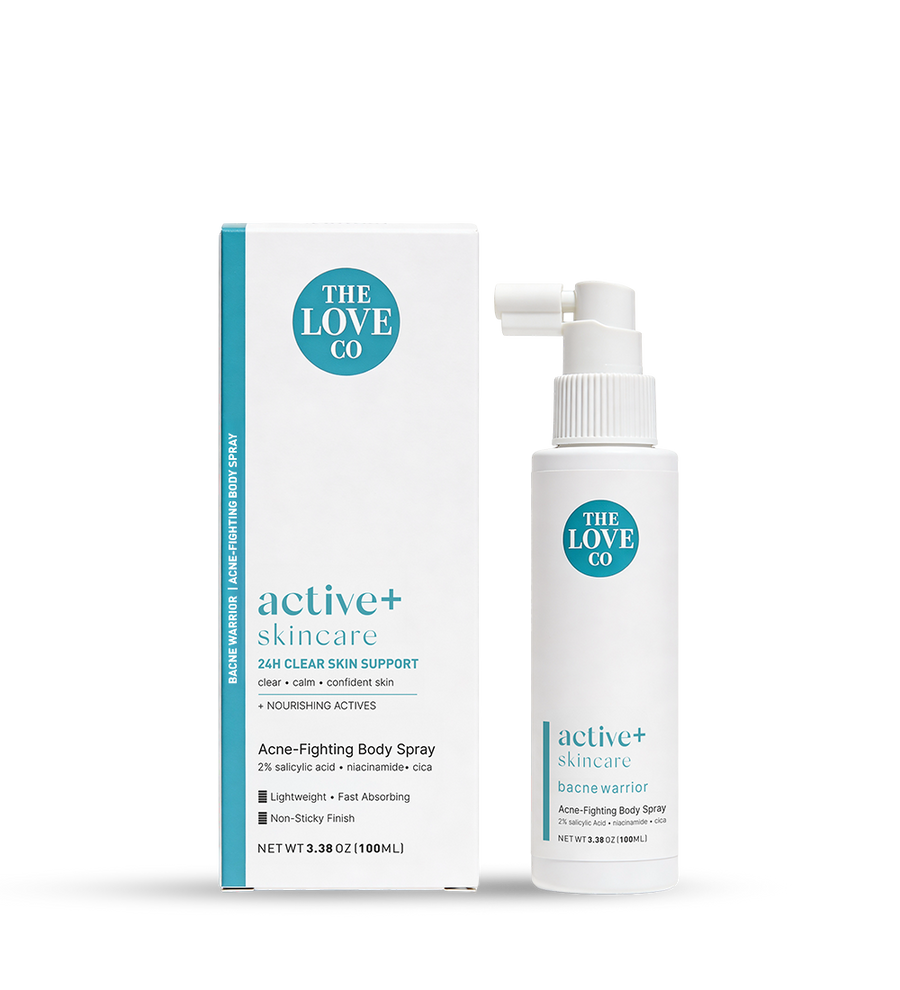
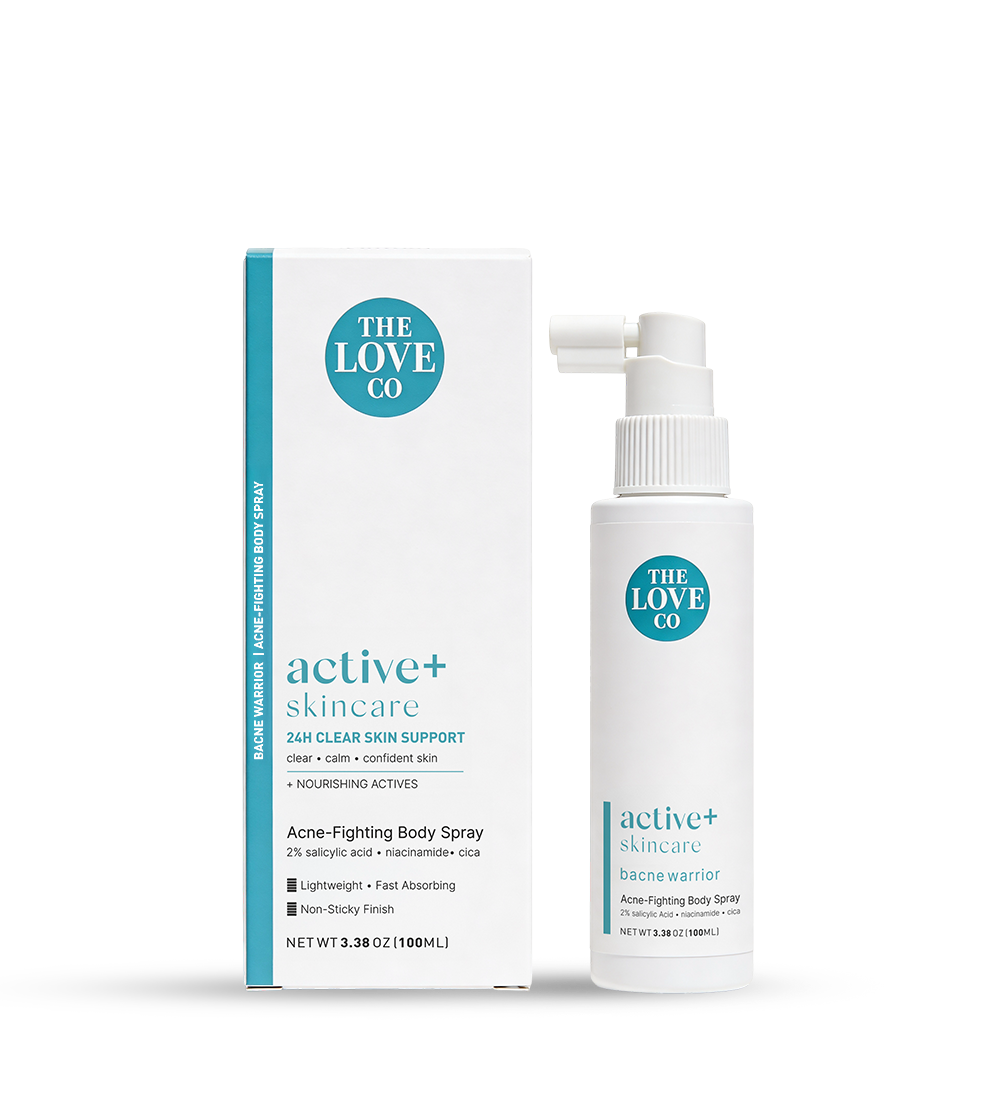
The Bacne Warrior by The Love Co — 2% salicylic acid + 4% niacinamide + zinc PCA + cica formulation falls into the category-C-topical zone — the salicylic concentration is the lower end of dermatologically used doses, and the supporting ingredients (niacinamide, zinc PCA, cica) are all considered pregnancy-safe. But — and this is non-negotiable — always confirm with your obstetrician before using anything during pregnancy.
The trimester-by-trimester approach
First trimester (weeks 1-13)
- Confirm with OB before introducing any new topical. Even if you used a product pre-pregnancy, confirm it’s okay to continue.
- If your OB approves: continue Bacne Warrior once daily (not twice) on the upper back and shoulders only. Avoid the belly entirely.
- If your OB says switch: move to azelaic acid 10-20% on the affected area.
- Focus on the behavioural protocol: shower within 30 minutes of sweating, cotton sleepwear, fresh pillowcases.
Second trimester (weeks 14-27)
- Most women see partial clearing in this window as hormones stabilise.
- Continue what’s working — don’t introduce new actives.
- Stop coconut oil and almond oil massages on the affected zones (they’re comedogenic on body skin).
Third trimester (weeks 28-40)
- A second flare can hit as hormones shift toward labour preparation.
- Continue the same protocol. Don’t add new actives this late.
- Cotton, loose maternity wear over the affected zones — synthetic stretch fabric stresses skin further at full belly size.
What to do for postpartum body acne
Postpartum is a hormonal cliff. Some women’s acne clears entirely; others flare badly in the first 6-12 weeks.
If breastfeeding: the same safety rules as pregnancy apply. Confirm any topical with your OB or paediatrician before use. Salicylic acid topical on limited body area is generally considered breastfeeding-safe, but the medical conservative position is to confirm before applying. Avoid the chest area entirely during nursing — even safe ingredients can transfer.
If not breastfeeding: you can resume full-strength protocols, including retinoids and oral options if your dermatologist prescribes them.
When to see a dermatologist (not just an OB)
Book a dermatologist (alongside your obstetrician) if you have:
- Cystic acne that’s painful and larger than 1 cm. There are pregnancy-safe interventions (intralesional steroid injection at very low dose) a derm can offer.
- Severe flares that aren’t improving on topical protocol.
- Visible scarring beginning to form. Early intervention prevents permanent marks.
- Distress or anxiety about appearance. Pregnancy is hard enough; skin distress is treatable. Don’t tough it out.
A good obstetrician + dermatologist collaboration is the gold standard for pregnancy acne. The OB clears the active; the derm calibrates the dose.
FAQ
Is 2% salicylic body spray actually safe in pregnancy? Topical salicylic acid at 2% on limited body area is FDA category C — meaning animal studies show possible adverse effects but human data is limited. Most dermatologists consider it low-risk for topical, leave-on use on the back, chest, or shoulders. Always confirm with your obstetrician. Oral salicylates (aspirin) at high dose are a different category and clearly avoided.
Can I use Bacne Warrior on my belly? No. Even with OB approval, avoid the belly entirely during pregnancy. Restrict to the upper back, shoulders, and chest if approved.
What about postpartum hyperpigmentation from old breakouts? Niacinamide (already in Bacne Warrior) is the safest active for postpartum pigment. Hydroquinone is avoided through breastfeeding. Azelaic acid is also a good option.
Will my body acne come back next pregnancy? Possibly. The pattern often repeats. Brief your obstetrician early — you’ll be ready faster the second time.
TLC signature line
“My wife — the dermatologist who co-designed this product — went through both her pregnancies wanting one safe-enough body topical she didn’t have to second-guess. Bacne Warrior was built with that bar in mind. But always — always — confirm with your own obstetrician first. Pair it with the body wash from your TLC ritual; keep the mist for the neck.”
— Hemang Jain, Founder, The Love Co.
→ With OB approval, start gently: Get Bacne Warrior → · ₹449 · ships in 24h.
See also: - The full back & body acne guide → - Body acne in teenagers: a parent’s guide → - Saree blouse acne: why it happens & how to stop it →
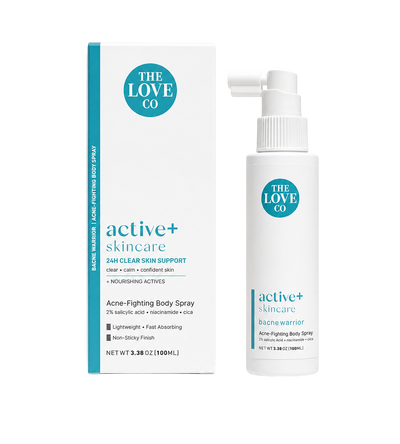
Bacne Spray – 2% Salicylic Acid Body Spray
A leave-on 2% salicylic acid body spray for back, chest, shoulder, and post-workout body acne. Designed for hard-to-reach zones, fast absorption, and daily use under clothes without a...
A ritual is the smallest love you give yourself, daily.
— Hemang Jain · 28 May 2026