By Hemang Jain · Reviewed by Dr. Tanvi Sehgal, MD · Last updated: 2026-05-02
What this means for you
If a scent disappears within 20 minutes of stepping out of the shower, the formula is short on heart and base notes — TLC washes are built to linger 2–4 hours on skin.
Most Indian women own both a body butter and a body lotion — and use them interchangeably. Lotion in summer, butter in winter, and a vague sense that the richer one is "better for dry skin." That intuition is half right. Body butter and body lotion are not different strengths of the same product. They are chemically distinct formats that do different things for your skin and, more importantly, for the way fragrance behaves on your body through the day.
Use both. Use them correctly. And understand why one of them is the format of choice if you care about how long your scent lasts.
What's actually different — the formulation chemistry
The biggest difference is water content. A body lotion is roughly 70 to 80 percent water, with the rest split between humectants (glycerin, sodium PCA), light emollients, a small amount of butter, and a preservative system. The texture is fluid because water dominates.
What this means for you
If a scent disappears within 20 minutes of stepping out of the shower, the formula is short on heart and base notes — TLC washes are built to linger 2–4 hours on skin.
A body butter is the opposite. It is largely anhydrous — no water, or very little — built around shea butter, cocoa butter, mango butter, and carrier oils, whipped to a soft peak. The texture is dense, aerated, scoopable. Body cream sits in between — water-based but heavier than lotion, lighter than butter.
What follows from chemistry is everything else: how each one feels, how long it sits on the skin, how quickly it absorbs, and how it behaves as a substrate for scent.
Body lotion — what it does, what it doesn't, when it wins
Body lotion delivers fast, light hydration. The high water content carries humectants into the upper skin layers quickly. It absorbs in 30 to 90 seconds, leaves no visible residue, and lets you get dressed without waiting. In a Mumbai July or a Chennai April, that is non-negotiable.
What this means for you
If a scent disappears within 20 minutes of stepping out of the shower, the formula is short on heart and base notes — TLC washes are built to linger 2–4 hours on skin.
What it doesn't do well: long occlusion. Once the water phase evaporates, the residual oils on the skin are minimal. Hydration is real but shallow, and on genuinely dry skin in dry climates, lotion alone is not enough. It also doesn't carry fragrance for long.
Body lotion wins when the brief is speed, lightness, and humidity — daytime use, summer, post-shower for normal skin, and any scenario where heaviness is the enemy.
Body butter — what it does, what it doesn't, when it wins
Body butter is an occlusive treatment. The high lipid content forms a soft film over the skin, slowing trans-epidermal water loss for hours. On dry, flaky, or stripped skin, it works at a depth no water-based formula reaches.
What it doesn't do well: absorb in a hurry. A good Indian-formulated body butter (whipped, not solid block — solid butters are unusable in our climate) takes two to four minutes to fully sink in. In high humidity, applied liberally all over, it can feel heavy.
Body butter wins on dry skin, in dry climates, on damp skin straight after a shower, on elbows, knees, heels and shins year-round, and as the base of a fragrance layering routine.
Body butter vs body lotion — the comparison table
| Attribute | Body lotion | Body butter |
|---|---|---|
| Water content | 70–80% | 0–5% |
| Texture | Fluid, pourable | Whipped, dense |
| Absorption time | 30–90 seconds | 2–4 minutes |
| Hydration depth | Surface, quick | Occlusive, prolonged |
| Fragrance retention | 2–3 hours | 4–6 hours, often longer |
| Best season | Summer, monsoon | Winter, dry climates |
| Best skin type | Normal, oily, combination | Dry, very dry, sensitive |
Fragrance retention — why body butter holds scent longer
This is the part most "body butter vs lotion" articles miss, and the part that matters most if you bought into a scented body care routine.
Fragrance molecules are largely lipid-soluble. That isn't marketing — it's basic perfumery science. The aromatic compounds that make up a fragrance accord (floral, woody, gourmand, musk) are non-polar organic molecules. They bind readily to fatty surfaces and resist binding to water. When a scented body lotion sits on your skin, the water phase evaporates within minutes, taking lighter top notes with it and leaving the fragrance with very little to cling to.
A body butter behaves differently. The shea, cocoa and mango butter base is a dense lattice of lipids. Fragrance molecules embed into that lattice and release slowly as your skin warms through the day. The same scent applied as a body butter projects two to three times longer than it does as a body lotion.
This is why, at TLC, body butter is the format we treat as the fragrance anchor. Our layering guide starts with body butter on damp skin and builds upward — body mist or perfume goes on top, not underneath.
Indian climate guide — when to use which
India is not one climate. The right product changes with the city and the month.
Mumbai, Chennai, Kolkata — humid all year. Body lotion as the everyday format. Body butter on elbows, knees, heels, and as a nighttime treatment. Don't apply butter all over in 80 percent humidity unless your skin is genuinely parched.
Delhi, Punjab, UP — sharp seasonal split. Lotion April through September. Body butter October through March, applied head to toe within three minutes of stepping out of the shower while skin is still damp.
Bangalore, Pune, Hyderabad — moderate, mild winters. Lotion daytime, butter at night, year-round. Cooler months shift toward butter; the rest of the year, lotion leads.
Monsoon, anywhere. Light lotion in the morning, butter on dry zones at night.
Layering both — for severely dry skin
"For patients with eczema, ichthyosis, or chronic xerosis, we recommend a two-step approach — a humectant-rich body lotion on damp skin first, followed by a body butter sealing layer within two minutes. The lotion delivers water into the stratum corneum; the butter locks it in. Neither does the full job alone." — Dr. Tanvi Sehgal, MD (Dermatology), TLC dermatology partner
This routine also happens to be the longest-lasting fragrance routine you can build, because you're stacking two layers of scent on a damp, lipid-rich base. Pair it with an in-shower moisturizer and an SLS-free body wash, and the entire routine works toward a single outcome: hydrated skin that holds scent.
Where TLC fits
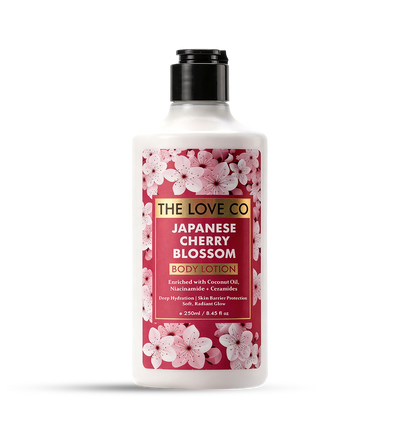
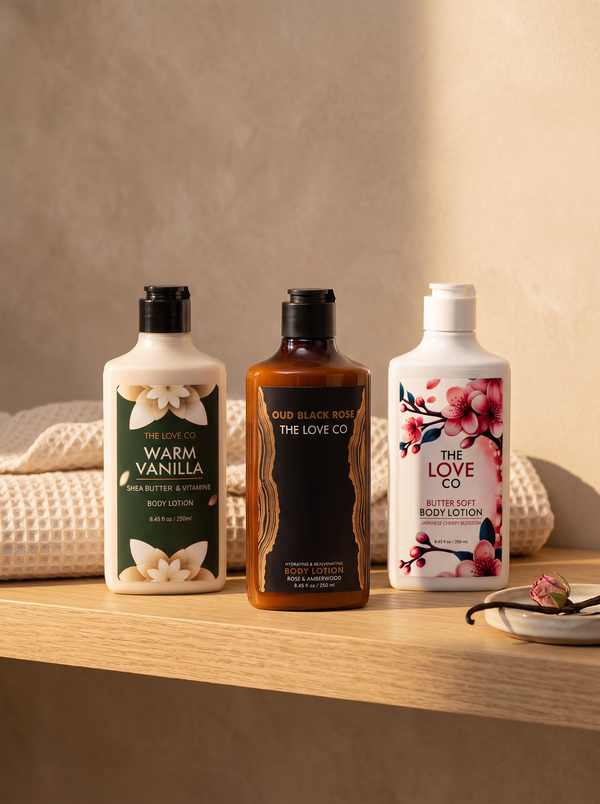
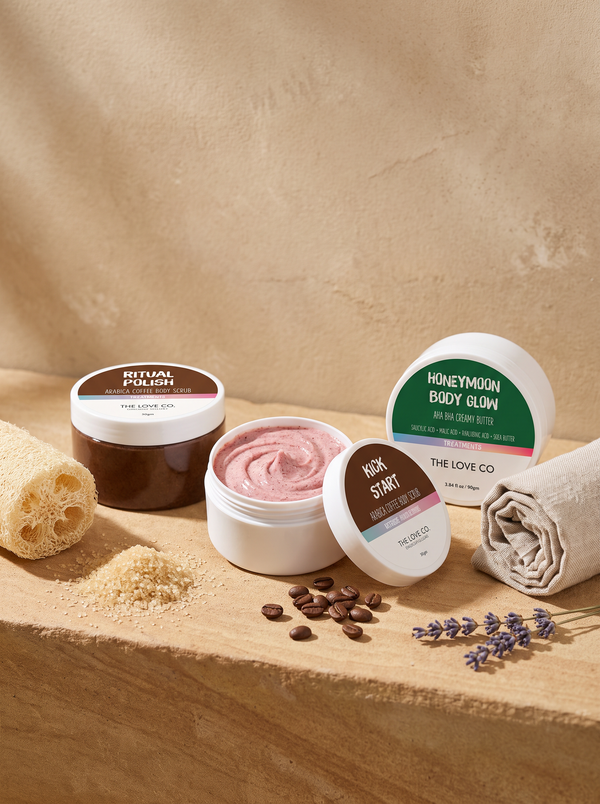
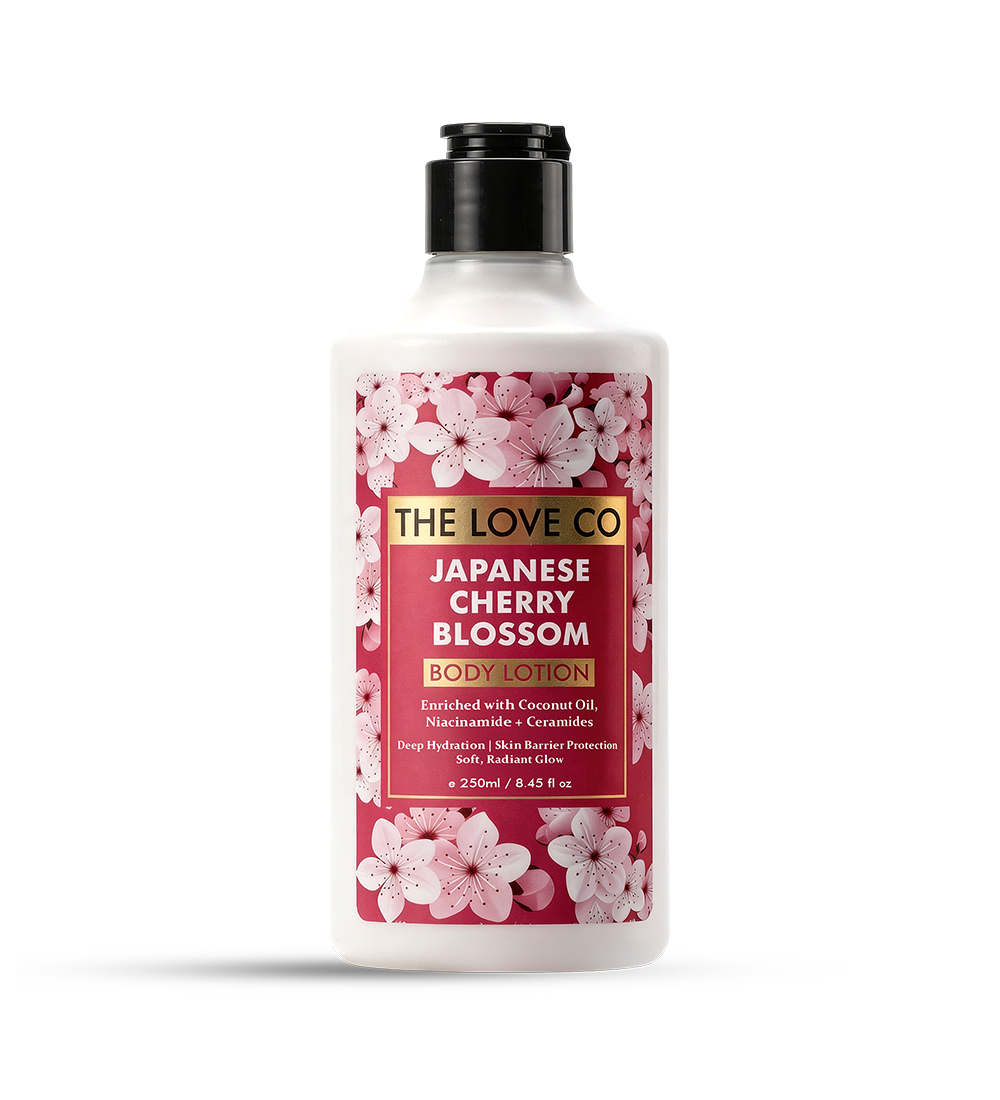
Our body lotion range is built for daily Indian use — light, fast-absorbing, fragrance-led. Our body butter range is whipped (never solid), built around shea, cocoa and mango butter, and engineered as the fragrance anchor. Same notes appear across both formats, so you can build a routine around a single scent.
Related concepts
- Fragrance pyramid — The top, heart, and base note structure that describes how a scent unfolds over time after application.
- IFRA — The International Fragrance Association, which sets safe-use concentration limits for individual fragrance ingredients.
- Sillage — The trail of scent left behind by a wearer — driven primarily by base note molecular weight and fixative levels.
- Accord — A balanced blend of three or more fragrance notes that read as a single olfactory impression.
- Macrocyclic musk — A modern, biodegradable musk class used as a base-note fixative in skin-safe rinse-off formulations.
FAQ
Is body butter better than body lotion for dry skin in India?
For genuinely dry skin, yes — particularly in winter or dry climates. Body butter's lipid-rich base seals in moisture more effectively than a water-based lotion. For normal skin in humid weather, lotion is the better daily pick.
Can I use body butter every day in Indian summer?
Use it on dry zones (elbows, knees, heels, shins) rather than head to toe. Full-body butter in 30+ degrees and high humidity feels heavy. Switch to lotion for daytime, keep butter for the night routine.
Does body butter actually hold fragrance longer than body lotion?
Yes — typically two to three times longer. Fragrance molecules are lipid-soluble and bind to the oil-rich base of body butter, releasing slowly through the day.
What is the difference between body butter and body cream?
Body cream is water-based but heavier than lotion. Body butter is largely anhydrous, built on shea, cocoa and mango butters. Cream is faster absorbing; butter is more occlusive.
Which is better for glowing skin — body butter or lotion?
Body butter for the visible softness on dry skin. Lotion for everyday plumping hydration. Many people use lotion daytime and butter at night to get both effects.
The TLC pick
If you came here trying to choose one, our recommendation is to own both — and lead with body butter when the scent matters. Explore the body butter range, scoop a generous amount onto damp skin within three minutes of your shower, and build the rest of your fragrance from there.
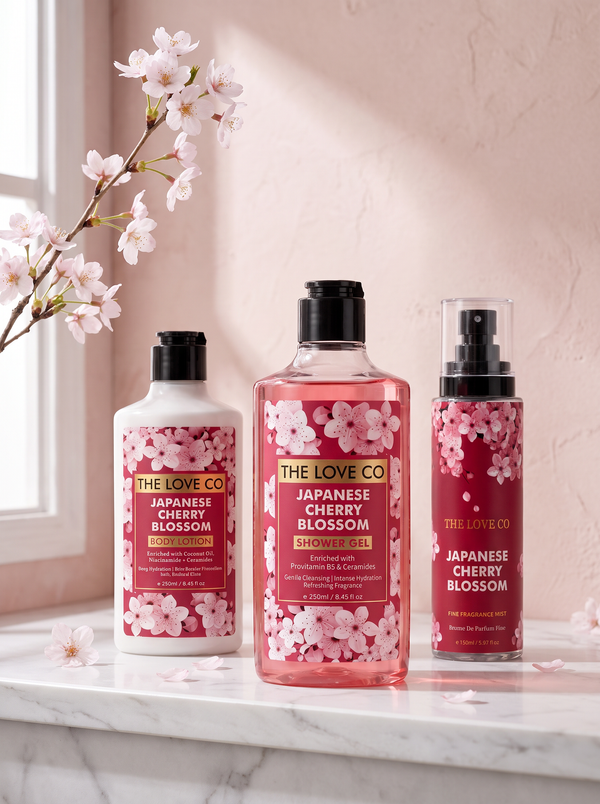
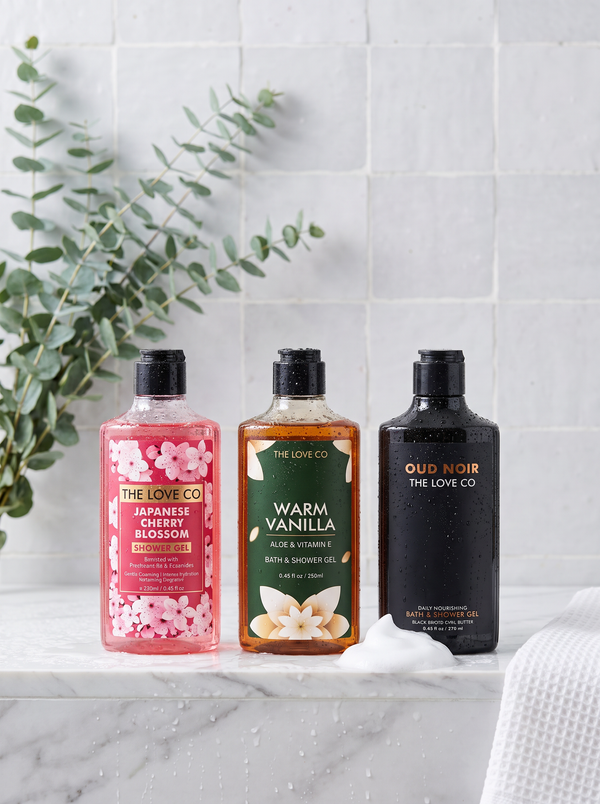
Japanese Cherry Blossom Shower Gel
Scent Trail Step 1 · soft floral body wash Start the Scent Trail here. A pH 5.5, SLS-free cleanser that protects your skin barrier while it washes —...
A ritual is the smallest love you give yourself, daily.
— Hemang Jain · 01 May 2026