By The Love Co · Last updated: 2026-08-26
It starts with a brief, not a formula
Nobody begins by listing ingredients. A fragrance brief is a written description of an intended experience, and the good ones read more like a scene than a specification.
A brief names the feeling first — who is wearing this, at what hour, in what weather, and what should the person standing next to them think. Then the constraints: the format, the price the product has to land at, the climate it has to survive, and any materials that are off the table.
Climate is the constraint that changes everything in India. A composition designed for European wear can be built around delicate top notes that will simply not survive 38°C and 75% humidity. So the brief has to say so, in those words, or the perfumer will solve a different problem beautifully.
The perfumer answers in submissions
A perfumer works at a fragrance house, with access to thousands of raw materials — naturals like sandalwood absolute and rose, and synthetics that make certain effects possible at all.
Against one brief, a perfumer typically returns three to six submissions, each a different interpretation. They arrive as numbered vials with no names, and they are assessed blind, on skin, over hours — never from a card and never in one sitting, because a fragrance you meet only in its first ten minutes is a fragrance you have not met.
Most submissions are rejected. The feedback is where the work happens: too sweet at hour two, the sandalwood disappears, the opening is beautiful but nothing survives it. The perfumer revises, and a fragrance usually goes through several rounds before anyone commits.

From concentrate to bottle
The chosen submission is a concentrate — the pure fragrance oil. Turning it into a body mist is a separate discipline.
| Step | What happens | Why it matters |
|---|---|---|
| Dilution | The concentrate is dissolved into the denatured alcohol carrier at body-mist strength | Sets the concentration — and therefore the projection and the price |
| Adjuvants | Humectants (aloe, propylene glycol) and UV filters are added | Stops the alcohol drying skin; stops light degrading the juice |
| Maceration | The batch rests, sealed and cool, for weeks | Materials marry. Skipping this is why some fragrances smell sharp on launch |
| Chilling and filtration | The batch is chilled, then filtered clear | Removes anything that would cloud the liquid at low temperatures |
| Stability testing | Heat, cold and light cycles over weeks | Predicts shelf life and confirms the scent and colour hold |
| Filling | Bottled, sprayers fitted, batch-coded | The batch code is what makes a recall or a complaint traceable |
Why maceration is the step that gets skipped
Maceration is resting. The finished, diluted batch is held sealed, cool and dark, and left alone.
During that time the materials in the composition interact and settle into each other. A freshly diluted fragrance often smells noticeably alcoholic and slightly disjointed — you can pick out individual materials that should be reading as a single accord. After maceration the same batch reads smoother, rounder, more integrated.
It gets skipped because it is pure cost with no visible output. Weeks of finished inventory sitting in a tank, not being sold. A brand under pressure to ship will fill early, and the customer receives a fragrance that has not finished becoming itself.
You can sometimes tell. A fragrance that smells sharp and thin on the first spray but noticeably better from the same bottle three months later was probably filled young.
What stability testing is actually for
Stability testing exposes the finished product to conditions worse than it should ever meet, on purpose.
Batches are cycled through elevated heat, freezing, and light exposure over a period of weeks, and assessed at intervals for changes in scent, colour, clarity and the performance of the packaging itself. The point is to compress years of shelf life into a testable window.
For a product sold across India, this is not a formality. A bottle may sit in a warehouse in Rajasthan in June, travel in an unrefrigerated vehicle, and live in a bathroom in Kerala. If the juice is going to discolour or the top notes are going to turn, it is far better to discover that in a test chamber than in a customer's hands.
This is also the origin of those two UV filters on the ingredient list. They are a stability answer, written into the formula.
Quick questions
How long does it take to make a fragrance?
Built properly, the better part of a year. The brief and perfumer submissions take months of iteration, maceration takes weeks, and stability testing runs for weeks more before filling.
What is maceration in perfumery?
Maceration is resting a finished, diluted fragrance batch sealed in cool darkness for weeks so the materials integrate. It is why a properly rested fragrance smells rounder and less alcoholic than one filled immediately.
Who actually creates a fragrance?
A perfumer working at a fragrance house, responding to a written brief from the brand. They typically submit three to six different interpretations, which are assessed blind on skin over hours.
Why do some fragrances smell harsh at first?
Often because the batch was filled before it had macerated. The materials have not yet settled into each other, so individual components read separately instead of as a single accord.
What is stability testing?
Cycling the finished product through heat, cold and light exposure over weeks to predict shelf life and confirm the scent, colour and packaging hold. It is especially important for products sold across Indian climate extremes.
Are natural materials better than synthetics?
Neither is inherently better. Naturals bring complexity and variability; synthetics bring consistency, and make some effects possible at all. Almost every fragrance you have worn uses both.
The TLC Pick
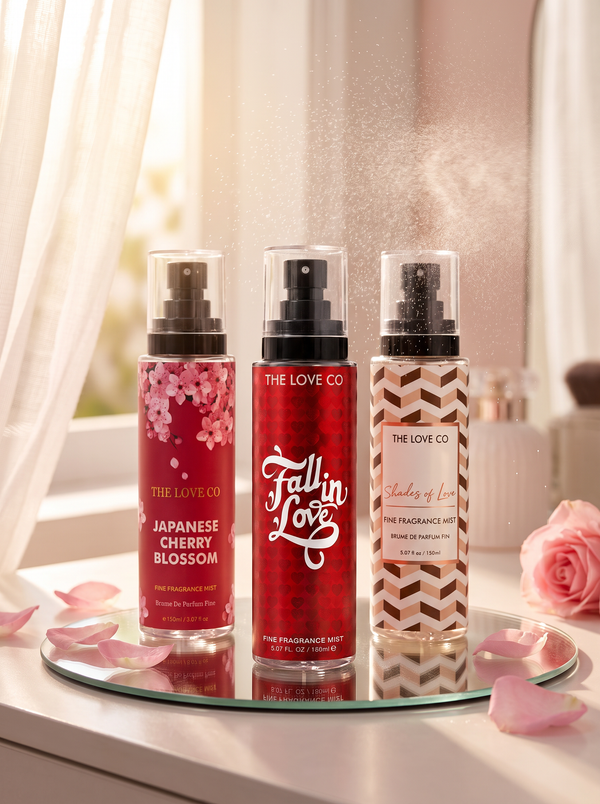
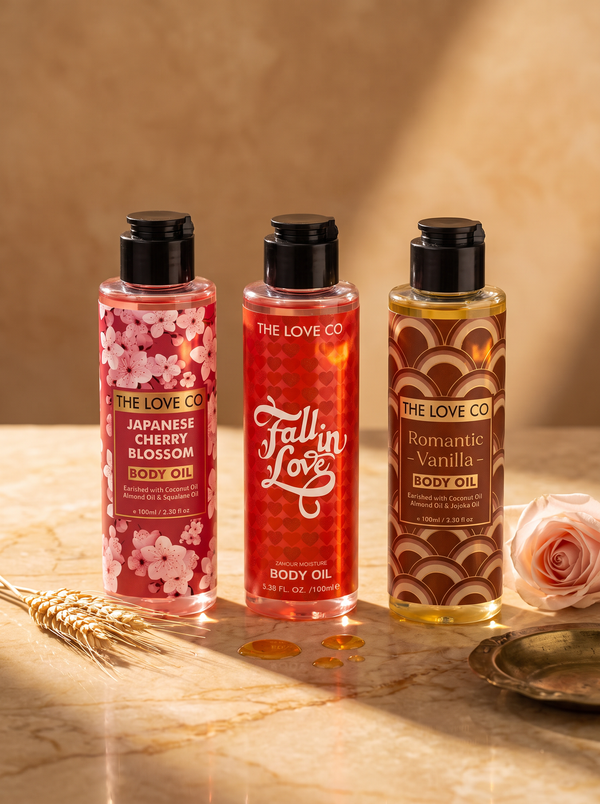
The most complete example of this process in the range is Fall in Love Body Mist — saffron and jasmine over amberwood and cedar, closing on fir resin and oakmoss. Three distinct acts, with two traditional fixative materials doing the structural work at the bottom.
Read where the raw materials come from in the A–Z of ingredients and notes, or browse the body mist collection.
The perfumer sent the sixth submission with one line in the email: this one is her, isn't it.
Keep reading
- What's Actually In a Body Mist
- India's Fragrance Heritage
- Fragrance Concentration Explained
- Perfumery Glossary: 60 Terms Decoded
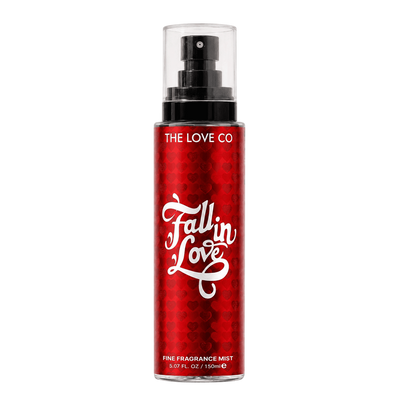
Fall in Love Body Mist
Fall in Love body mist · Spritz, linger The mist for the evening someone asks what you're wearing. Warm saffron, soft jasmine, a woody-amber dry-down. A romantic scent...
A ritual is the smallest love you give yourself, daily.
— Sweety Jarota · 26 Aug 2026