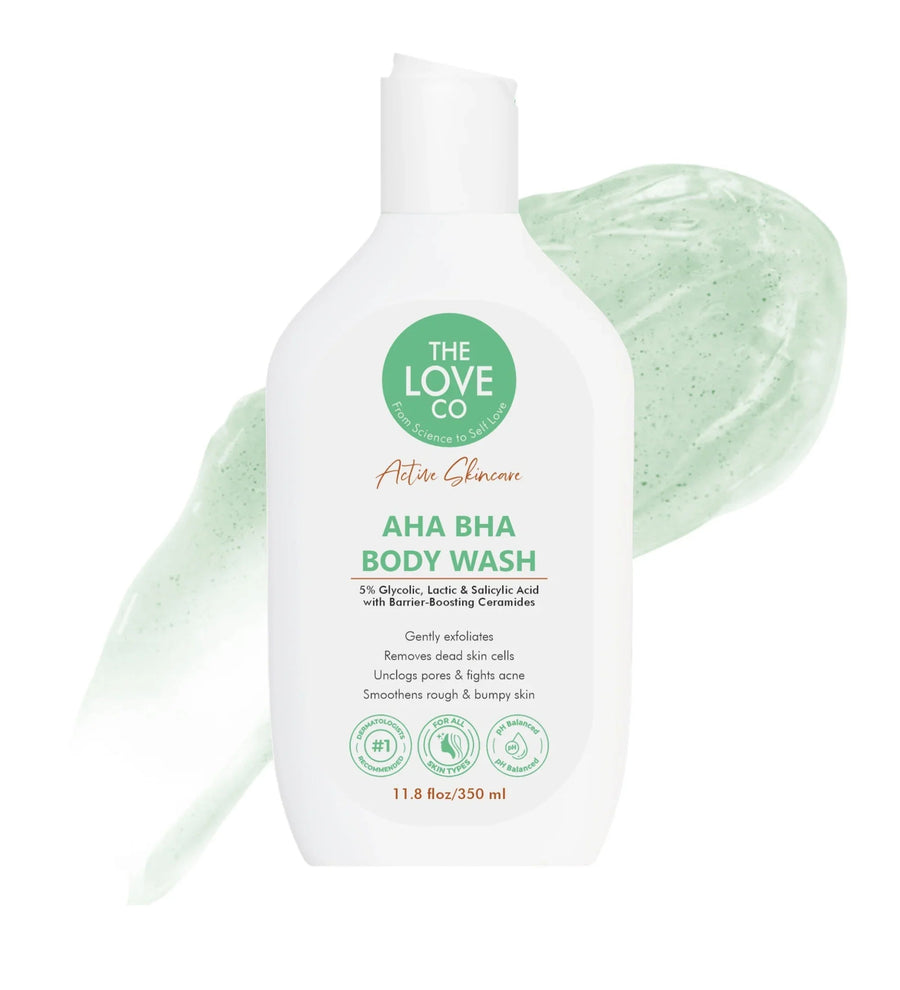

There is a specific kind of soft you only notice by accident. You reach across to switch off a lamp and your forearm grazes the sheet, and instead of the usual faint catch, there is nothing but smooth. That softness is not magic. On the body, it is very often the work of two quiet acids — glycolic and lactic — doing the slow, patient job of resurfacing.
Meet the two AHAs
Both glycolic and lactic acid are alpha hydroxy acids: water-loving exfoliants that dissolve the glue holding dull, dead cells onto the surface of your skin. But they are not interchangeable, and their differences are the reason they work so beautifully as a pair.
- Glycolic acid is the smallest AHA. Small means it penetrates fast and works hard, making it the stronger resurfacer of the two — brilliant on rough, dull, congested texture.
- Lactic acid is a larger molecule, so it works a touch more gently and brings a humectant quality — it helps the skin hold water even as it exfoliates.
One pushes deeper; one cushions. That balance is the whole point.
Why pair them instead of picking one
Use glycolic alone at strength and you get serious smoothing, but it can feel sharp on body skin that is not used to it. Use lactic alone and it is gentle but slower on stubborn build-up. Together, glycolic does the heavy resurfacing while lactic softens the experience and supports the skin barrier. You get the result of a strong acid with a little more grace in how it gets there.
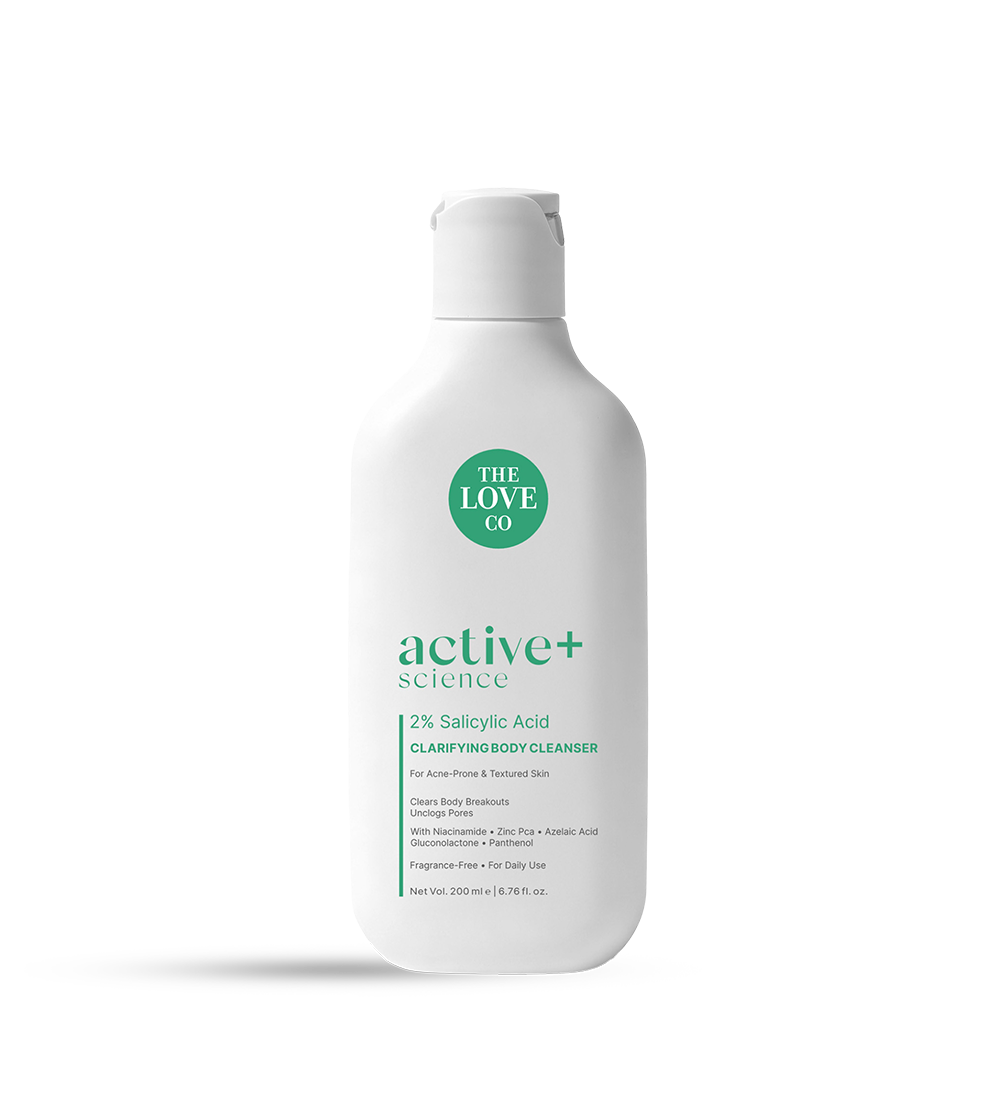
That is the thinking behind the 5% AHA complex in the 5% AHA + 1% BHA Body Cleanser — a glycolic and lactic blend tuned for the thicker skin of arms, thighs, back and chest. And because it also carries 1% salicylic acid (a BHA), it reaches into the pore as well as across the surface, which is why it handles rough texture and congestion in the same wash.
What the smoothing duo is best for
- Rough, dull, uneven texture on arms and thighs.
- That dry, slightly grey look skin gets in dry-season or over-AC weather.
- Stubborn KP and strawberry skin, where surface smoothing is half the battle.
- Skin that has plateaued on scrubs and gentle washes.
The Indian-skin reality check
Glycolic is effective precisely because it is potent — and potent acids ask for respect, especially on melanin-rich skin that can mark darker after irritation. A sting you push through today can become a dark patch that lingers for months. Lactic's gentler, hydrating nature softens that risk inside a blend, but it does not erase it. The rule stays the same: start slow, watch how your skin answers, and never chase speed.
How to use glycolic and lactic acid on the body
- Patch-test before committing to full-body use.
- Massage onto damp skin, leave about 60 seconds, then rinse — a cleanser keeps contact time short and controlled.
- Use 3 to 4 times a week, not daily, especially while your skin is adjusting.
- Never apply right after shaving.
- Moisturise after, and wear SPF every day on exposed skin — AHAs leave fresh skin more sun-sensitive.
- Ease off the frequency if you see stinging, dryness, peeling or tightness.
Give it two to four weeks of consistent use before deciding how it is working. The duo rewards rhythm, not force.
Seal in what the acids reveal
Once glycolic and lactic have done the resurfacing, your skin is primed to drink. On non-irritated skin, a 10% Urea Body Lotion locks in moisture and keeps rough skin soft between washes. And a Daily Dose SPF 50 Body Lotion guards the newly smooth skin from the sun — non-negotiable when you are exfoliating regularly. The 5% AHA + 1% BHA Body Cleanser resurfaces; these two protect and prolong.
Quick FAQ
Is glycolic too strong for the body? On its own at high strength it can be harsh, but blended with lactic and dosed sensibly in a rinse-off cleanser, it is well suited to thicker body skin.
Which is better, glycolic or lactic? Neither — they do different jobs. Glycolic resurfaces harder, lactic smooths and hydrates. The pairing beats either alone.
Can sensitive skin handle this duo? Possibly, but start with a patch test and lower frequency, and build up only if your skin stays calm.
Stay with it, and one ordinary evening your arm will brush against something soft and you will realise the soft is you — the quiet, earned smoothness of skin that finally got what it needed.
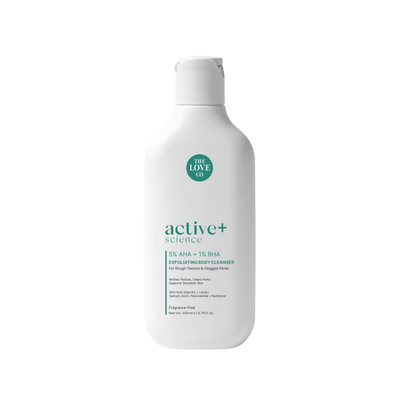
5% AHA + 1% BHA Body Wash
The strongest exfoliating cleanser in the active range. 5% AHA resurfaces the dead skin layer. 1% BHA clears blocked pores on your body. Built for stubborn KP, strawberry...
A ritual is the smallest love you give yourself, daily.
— Anaya Rao · 06 Jun 2026