The fragrance of India and the fragrance culture of the Middle East are not separate traditions that happen to like similar things.
They are the same tradition, evolved from the same roots, separated by centuries of trade and politics and the modern nation-state borders that obscure older maps.
The Spice Route Fragrance History
For over 2,000 years, the primary trade route between India and Arabia carried three categories of goods: spices, textiles, and fragrance.
Oud (agarwood, Aquilaria) grew in the forests of Assam and Southeast Asia and reached the Arab world via Indian traders. Sandalwood from Karnataka reached Oman and Yemen as one of the most prized commodities of the ancient trade. Indian rose (via the Persian rose, also India-adjacent in origin) reached the Gulf through the same routes.
The Arab perfumery tradition — centred in oud, rose, sandalwood, amber, musk — was built substantially on Indian raw materials. The Al-Kindi perfumery manuals from 9th century Baghdad describe distillation techniques that trace to Indian attar practice. The oud incense burned in Emirati and Saudi homes today traces to the same Assamese forests that supplied Arab traders 1,200 years ago.
Indian fragrance didn't enter the Middle East. It helped create the Middle Eastern fragrance tradition.
The Contemporary Gulf Market
Today, the Gulf Cooperation Council countries (UAE, Saudi Arabia, Kuwait, Qatar, Oman, Bahrain) represent one of the highest per-capita fragrance spending markets in the world.
UAE fragrance market size: ~$600M annually. Saudi Arabia: the largest fragrance market in the Middle East. Per capita fragrance spend in Gulf countries: 5–10x the global average.
The fragrance preference is Oriental — oud, rose, sandalwood, musk, amber. These are the same ingredients that define Indian fragrance heritage.
This is not coincidence. It's the 2,000-year trade connection expressing itself in consumer behaviour.
Why Indian Body Care for the Middle East
The Indian brands that have successfully entered the Middle East have done so on two dimensions: price (affordable luxury versus European premium) and ingredient authenticity (genuinely Indian, not just "inspired by").
For fragrance-led body care specifically:
The ingredient alignment is exact: Oud + rose + sandalwood = Oriental fragrance. The Love Co's Kannauj rose + Mysore sandalwood + Tamil Nadu vetiver maps directly onto the scent family that Gulf consumers spend the most on.
The heat performance advantage: Indian fragrance ingredients (heavy base notes, oil-stable, skin-personalised) are specifically well-suited to Gulf climate — high heat, air-conditioned interiors, low humidity. Natural aromatic compounds that perform in Indian summer perform equally in Dubai.
The halal-compatible format: Alcohol-free body oil using sandalwood, rose, and vetiver is inherently compatible with halal personal care requirements. The traditional attar format — which The Love Co's body oil format draws from — was developed in Islamic perfumery culture specifically because it is alcohol-free.
The price positioning: A premium Indian fragrance-led body care ritual at ₹2,500–4,000 (AED 120–200) positions at accessible luxury in the Gulf market — below European luxury brands, above mass Indian imports.
India's First International Fragrance Play
For most Indian body care brands, international expansion means the UK or US. Large Indian diaspora. Familiar market. Safe.
The Love Co is going to the Middle East first.
Not because the diaspora isn't valuable, but because the ingredient story is uniquely positioned there. Kannauj rose, Mysore sandalwood, and Tamil Nadu vetiver are Indian ingredients with a 2,000-year cultural history in the same Gulf markets The Love Co is targeting.
India's fragrance story doesn't need to be explained in the Middle East. It just needs to be properly branded for the first time.
The Love Co is India's first fragrance-led body care brand, with the Middle East as its first international market.
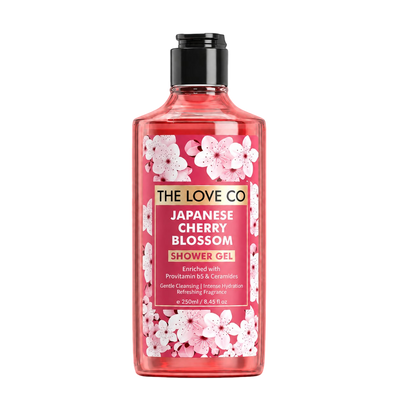
Japanese Cherry Blossom Body Wash
Scent Trail Step 1 · soft floral body wash Start the Scent Trail here. A pH 5.5, SLS-free cleanser that protects your skin barrier while it washes —...
A ritual is the smallest love you give yourself, daily.
— Hemang Jain · 19 May 2026