No two people smell identical wearing the same fragrance. The bottle is fixed; the skin is not.
Your skin transforms every fragrance it encounters. The result — fragrance plus your specific chemistry — is something that cannot be replicated on anyone else. This is not marketing language. It is biochemistry.
The Four Variables
1. Skin pH: Normal skin pH ranges from 4.5 to 7.5. Even within this range, individual variation is significant. Acidic skin accelerates the evaporation of lighter fragrance molecules and makes base notes dominant more quickly. More alkaline skin holds top notes longer.
The practical implication: an acidic-skinned person wearing a rose-sandalwood fragrance will quickly lose the rose top note and arrive at the sandalwood base within an hour. The same fragrance on alkaline skin holds its rose heart for three to four hours before deepening.
2. Microbiome: Your skin hosts hundreds of bacterial species. These bacteria metabolise fragrance compounds — breaking some down, transforming others, creating secondary compounds that weren't in the original formula. The specific bacterial population varies completely between individuals, driven by genetics, diet, environment, and hygiene practice.
This bacterial transformation is part of why a fragrance that smells right on someone you love can smell slightly wrong on you — your microbiomes are producing different outputs from the same input. It is also why fragrance develops uniquely on each person.
3. Body temperature: Warmer skin volatilises fragrance faster. High-temperature individuals — those who run warm through exercise or metabolism — find fragrances evolve and fade faster than on cooler skin. They also project more — the heat carries fragrance further.
In India's climate, where ambient temperatures are higher and physical activity produces more heat, natural base notes like sandalwood and vetiver outperform citrus top notes because they're thermally stable. They don't evaporate at 38°C.
4. Skin hydration and lipid content: Well-hydrated, slightly oily skin holds fragrance better — the oils provide a carrier medium that slows evaporation. Dry skin absorbs fragrance quickly and provides less hold. This is why applying body oil before lotion before fragrance dramatically improves longevity — you're providing the lipid carrier the fragrance needs.
Reading Your Skin Chemistry
If fragrance disappears on you quickly: Your skin is likely dry or acidic. Apply body oil first. Focus on base-note heavy fragrances (sandalwood, vetiver) which have inherently low volatility.
If fragrance goes "soapy" on you: Your skin pH is shifting certain aroma compounds. Try fragrances without heavy musks, which are prone to this transformation on specific skin types.
If fragrance goes sharp or medicinal on you: Your skin microbiome is metabolising certain fragrance components differently. Shift away from compounds containing high eugenol (spicy) or isovaleric acid (cheesy) — and toward sandalwood and rose, which metabolise more predictably across skin types.
If fragrance smells better on you after an hour than immediately: Congratulations — you have warm, moderately oily skin that develops fragrance beautifully. The top notes aren't your layer; the dry-down is.
Why Natural Ingredients Respond Better
Synthetic fragrance compounds are molecularly simplified — designed to smell consistent across different skin types by reducing the number of variables. This consistency is their limitation: they don't develop on skin, they just gradually fade.
Natural ingredients like Kannauj rose and Mysore sandalwood contain hundreds of compounds that interact differently with different skin chemistries. The fragrance develops — it responds to you, and becomes partly yours.
The result is a fragrance identity, not just a fragrance: the synthesis of the formula and the person wearing it.
The Love Co is India's first fragrance-led body care brand — built on natural ingredients that become uniquely yours.
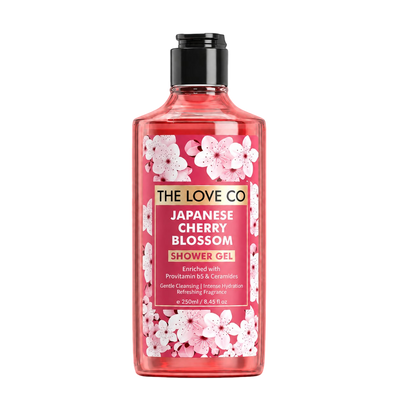
Japanese Cherry Blossom Body Wash
Scent Trail Step 1 · soft floral body wash Start the Scent Trail here. A pH 5.5, SLS-free cleanser that protects your skin barrier while it washes —...
A ritual is the smallest love you give yourself, daily.
— Hemang Jain · 20 May 2026