


You walk into a room. Someone is wearing a fragrance that stops you cold — not because it's strong, but because it belongs to someone else. Someone not present. Someone from ten years ago, or someone who is no longer alive.
The memory arrives complete: their face, their voice, the specific light of the room where you last saw them.
This is person-specific scent memory. It is one of the most visceral experiences the human nervous system produces. And it is completely explainable.
How Person-Scent Associations Form
Every person has a unique scent signature — a combination of skin chemistry, microbiome, pheromones, diet, and whatever fragrance products they use. Even without any added fragrance, you smell like yourself in a way that is specific enough for dogs to identify you among thousands of people.
When you spend time with someone — particularly in emotionally significant conditions (intimacy, stress, celebration, grief) — your olfactory system encodes their scent alongside the emotional context. The amygdala tags it with emotional weight. The hippocampus stores it with contextual detail.
The association forms gradually and then becomes permanent. The smell becomes the person, neurologically.
Why the Memory Arrives Before Recognition
The remarkable quality of these memories is their involuntary, pre-cognitive arrival. You don't decide to remember the person. The smell produces the memory before conscious thought catches up.
This is the same mechanism as the Proust phenomenon — direct olfactory bulb access to the amygdala and hippocampus, bypassing thalamic relay. The emotional memory of the person activates before you've consciously identified the fragrance.
You feel them before you name the smell.
Why These Memories Are So Durable
Person-specific scent memories are among the most resistant to fading in human memory. Several factors contribute:
Emotional encoding intensity: If the person was emotionally significant — parent, partner, close friend — the memories encoded around their scent carry high amygdala activation. High-emotion memories encode more deeply and retrieve more reliably.
Repetition: People you lived with or spent significant time with exposed you to their scent repeatedly across thousands of interactions. Repetition consolidates olfactory memory.
Uniqueness of the stimulus: If the person wore a specific fragrance that you don't frequently encounter elsewhere, the memory trace has low interference from similar stimuli. It remains sharp because it is rarely activated by anything other than the original smell.
The Fragrance You Leave Behind
The inverse of this is worth considering: you are being encoded into other people's memories right now.
The people who live with you, work alongside you, hug you, sit near you — they are building a person-scent association for your smell. If your smell is consistent — the same body care system worn daily, the same base-note ingredients released slowly from skin — the encoding will be precise and permanent.
If your fragrance is inconsistent — different perfumes, some days nothing, some days over-sprayed — the encoding is muddier, less memorable.
Natural fragrance ingredients like Kannauj rose, Mysore sandalwood, and Tamil Nadu vetiver are ideal for person-encoding precisely because they are skin-absorbed and long-lasting. They release for six to eight hours, at body temperature, becoming part of your skin's output rather than sitting on top of it.
The people around you don't smell "perfume." They smell you, expressed through rose and sandalwood and vetiver. That is what they will remember.
The Loss Dimension
When someone dies, their scent often lingers in their possessions — in bedding, clothing, a chair. For the people left behind, these scent traces are often the last and most overwhelming form of presence.
This is not irrational attachment to objects. It is the olfactory system doing what it was built to do — finding the person in the signal, activating the full encoded memory, producing the feeling of presence even in absence.
The durability of these memories is, ultimately, a form of grace.
The Love Co is India's first fragrance-led body care brand — built on Kannauj rose, Mysore sandalwood, and Tamil Nadu vetiver. What you put on your body is what people carry when they remember you.
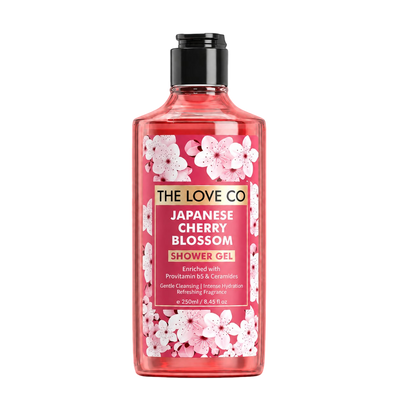
Japanese Cherry Blossom Body Wash
Scent Trail Step 1 · soft floral body wash Start the Scent Trail here. A pH 5.5, SLS-free cleanser that protects your skin barrier while it washes —...
A ritual is the smallest love you give yourself, daily.
— Hemang Jain · 20 May 2026