



Glycerin vs Shea Butter vs Hyaluronic Acid in Body Lotion: What Wins?
Here is a question with no right answer: which is better — glycerin, shea butter, or hyaluronic acid in a body lotion?
The question is wrong because these three ingredients do not compete. They do different jobs. Understanding glycerin, shea butter, and hyaluronic acid in body lotion — what category each belongs to, what it does, and when you need it — changes not just which product you choose but how you use what you already have.
The Three-Category Framework: Humectant, Emollient, Occlusive
Humectants attract water molecules. They pull moisture from the environment (if humidity is high enough) or from the deeper layers of skin and hold it at the surface. Examples: glycerin, hyaluronic acid, aloe vera, honey.
Emollients smooth and soften skin by filling in the microscopic gaps between skin cells. They do not primarily add water — they improve the texture and feel of skin. Examples: shea butter, most plant oils, fatty alcohols.
Occlusives form a physical barrier on the skin surface that slows down transepidermal water loss (TEWL). They seal moisture in. Examples: coconut oil, petrolatum, beeswax, lanolin.
A well-formulated body lotion uses all three, layered to work together. Strip any one out and the formula is incomplete.
Glycerin: The Workhorse
Glycerin is one of the most studied moisturising ingredients in cosmetic science. It attracts water to the skin surface, creates a light non-occlusive film, and improves skin barrier function over time with consistent use.
For Indian skin: glycerin works well across skin types because it is lightweight. In India’s humid coastal cities, it draws enough water from the air to be highly effective. In dry inland winter conditions, it needs an occlusive seal on top to perform optimally.
On a label: Glycerol, glycerin. Usually appears high in an ingredient list because it is inexpensive and effective enough to use at meaningful concentrations.
Hyaluronic Acid: The Sophisticated Humectant
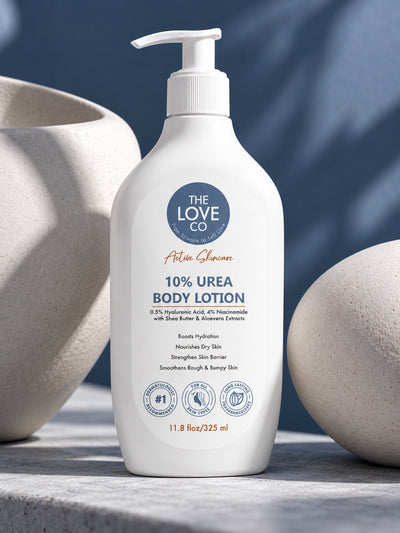
Hyaluronic acid (HA) is a naturally occurring polysaccharide found in the skin’s connective tissue. It can hold up to 1,000 times its own weight in water molecules. It also comes in multiple molecular weights that penetrate the skin to different depths.
Hyaluronic acid is more expensive and more sophisticated than glycerin. It creates a lighter, more cushioned skin feel and works across a broader humidity range. A premium body lotion often includes both — glycerin for reliable, cost-effective humectancy, HA for depth and that distinctive plumped texture.
For Indian skin: particularly useful on body skin that is chronically dry despite regular moisturising — HA draws and holds more water than glycerin and changes the experience of dryness more dramatically.
Shea Butter: The Richness
Shea butter comes from the fat of the shea tree nut, native to West Africa. It is an emollient — its job is not to add or attract water but to smooth, soften, and improve the skin’s own barrier function.
It is rich in fatty acids (stearic and oleic primarily) and contains triterpenoids with mild anti-inflammatory properties. Shea butter is a relatively “breathable” emollient — it softens without feeling heavy or suffocating.
For Indian skin: excellent for rough areas — elbows, knees, the back of the heels, upper arms affected by keratosis pilaris. Also works well for chronically dry winter skin on the legs and arms without the heaviness of a pure oil.
On a label: Butyrospermum parkii (shea) butter. Should appear in the first half of the ingredient list for meaningful skin benefit.
What Actually Wins: The Combination
The ideal body lotion system for Indian skin:
- On slightly damp skin after shower: Apply a lotion that contains both glycerin and hyaluronic acid. The surface water gives the humectants something to work with immediately.
- The lotion’s base contains emollients: Shea butter, plant oils, or fatty acids in the formula smooth the skin surface and improve how the humectants work.
- Seal on particularly dry areas: A small amount of coconut oil or body butter over the lotion on elbows, knees, and heels locks everything in.
Glycerin, shea butter, and hyaluronic acid in body lotion are not competing heroes. They are teammates. The best body care formulations use all three — because dry skin is not a single problem, and moisture is not a single solution.
Part of The Love Co. Natural Ingredients series. Back to the complete guide →
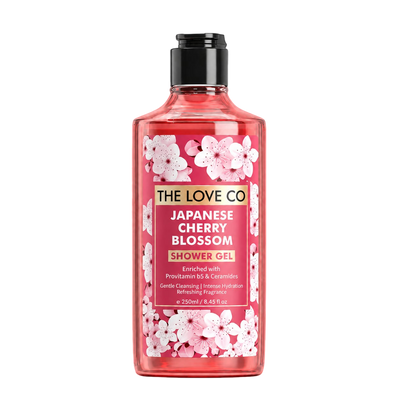
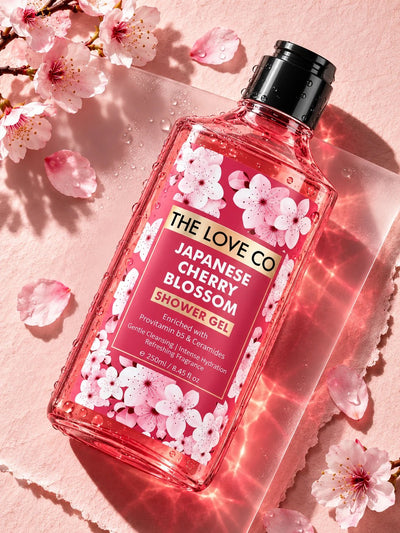
Japanese Cherry Blossom Shower Gel
Scent Trail Step 1 · soft floral body wash Start the Scent Trail here. A pH 5.5, SLS-free cleanser that protects your skin barrier while it washes. Follow...
A ritual is the smallest love you give yourself, daily.
— The Love Co · 08 May 2026