



Rose in Skincare: Why Indian Gulab Is Different from Other Rose Extracts
Every body care brand sells rose. Rose water, rose oil, rose extract — the flower is so ubiquitous in beauty marketing that it has almost become invisible. You see it, register it as "natural and nice," and move on.
That is a mistake worth correcting. Because rose extract skincare India produces — specifically the Kannauj rose from Uttar Pradesh — is chemically different from the Bulgarian rose that most of the world treats as the gold standard. And that difference has real consequences for what it does to your skin.
The Problem With Generic "Rose" in Body Care
When a product lists "rose" as an ingredient or key feature, it could mean several things:
- A genuine Rosa damascena hydrosol (rose water)
- Rose absolute (solvent-extracted oil)
- Rose essential oil (steam-distilled)
- Synthetic rose fragrance — "parfum" or "fragrance"
- A rose-themed marketing claim with no rose in the formula at all
Most of the time, in mass-market body care, it is the last two. The reason is cost: true rose oil trades at among the highest prices of any botanical extract. Bulgarian rose oil routinely sells for ₹4,00,000–8,00,000 per kilogram. Synthetic rose fragrance costs a fraction of that.
What Makes Kannauj Rose Different
Kannauj, in Uttar Pradesh, has been called the "perfume capital of India" for over 400 years. The key chemical difference is in rose oxide concentration — the compound responsible for the characteristic sharp, fresh, slightly lychee-like quality that marks high-grade rose oil.
Studies comparing Kannauj rose otto with Bulgarian rose otto have found that Kannauj rose contains higher concentrations of rose oxide and geraniol. Geraniol, specifically, is documented as a potent antioxidant and skin-conditioning compound. For skincare, this matters because you are not just buying scent — the active compounds in the rose oil are the same ones doing the functional work on skin.
What Rose Extract Actually Does to Skin
Hydration
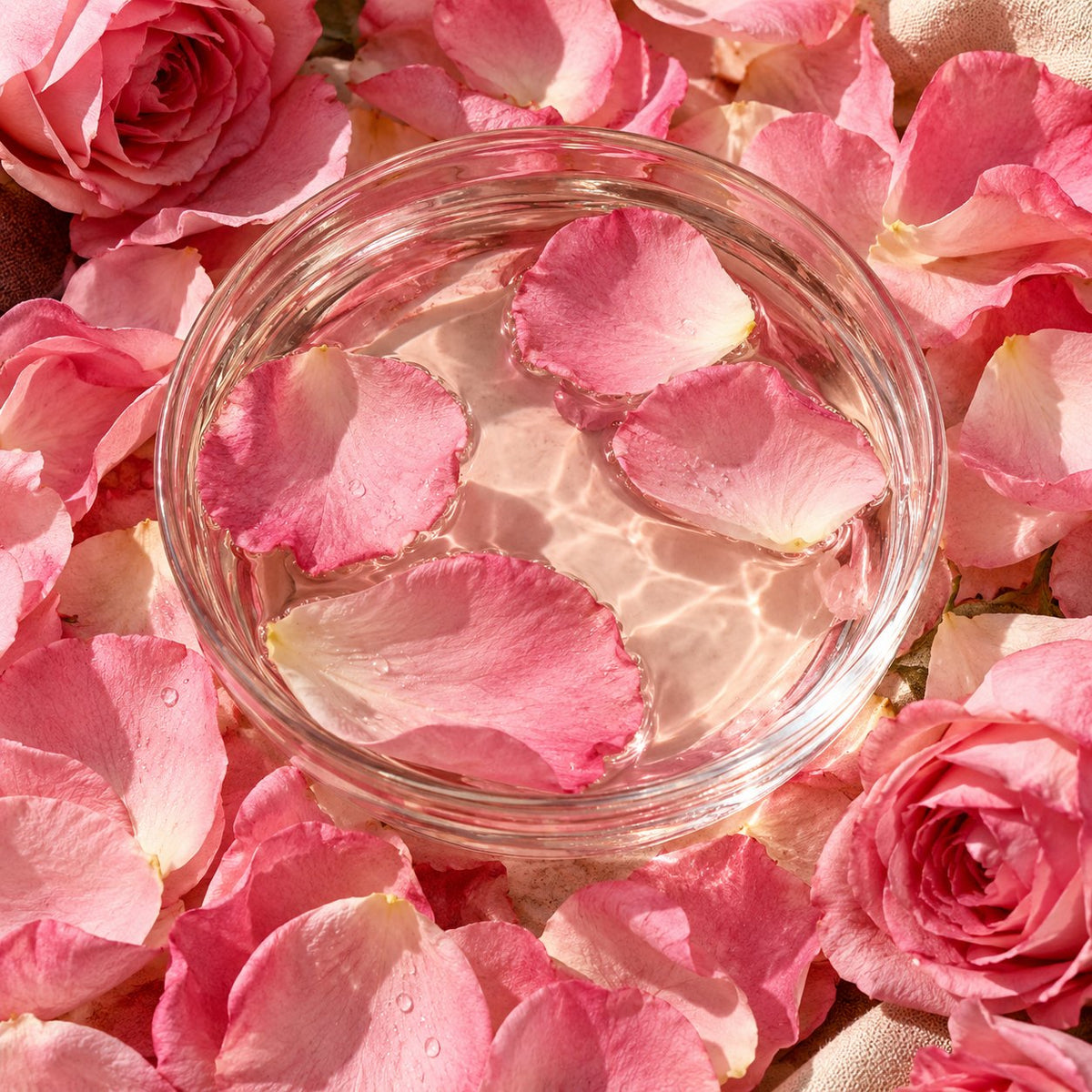
Rose water (Rosa damascena hydrosol) is a natural humectant — it attracts moisture to the skin surface without the heaviness of a cream. For combination and oily skin types, this is particularly useful: hydration without occlusion.
Antioxidant Protection
The phenolic compounds in rose extract — gallic acid, flavonoids, vitamin C precursors — neutralise free radicals from UV exposure and environmental pollution. This is relevant for Indian urban skin, which is subjected to significant oxidative stress from pollution and year-round UV.
Anti-Inflammatory
Rose extract reduces the inflammatory response in skin cells. For post-sun skin, sensitive skin, or skin that reacts to heat and humidity, this property makes rose extract a calming ingredient rather than just a fragrant one.
Toning Without Stripping
Traditional rose water has been used as a skin toner for centuries across South Asia, the Middle East, and the Mediterranean. It reduces the appearance of pores, improves surface texture, and leaves skin feeling fresh without stripping it of its natural oils the way alcohol-based toners do.
The Gulab in Your Product: What to Look For on the Label
Genuine rose ingredients:
- Rosa damascena flower water — rose hydrosol/water
- Rosa damascena flower oil — true rose otto, steam distilled
- Rosa damascena extract — concentrated extract, may be water or glycol-based
What to be cautious of:
- Fragrance or parfum listed where rose oil would appear — likely synthetic
- "Rose complex" with no INCI name — undefined and unverifiable
- Rose listed as a highlight on front-of-pack but absent or appearing last on the ingredient list
Rose in Indian Body Care Tradition
Gulab holds a particular place in Indian ritual. Rosewater was used in Mughal baths. Rose petals were strewn at weddings. Gulab jal was applied to faces and bodies as part of daily care — not as an act of indulgence, but as an ordinary practice considered basic to health and beauty.
Kannauj growers have been selecting and cultivating the best rose varieties in the best conditions for over four centuries. The result is an ingredient that earns its place in body care not because it is ancient, but because it is excellent.
The Feeling Rose Creates
There is a moment when you apply a body lotion that contains real rose — not synthetic reconstruction, but actual Rosa damascena — and the scent opens differently. It deepens as it warms on your skin. It has presence without being loud.
Real gulab in body care is the difference between a photograph of a rose and a rose in your hand. The rose extract skincare India grows has been earning that distinction for 400 years. Your skin can tell.
Part of The Love Co. Natural Ingredients series. Back to the complete guide →
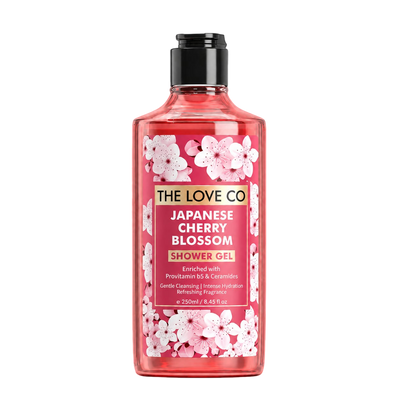
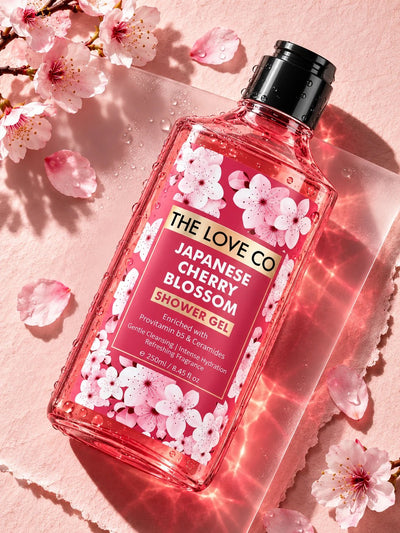
Japanese Cherry Blossom Shower Gel
Scent Trail Step 1 · soft floral body wash Start the Scent Trail here. A pH 5.5, SLS-free cleanser that protects your skin barrier while it washes. Follow...
A ritual is the smallest love you give yourself, daily.
— The Love Co · 08 May 2026