

You run a hand down your upper arm after a shower and feel it before you see it. Tiny raised dots, a sandpaper drag where the skin should be smooth. Maybe it is the backs of your thighs, or that stubborn rough patch on your shoulders that never seems to settle, no matter how much lotion you pile on. Scrubbing harder only leaves it angry and pink. The truth is that texture like this is rarely a cleanliness problem. It is a build-up problem, and build-up needs chemistry, not friction.
That is the whole idea behind an acid body wash. Three different exfoliating acids, each with its own job, doing in sixty seconds what a loofah never quite manages. Here is what each one is actually doing on your skin.
Glycolic acid: the surface sweeper
Glycolic acid is the smallest of the alpha hydroxy acids, which is exactly why it works the way it does. Small molecules move fast and reach the surface layer quickly. Its job is to loosen the glue that holds dead, dulling cells onto the skin long after they should have shed. In humid Indian weather, where sweat, sunscreen and dust settle into every fold by mid-afternoon, that surface layer thickens faster than you would think. Glycolic clears it, which is why skin feels genuinely smoother and looks less grey after a few uses.
Lactic acid: the gentler partner
If glycolic is the sprinter, lactic acid is the steadier hand. It is a larger AHA, so it works a little more slowly and sits more comfortably on skin that flares easily. It also has a quiet talent the others lack: it helps skin hold on to water. That matters enormously on the body, where most of us are already dry from hard water and long hot showers. Pairing lactic with glycolic means you get the smoothing without tipping straight into tightness.
Salicylic acid: the one that goes deeper
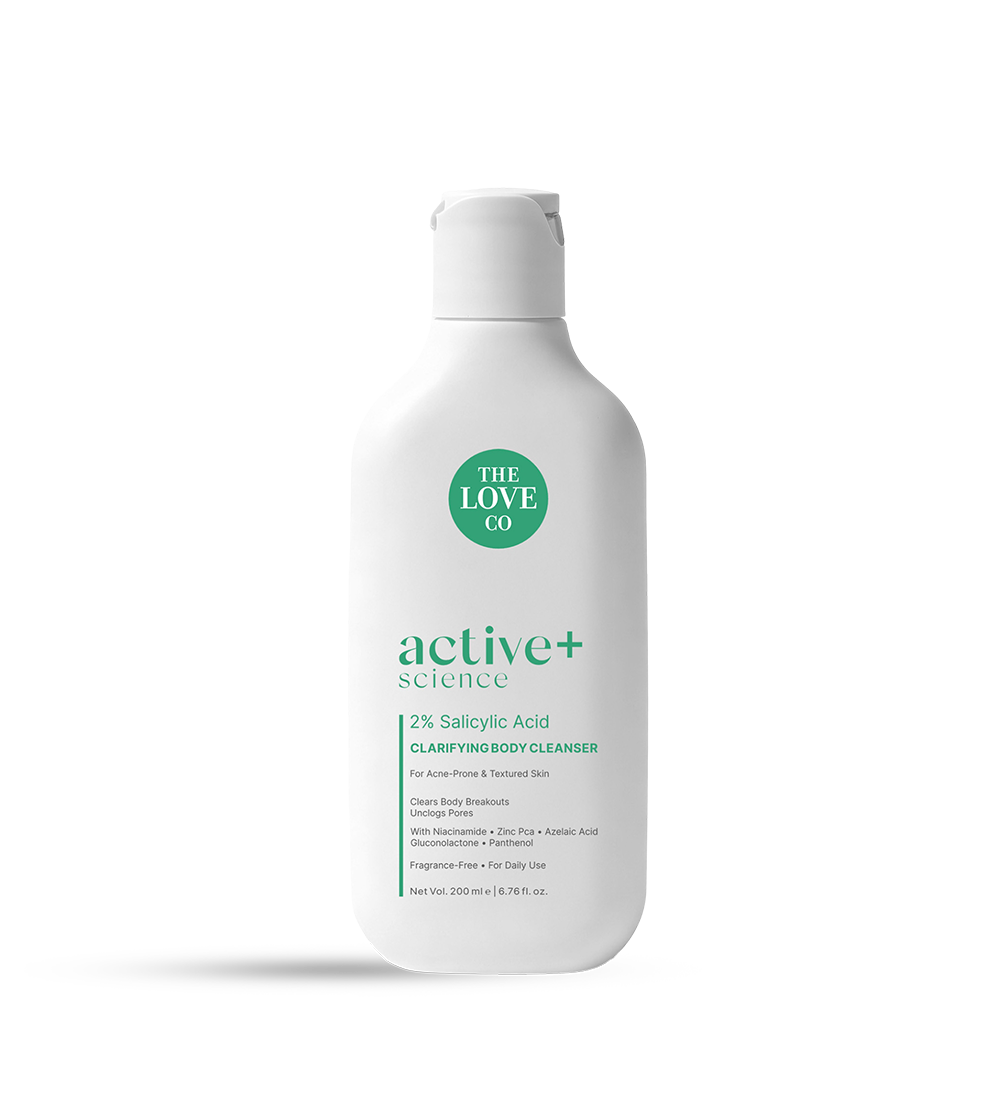
This is the beta hydroxy acid, and it behaves differently on purpose. Salicylic is oil-loving, which means it can slip down into the pore itself rather than only working across the surface. At 1%, it gets inside clogged follicles on the back, chest and shoulders, the exact places that break out when heat and a sweaty gym tee conspire against you. Where the AHAs smooth what you can see, salicylic clears what you cannot.
Why all three together, not one at a time
You could chase each of these in a separate product. Most of us never do, because a four-step body routine dies by week two. The point of combining glycolic, lactic and 1% salicylic in a single wash is that they cover different ground at once:
- Glycolic handles surface dullness and rough-to-the-touch texture.
- Lactic smooths while keeping the skin comfortable, not stripped.
- Salicylic works inside the pore on congestion and body breakouts.
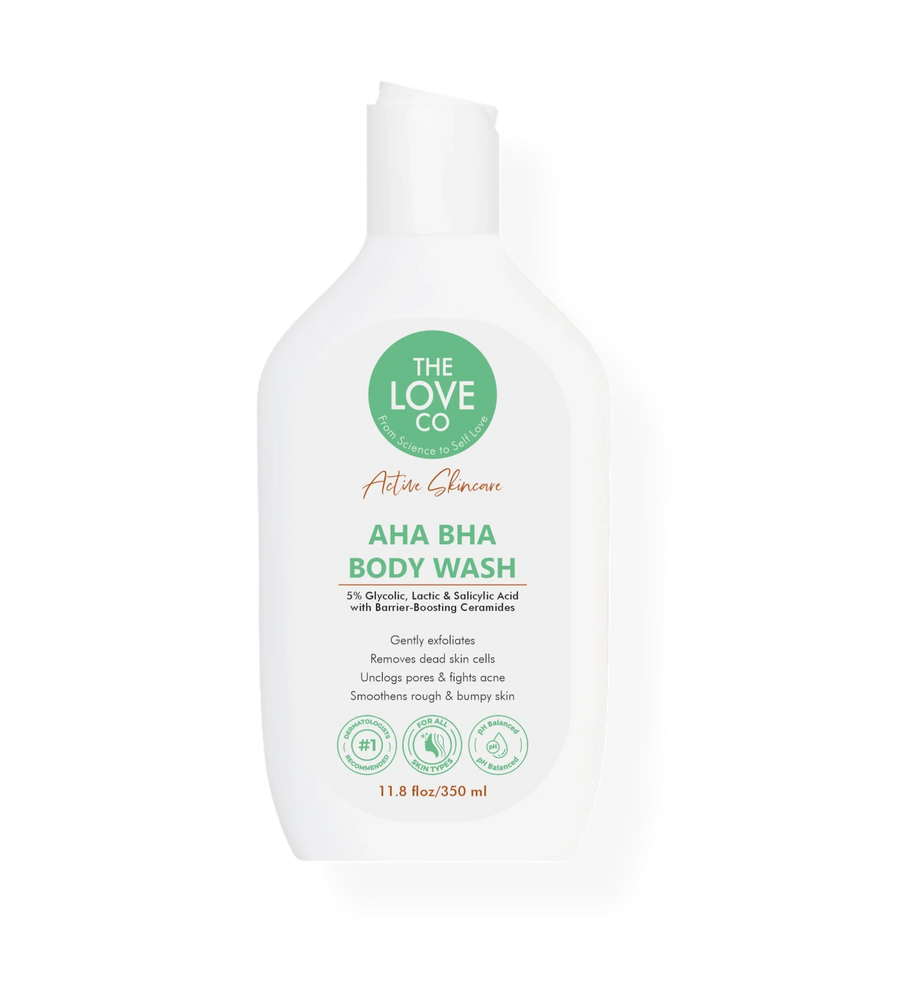
The AHA BHA Body Wash brings them together with niacinamide for more even-looking tone, plus ceramides, tea tree and aloe to keep the experience kind rather than astringent. It is a cleanser, so the actives do their work in the time the lather is on your skin, then rinse away.
How to let the chemistry actually work
Acids need a moment of contact. Rushing them off defeats the point.
- Use on damp skin in the shower, on the areas that need it.
- Massage gently, then let the lather sit for around sixty seconds.
- Rinse, pat dry, and follow with a body lotion every single time.
- Wear sunscreen on exposed skin during the day. Freshly exfoliated skin marks more easily, and melanin-rich skin in particular can hold on to dark spots long after a sunburn fades.
A few honest questions
Can I use this every day? Many people can. If skin feels tight or itchy, drop to three or four times a week and lean harder on your lotion.
Will it sting? A wash format is mild and rinses off, so a faint tingle is normal but burning is not. Burning means back off.
When will I notice anything? A smoother feel tends to arrive in two to three weeks. Real change in rough, bumpy texture takes four to six weeks of steady use, the same patience any acid asks for.
What do I pair it with? The AHA BHA Body Wash sits beautifully with the 10% Urea Body Lotion on stubborn texture days.
Give it a few weeks and the change announces itself the same way the problem did: with your own hand, in the dark, after a shower. The drag is gone. The skin just feels like skin again.
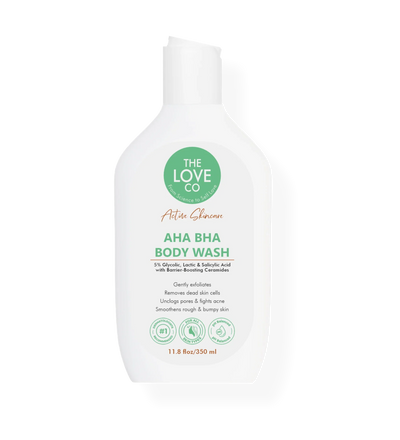
AHA + BHA Body Wash · 350ml
The full-size AHA+BHA body wash for everyday body texture work. Glycolic acid, lactic acid, and 1% salicylic acid work together on KP, strawberry skin, dullness, blocked pores on...
A ritual is the smallest love you give yourself, daily.
— Meher Kapoor · 06 Jun 2026