
You have done everything right. You buy the deodorant that promises all-day freshness, you reapply before going out, you have even tried the ones that claim to lighten. And still, when you raise your arm in a sleeveless top, the skin underneath looks darker and feels rougher than the rest of you. It is a quietly frustrating thing, because you assumed your deodorant was handling all of it. It was not. It was never designed to.
What deodorant is actually for
Deodorant has one job and it does it well: managing odour. It works on the smell that happens when sweat meets the bacteria living on your skin. Some products go a step further as antiperspirants, temporarily reducing how much you sweat by blocking the sweat ducts. Both are about the surface experience of the day, staying fresh, staying dry.
Neither of those things touches the skin itself. Deodorant does not exfoliate. It does not lift pigment. It does not clear a follicle where an ingrown hair is forming. Expecting it to is a bit like expecting your perfume to treat acne. Different tool, different job.
What underarm skincare is for
The skin under your arm is real skin, the same skin that responds to friction, sun, hair removal and dead-cell build-up everywhere else, just in a thinner, more folded, more frequently irritated form. Underarm skincare treats the condition of that skin rather than the smell on top of it.
- Tone. It addresses darkness from friction, stubble shadow and pigment on melanin-rich skin.
- Texture. It smooths rough, bumpy skin instead of just covering it.
- Ingrowns. It keeps follicles clear so hairs surface cleanly after shaving or waxing.
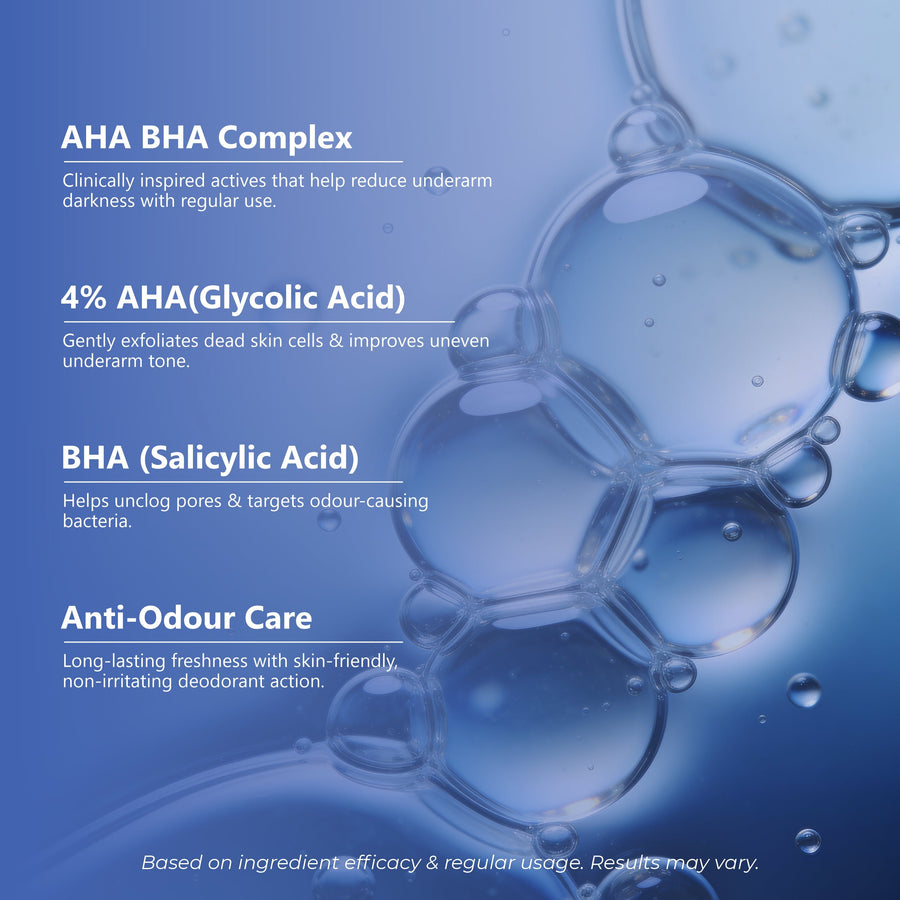
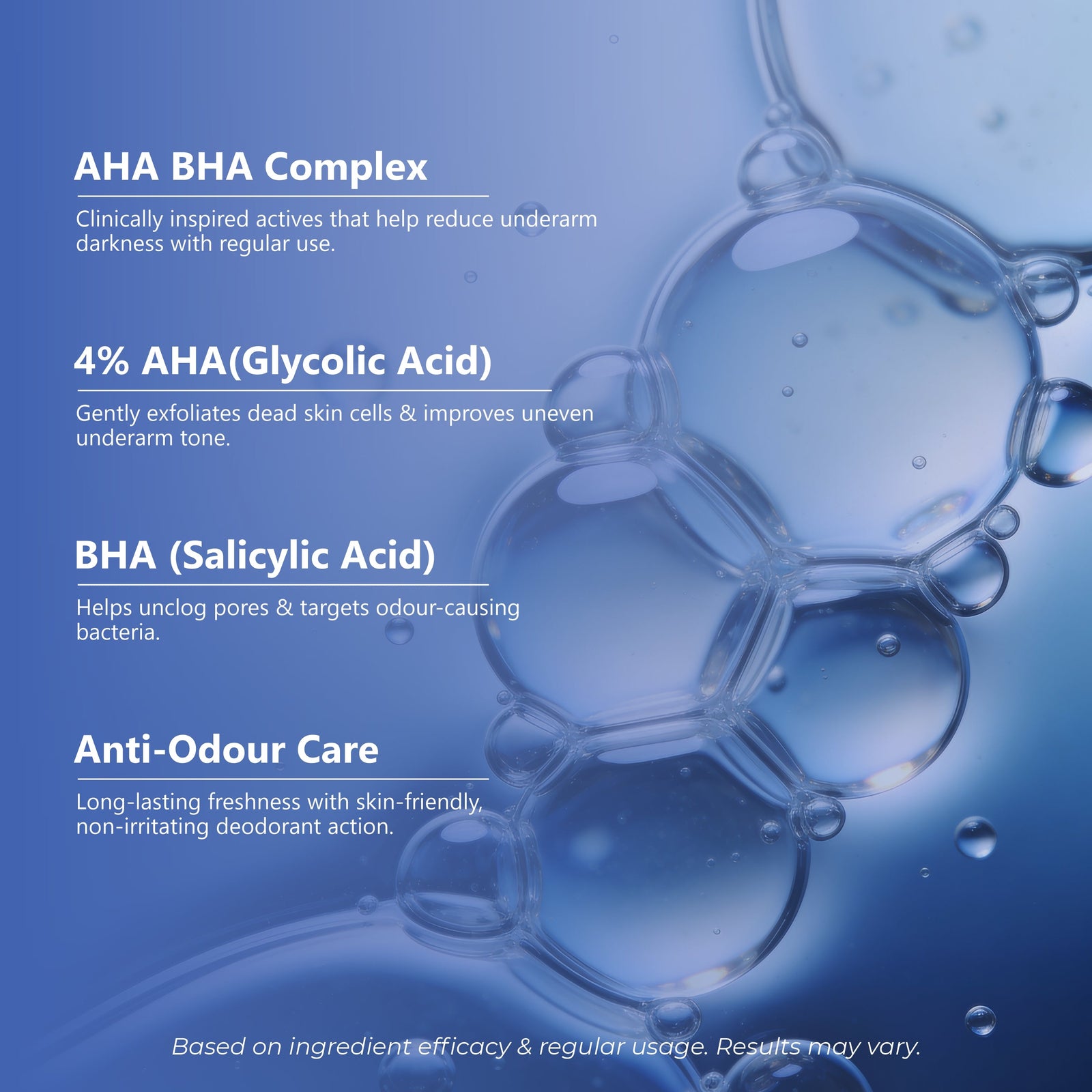
The quiet difference is exfoliation. A treatment like the AHA BHA Under Arm Roll On uses gentle acids to lift dull surface cells and clear the follicle, the kind of work no deodorant is built to do.
The whitening deodorant trap
Plenty of deodorants advertise whitening, and this is where the confusion sets in. A deodorant that claims to lighten is still, at its core, a product worn all day to manage smell. It is not formulated to resurface skin over weeks the way a dedicated nighttime treatment is. If darkness is your real concern, asking your deodorant to fix it means asking the wrong product, and then blaming yourself when nothing changes.
Why you may want both, used differently
This is not a case of replacing one with the other. They live at different times of day and solve different problems.
- Daytime: deodorant. Fresh skin, odour managed, sweat handled. Worn when you are out and active.
- Nighttime: skincare. Apply an exfoliating roll-on on clean, dry underarms before bed, let it dry, and let it work overnight while you are not sweating into it.
One key thing to know: an exfoliating roll-on is skincare, not an antiperspirant. It will not stop you sweating, and it is not meant to. That is exactly why you keep your deodorant for the day and let the treatment do its slower, deeper work at night.
What this looks like over time
Deodorant gives you an instant result you feel within minutes. Skincare gives you a gradual one you notice over weeks. With nightly use, brightening usually becomes visible over four to six weeks, and rough, ingrown-prone texture smooths along the way. The two together mean you are fresh in the moment and steadily improving underneath, instead of endlessly masking a problem that needed treating.
Frequently asked questions
Can I just use a whitening deodorant instead? It will manage odour, but it is not built to resurface skin over weeks the way a dedicated exfoliating treatment is.
Do I apply the roll-on and deodorant together? Use the roll-on at night on clean, dry skin, and your deodorant during the day. They can both be part of your routine.
Will the roll-on stop my sweat? No. It is exfoliating skincare, not an antiperspirant. Keep your deodorant for sweat and odour.
When will I see a difference in tone? Usually over four to six weeks of consistent nightly use.
Once you stop asking one product to do two jobs, the whole thing gets easier. Your deodorant goes back to keeping you fresh, and your skin finally gets something that treats it like skin. Add the AHA BHA Under Arm Roll On to your nighttime routine, and within a few weeks you will lift your arm and feel, for once, that the skin underneath is being cared for, not just covered.
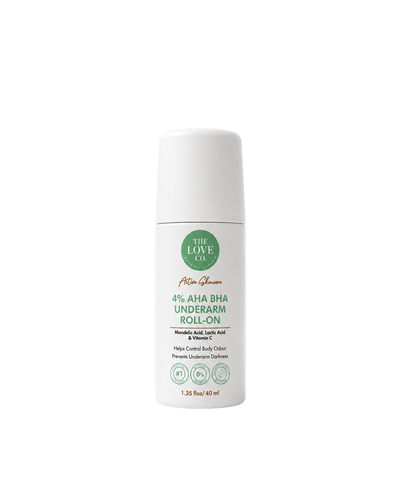
Dark Underarm Roll-On
A nighttime AHA+BHA underarm roll-on for dark underarms, rough texture, and ingrowns from shaving or waxing. It exfoliates the underarm area gently; it is not an antiperspirant. How...
A ritual is the smallest love you give yourself, daily.
— Sweety Jarota · 06 Jun 2026