
If you're using an AHA body wash, you must wear SPF 30+ on any exposed body area every morning. This is not optional. Skip it and you risk sun damage, hyperpigmentation, and undoing every gain you've made with the wash.
This is the single most important rule of using AHA body care, and it's the one most often ignored. AHAs make your skin temporarily more vulnerable to UV. In Indian sun, that's a real problem, not a theoretical one. Here's the safe routine.
Why AHA Increases Sun Sensitivity (Photosensitivity)
AHAs work by removing the top layer of dead skin cells. That dead layer normally takes some of the UV hit before the live skin underneath sees it. Once you exfoliate it away, your fresher skin is exposed. UV penetrates more efficiently. Damage happens faster.
The US FDA mandates that any AHA leave-on product carry a sunscreen warning, and dermatology guidance globally treats wash-off AHAs the same way. The exfoliation effect lasts well beyond the rinse. You are photosensitive for at least a week after you stop active AHA use.
The Non-Negotiable Rule for Indian Sun
SPF 30+ on every exposed body area, every morning, every day you've used AHA in the past week.
India sits between roughly 8 and 35 degrees North. UV index in most of the country reads 8 to 11+ for most of the year, which is "very high" to "extreme" on the WHO scale. Cloudy days and AC-bound office hours don't excuse you. Up to 80% of UVA passes through clouds, and UVA is what drives skin ageing and pigmentation, the exact things you're using AHA to fix.
| Body area | Sunscreen need |
|---|---|
| Arms (sleeveless tops, t-shirts) | SPF 30+, every morning |
| Legs (shorts, skirts, sarees) | SPF 30+, every morning if exposed |
| Chest and décolletage (lower necklines) | SPF 30+, every morning |
| Back (backless, halter) | SPF 30+, before changing |
| Areas always covered (under shirts, full sleeves) | Optional, but smart on humid days |
The Safe Daily Routine, Step by Step
- Evening shower: AHA body wash, lukewarm water, 30 to 60 second contact, rinse, pat dry, body lotion within 3 minutes.
- Morning: Lukewarm shower without AHA. A gentle, hydrating body wash or just water.
- After morning shower: Body lotion, then body sunscreen (SPF 30+) on every area that will be exposed during the day.
- Mid-day reapplication: If you're outdoors for more than 2 hours, or sweating, or swimming, reapply.
Why evening AHA, not morning? Two reasons. One: it gives the acid a full overnight period of reduced UV exposure. Two: morning shower routines are usually rushed, and applying body sunscreen properly takes 60 to 90 seconds you won't always have if you've also done an AHA wash.
What "SPF 30+" Actually Means for Body Sunscreen
- SPF 30: Blocks ~97% of UVB. Adequate for most Indian situations.
- SPF 50: Blocks ~98% of UVB. Marginal real-world improvement, but better for outdoor or sensitive-skin days.
- Broad spectrum / PA+++: Critical. UVA is what drives ageing and dark spots. Look for "broad spectrum" or PA+++ at minimum on the label.
- Water resistant: Worth the small upcharge in Indian humidity, even for everyday wear.
How Much Body Sunscreen to Apply
Most people use far too little. The standard guidance is 2 mg per square cm of skin, which translates roughly to:
| Body area | Approximate amount |
|---|---|
| Each arm | One full teaspoon |
| Each leg | Two teaspoons |
| Chest and back combined | Two teaspoons |
If a 100ml bottle lasts you three months for body, you're under-applying. A typical AHA-user should finish a 100ml body sunscreen in 4 to 6 weeks of daily use.
Common Mistakes That Cause Hyperpigmentation
- Applying AHA in the morning, sun in the afternoon: The skin is most photosensitive within the first few hours after acid contact. Switch to evening use.
- Forgetting hands and feet: Indian women's hands and feet often show the worst tan and pigmentation precisely because of this oversight.
- Skipping sunscreen on cloudy days: UVA passes clouds. Pigmentation doesn't care about your weather app.
- Trusting "SPF in lotion" alone: Most body lotions with SPF use SPF 15. Not enough for AHA-active skin.
"This is where Indian women lose their AHA results. They use the wash religiously, then walk into the sun in a sleeveless kurta with no body sunscreen. Three weeks later they message me about new dark patches and ask why the AHA isn't working. The AHA is working. The sun is winning. Body sunscreen is the partner product. Without it, you're not running an exfoliating routine, you're running a pigmentation experiment."
– Dr. Tanvi Sehgal, Consultant Dermatologist
Frequently Asked Questions
Can I use AHA body wash in the morning if I apply sunscreen?
Technically yes, but evening use is safer. Sunscreen is not a force field, and morning AHA leaves the smallest window between exfoliation and sun.
Do I need body sunscreen if I work indoors all day?
If you commute to work or sit near a window, yes. Glass blocks UVB but not UVA. UVA is what causes the slow tanning and pigmentation that AHA users are most vulnerable to.
How long do I need to wear body sunscreen after stopping AHA?
At least one week after your last AHA wash. The increased photosensitivity tapers gradually as new skin cells replace the exfoliated layer.
Is mineral or chemical sunscreen better for AHA-treated body skin?
Both work. Mineral (zinc oxide) is gentler on freshly-exfoliated, sensitive skin and recommended for first-time AHA users. Chemical formulas are lighter and more cosmetically elegant, useful for daily body wear under clothes.
Can I apply body sunscreen straight after my morning shower?
Yes, after body lotion. Lotion first to seal hydration, then sunscreen on top as the final step before clothes.
Build the Safe Routine
Pair your AHA body wash with the right protective routine. Explore TLC's exfoliating collection and our body wash and shower gel range.
For the foundational guide on AHA on Indian body skin, read our complete guide to AHA body wash in India. If you're concerned about post-AHA dryness, our best body wash for dry skin in India guide will help you keep the barrier intact.
SPF 30+. Every morning. No exceptions.
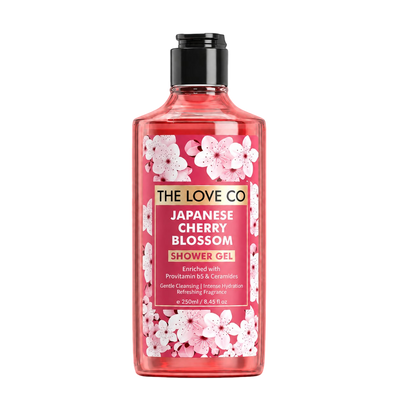
Japanese Cherry Blossom Shower Gel
Scent Trail Step 1 · soft floral body wash Start the Scent Trail here. A pH 5.5, SLS-free cleanser that protects your skin barrier while it washes —...
A ritual is the smallest love you give yourself, daily.
— Hemang Jain · 03 May 2026