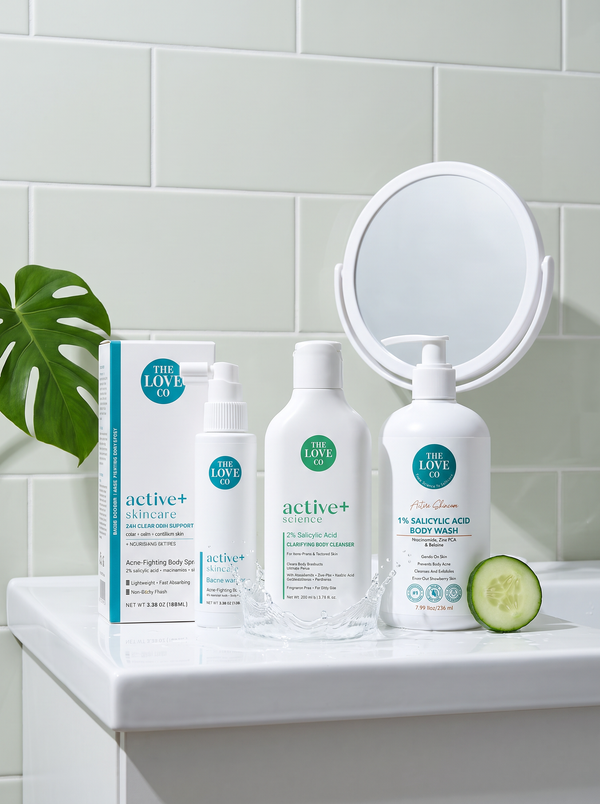
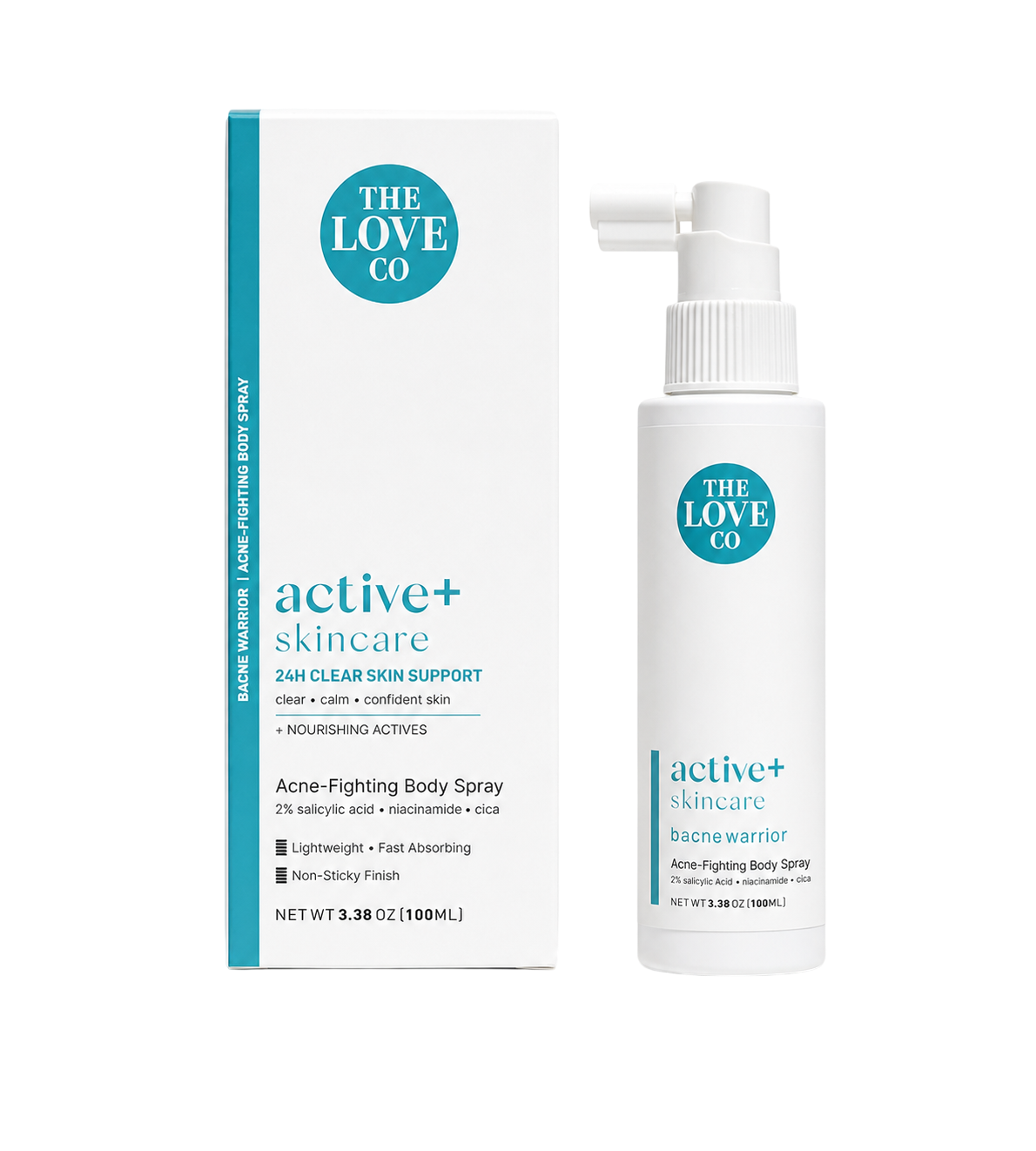
Acnesium® is a cosmetic active made from the rind (pericarp) of unripe pomegranates, developed by the French ingredient maker Silab and listed on packs as Maltodextrin & Punica Granatum Pericarp Extract. Silab reports that it limits Cutibacterium acnes growth and biofilm, calms inflammation, moderates sebum and reduces the pore-blocking build-up of dead cells. The evidence is a manufacturer-run lab model and a dermatologist-supervised study in adults with mild to moderate acne, not an independent trial. That is why we use it as a supporting active alongside 2% salicylic acid in our body acne spray, not as a replacement for it.
What Acnesium actually is
Acnesium is a preservative-free powder extracted from the pericarp of immature pomegranates grown in the Gabès oasis in Tunisia. Silab launched it in September 2020 as "the daily care for acneic skin" and positions it for slight to moderate acne in adults.[1] Pomegranate rind is rich in polyphenols, especially punicalagin and ellagic acid, which is where its antibacterial and anti-inflammatory activity is thought to come from.[6]
On a product label it does not appear as "Acnesium". The INCI name is Maltodextrin & Punica Granatum Pericarp Extract. In The Love Co's Bacne Spray it sits in the second half of the ingredient list, after the 2% salicylic acid, niacinamide, zinc PCA and cica.
The four things that go wrong in an acne follicle
Acne is not one problem. Dermatology reviews describe it as four linked processes inside the pilosebaceous unit, and body acne on the back, chest and shoulders follows the same biology on thicker, oilier, more enclosed skin.[4]
- Too much sebum. Larger oil glands on the trunk produce more of it, and heat and sweat make it worse.
- Hyperkeratinisation. Dead cells inside the follicle stop shedding cleanly and form a plug.
- C. acnes colonisation. The bacterium is present on everyone's skin. In acne it is not that there is more of it, but that it behaves differently: specific strains (phylotypes) dominate and it forms biofilms, sticky communities that resist treatment.[4][5]
- Inflammation. Skin cells, oil-gland cells and immune cells all respond, which is what turns a clogged pore into a red, sore bump.
Most single ingredients hit one or two of these. Salicylic acid works on the plug. Benzoyl peroxide works on the bacteria. The appeal of Acnesium is that Silab claims activity on all four.
How Acnesium is claimed to work
| Acne mechanism | What Silab reports Acnesium does | Type of evidence |
|---|---|---|
| C. acnes colonisation | Reduces bacterial proliferation, quorum sensing (the signalling bacteria use to coordinate) and biofilm formation | In-vitro, manufacturer |
| Sebum | Regulates sebaceous gland activity | In-vitro, manufacturer |
| Inflammation | Limits inflammatory responses from keratinocytes, sebocytes and lymphocytes | In-vitro, manufacturer |
| Hyperkeratinisation | Reduces the build-up of keratin that plugs the follicle | In-vitro, manufacturer |
| Visible acne | Significant fall in GEA score and lesion count versus placebo in adults with slight to moderate acne | Clinical, manufacturer, under dermatological control |
The lab work was done on a 3D reconstructed human epidermis that Silab's team built to mimic acne-prone skin. Instead of using either excess oil or bacteria alone, the model treats the skin with peroxidised squalene (oxidised sebum) and C. acnes phylotype IA1 at the same time, which together trigger acne-like thickening and inflammation. The model itself was published in Experimental Dermatology in 2021.[2][3]
How strong is the evidence? An honest grading
This is the part most ingredient pages skip. Here is where Acnesium sits on the evidence ladder, from weakest to strongest.
| Level | What exists for Acnesium | What is missing |
|---|---|---|
| Lab (in vitro) | Silab's 3D acne-skin model shows activity on bacteria, sebum, keratin and inflammation markers.[2][3] Independent studies of pomegranate peel extracts show antibacterial activity against Gram-positive skin bacteria, with punicalagin identified as a key compound.[6][7] | Peer-reviewed data on the finished extract from a group not connected to the manufacturer. |
| Human, manufacturer-run | Dermatologist-supervised study in adult volunteers with slight to moderate acne; GEA score and lesion counts fell significantly versus placebo.[1][3] | Participant numbers, duration, concentration and percentage results are not in the public summaries. |
| Human, independent randomised trial | None found. | Any. |
| Guideline recommendation | None. The American Academy of Dermatology's 2024 acne guideline does not mention pomegranate extracts.[8] | Not expected for a cosmetic active. |
So: a plausible mechanism, a reasonable lab story, and a small human signal from the maker. Good enough to use as a helper. Not good enough to build a routine on by itself. If a brand tells you a pomegranate extract will clear your back acne on its own, ask for the study.
Why we pair it with 2% salicylic acid
The AAD's 2024 guideline makes one point very clearly for topical acne care: combine ingredients with different mechanisms rather than relying on one.[8] Our body acne spray is built that way.
- 2% salicylic acid is oil-soluble, so it travels into the follicle and loosens the junctions between dead cells, which clears the plug. Dermatology reviews now describe this action as desmolytic rather than simply keratolytic.[9] Salicylic acid has a conditional recommendation in the AAD guideline, with the strongest evidence as part of a combination.[8]
- Acnesium adds the bacterial and inflammatory angle: biofilm, quorum sensing and the immune response that salicylic acid does not address.
- Niacinamide covers redness and post-acne marks. In two randomised trials, 4% niacinamide gel performed comparably to 1% clindamycin on inflammatory acne over eight weeks.[10][11]
- Zinc PCA and cica support oil balance and the skin barrier so the acid can be used daily without stripping.
Four mechanisms, one leave-on step. That is the design logic, and it is why a spray with this blend can be used every day on a large area of skin where a stronger single active would irritate.
Where Acnesium sits in the Bacne Spray and how to use it
The Bacne Spray – 2% Salicylic Acid Body Spray is a 100 ml leave-on mist for the back, chest and shoulders. Full ingredient list, in order: Water, Witch Hazel Extract, Butylene Glycol, Niacinamide, Salicylic Acid, Zinc PCA, Centella Asiatica Leaf Extract, Rosehip Seed Oil, Sodium Hyaluronate, Saccharide Isomerate, Tea Tree Leaf Oil, Cucumber Fruit Extract, Aloe Vera Extract, Lentil Seed Extract, Allantoin, Glycerin, Maltodextrin & Punica Granatum Pericarp Extract, PEG-40 Hydrogenated Castor Oil, Propylene Glycol, Disodium EDTA, Ethylhexylglycerin, Citric Acid, Sodium Hydroxide.
- Shake, then mist onto clean, dry skin from about 30 cm. No rubbing in.
- Let it dry for a minute before dressing.
- Start once a day. If skin feels dry or tight, go to alternate days. Use a plain moisturiser after and sunscreen on exposed skin the next morning, because salicylic acid makes skin more sun-sensitive.
Our guidance on timing: expect pore congestion to ease over four to six weeks of daily use, and post-acne marks to fade over eight to twelve weeks. Those are the brand's own observations from customers, not a clinical trial, and consistency matters more than how much you spray.
Who should not rely on it
- Moderate to severe or cystic body acne (deep, painful lumps, scarring) needs a dermatologist. Guideline-backed options there include topical retinoids, benzoyl peroxide and, where needed, oral treatment.[8]
- Pregnancy. The AAD advises keeping topical salicylic acid to limited areas during pregnancy. A back-and-chest spray is not a limited area. Ask your doctor first.[8]
- Broken or freshly shaved skin, or a known salicylate allergy: skip it.
FAQ
Is Acnesium the same as pomegranate juice or seed oil?
No. It is an extract of the rind of unripe fruit, standardised by the manufacturer, and its chemistry (punicalagin-rich tannins) is different from the juice or the seed oil.
Does Acnesium kill bacteria like benzoyl peroxide does?
Silab reports that it limits C. acnes growth, signalling and biofilm, which is a softer action than benzoyl peroxide's direct oxidative kill. The upside is that it does not bleach fabric or sting. The downside is weaker evidence.
Can I use the Acnesium spray with a benzoyl peroxide wash?
Yes, at different times of day, and watch for dryness. Benzoyl peroxide washes have weak evidence on the back because contact time is short, so the leave-on step is the one to keep.[12]
How long until I know if it works?
Give any topical acne routine twelve weeks. Clinical trials of topical acne treatments typically run eight to twelve weeks before measuring results.
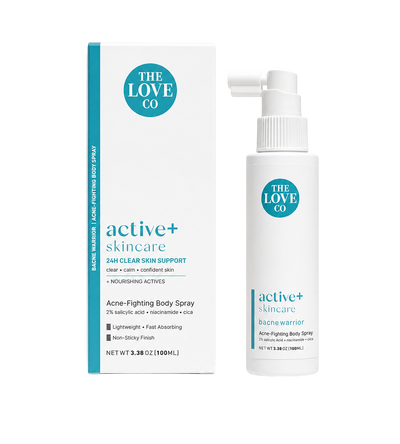
Bacne Spray – 2% Salicylic Acid Body Spray
A leave-on 2% salicylic acid body spray for back, chest, shoulder, and post-workout body acne. Designed for hard-to-reach zones, fast absorption, and daily use under clothes without a...
- ACNESIUM, the daily care for acneic skin Silab, 2020
- Silab tests its natural anti-acne active ingredient on a multifactorial model Premium Beauty News, 2021
- Silab's Acnesium limits C. acnes, promotes healthy skin Cosmetics & Toiletries, 2020
- Acne pathophysiology: an update (review) F1000Research, 2018
- The role of biofilm formation in the pathogenesis and antimicrobial susceptibility of Cutibacterium acnes Biofilm (PMC), 2021
- A comprehensive study of the antibacterial activity of bioactive juice and extracts from pomegranate peels and seeds Plants (PMC), 2021
- Identification of punicalagin as a key bioactive compound responsible for the antimicrobial properties of pomegranate peel extract J Agric Food Chem (PMC), 2025
- Guidelines of care for the management of acne vulgaris (summary) American Academy of Dermatology, 2024
- Salicylic acid as a peeling agent: a comprehensive review Clin Cosmet Investig Dermatol, 2015
- Topical nicotinamide compared with clindamycin gel in the treatment of inflammatory acne vulgaris Int J Dermatol, 1995
- Topical 4% nicotinamide vs. 1% clindamycin in moderate inflammatory acne vulgaris Int J Dermatol, 2013
- Efficacy of benzoyl peroxide 5.3% emollient foam and benzoyl peroxide 8% wash in reducing Propionibacterium acnes on the back J Drugs Dermatol, 2010
A ritual is the smallest love you give yourself, daily.
— Hemang Jain · 14 Oct 2026