



For mild to moderate body acne, the best-supported routine is a leave-on salicylic acid or benzoyl peroxide step used daily for at least eight to twelve weeks, plus a plain moisturiser and sunscreen. Benzoyl peroxide and topical retinoids carry the strongest guideline backing; salicylic acid, azelaic acid and niacinamide are conditionally recommended or supported by smaller trials; Acnesium, zinc and cica are helpers with lab and manufacturer data. Deep, painful or scarring acne is a prescription problem and should see a dermatologist.
How common body acne is
Body (truncal) acne is under-reported because people do not mention it. In a US study of 696 acne patients aged 14 to 20, 52.3% had acne on the back, chest or upper arms as well as the face.[1] A 2025 analysis of 2,038 validated patients put combined facial and truncal acne at 61.9%, with truncal-only acne rare at 1.7%, and found it more common in men (76.1%) than women (54.1%).[2] About one in four people with both facial and truncal acne never bring up the body acne unless examined.[3]
India has no national acne survey. The most-cited school study, of 1,032 students aged 11 to 19 in North India, found acne in 72.3%, most of it mild.[4] Adult acne is a smaller share of clinic visits but persistent: in a Delhi hospital series, 73.2% of adult cases had carried on from the teens.[5]
Why the body needs a different approach from the face
- Thicker skin, bigger oil glands. Actives that are fine on the face can be too weak for the back, and the area to treat is large.
- You cannot reach it. The worst zone, between the shoulder blades, is where hands do not go. A product you cannot apply evenly will not work.
- Wash-off products get seconds of contact. In a five-week study of benzoyl peroxide on the back, an 8% wash did not reduce C. acnes counts at two weeks while a 5.3% leave-on foam did; the authors blamed the brief contact time of the wash.[6] Leave-on steps matter more on the body.
- Sweat, friction and fabric. Gym wear, synthetic blouses and backpacks keep oil and sweat against the skin for hours.
The comparison
| Treatment | What it does | AAD 2024 grade | Body-specific notes | Without prescription in India? |
|---|---|---|---|---|
| Benzoyl peroxide (2.5–10%) | Kills C. acnes by oxidation; no resistance | Strong recommendation[7] | Leave-on beats wash-off on the back.[6] Bleaches clothes and bedsheets. Can sting on large areas. | Yes (pharmacy) |
| Topical retinoids (adapalene, tretinoin, tazarotene) | Normalise cell turnover, unplug follicles, anti-inflammatory | Strong recommendation[7] | Tazarotene and trifarotene have truncal-acne trial data.[8] Irritating at first; sun-sensitising. Not in pregnancy. | Adapalene 0.1% often sold OTC; others prescription |
| Salicylic acid (0.5–2%) | Oil-soluble; loosens the dead-cell plug inside the pore (desmolytic)[9] | Conditional recommendation, low-certainty evidence[7] | Best as a daily leave-on. Trials of 2% salicylic preparations show lesion reductions in the 40–50% range at 4 weeks, comparable to benzoyl peroxide plus adapalene in one small split-face study.[10] | Yes |
| Azelaic acid (10–20%) | Antibacterial, anti-keratinising, fades marks | Conditional recommendation[7] | A 2023 systematic review of 43 trials found it beats vehicle for acne and matches most comparators.[11] Gentle on dark marks. Thick creams are hard to spread on the back. | 10% yes; 20% usually prescription |
| Niacinamide (4–5%) | Anti-inflammatory; reduces redness and post-acne marks | Not graded | In two randomised trials, 4% niacinamide gel matched 1% clindamycin on inflammatory acne over 8 weeks.[12][13] Best as a partner, not a solo treatment. | Yes |
| Acnesium (pomegranate pericarp) | Claimed to limit C. acnes biofilm, sebum, keratin build-up and inflammation | Not graded | Manufacturer lab model plus a dermatologist-supervised study in mild to moderate adult acne; no independent trial.[14] Helper, not hero. | Yes (in cosmetics) |
| Zinc PCA, cica, tea tree | Oil balance, barrier support, mild antibacterial | Not graded | Supporting actives. Tea tree oil can irritate; use low concentrations or skip. | Yes |
| Topical antibiotics (clindamycin) | Kill C. acnes | Strong, but only combined with benzoyl peroxide[7] | Resistance develops if used alone. | Prescription |
| Oral doxycycline / minocycline | Systemic antibacterial and anti-inflammatory | Strong (doxycycline)[7] | For moderate to severe; limited courses. | Prescription |
| Oral isotretinoin | Shuts down sebum; the only treatment that changes the disease long-term | Strong for severe or scarring acne[7] | Dermatologist-managed; blood tests; never in pregnancy. | Prescription |
Each option in two minutes
Benzoyl peroxide
The workhorse. It oxidises C. acnes on contact and bacteria cannot become resistant to it, which is why the AAD recommends it strongly and insists topical antibiotics be paired with it.[7] On the body the catch is practical: it bleaches anything it touches, so pastel kurtas, blouse linings and bedsheets suffer, and a wash gives too little contact time to do much.[6] A 2.5–5% leave-on at night, with an old white T-shirt, is the sensible way to use it on the back.
Topical retinoids
Adapalene, tretinoin and tazarotene normalise how the follicle sheds cells, which prevents new plugs rather than just treating existing ones. They are strongly recommended and are the backbone of maintenance.[7] Truncal acne specifically has trial data for tazarotene lotion and trifarotene cream.[8] Expect dryness and some peeling for the first month, use at night, and never during pregnancy.
Salicylic acid
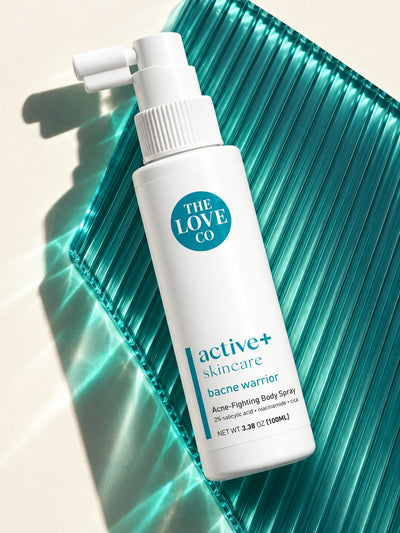
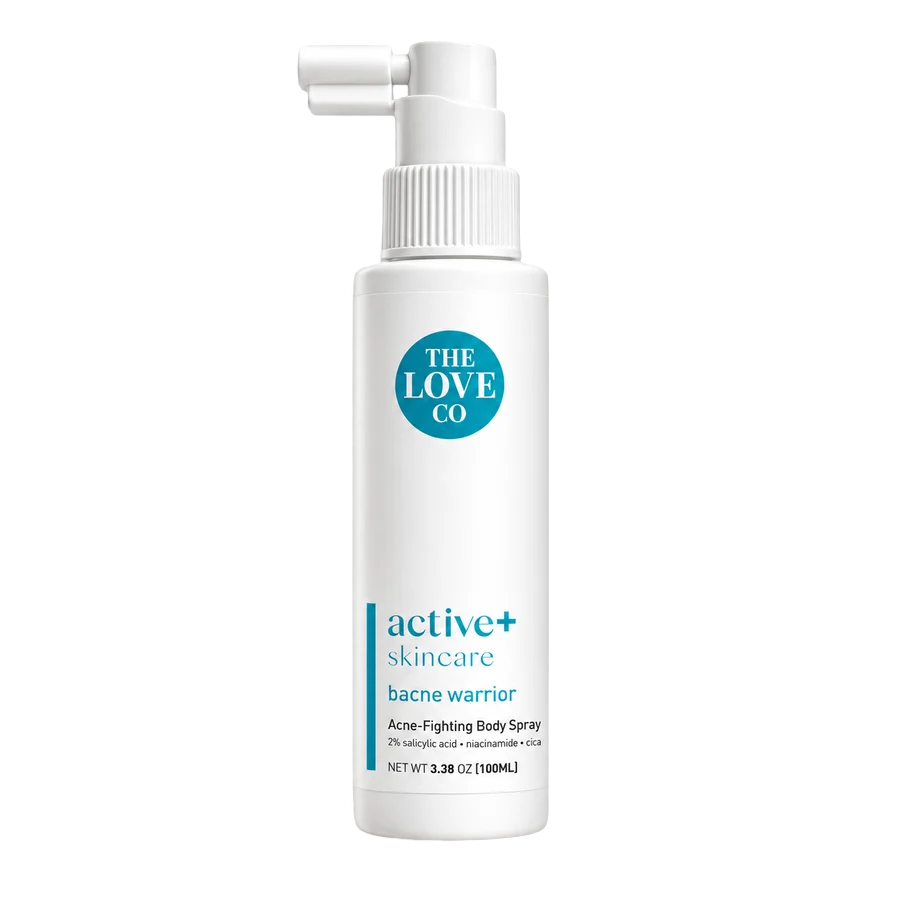
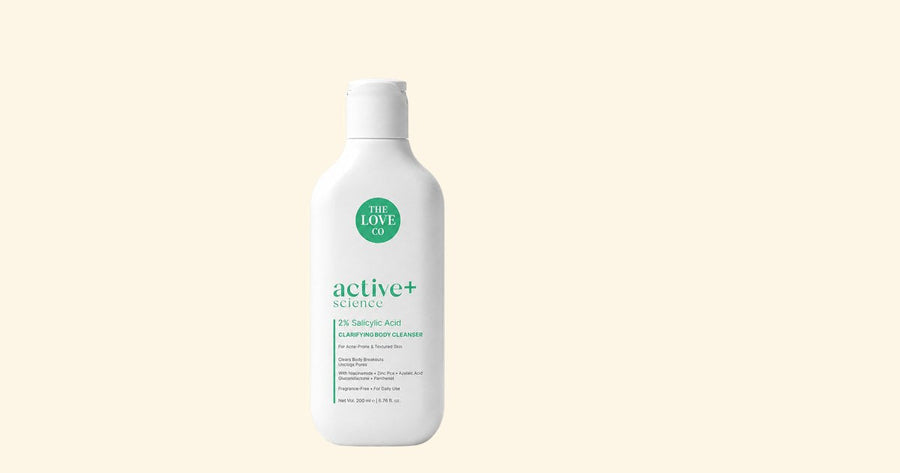
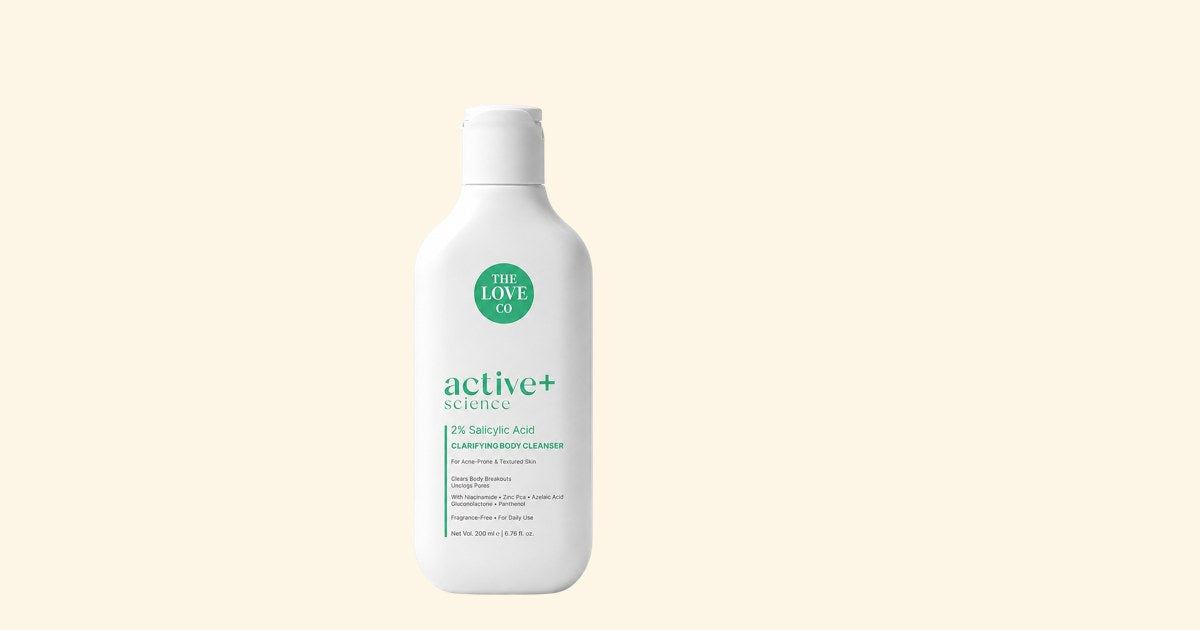
Oil-soluble, so it gets into the pore and loosens the junctions holding dead cells together.[9] The guideline grade is conditional because the trials are small, but the ones that exist show meaningful lesion reductions, and a 2024 multicentre trial of 500 patients compared a 2% salicylic hydrogel with adapalene over 16 weeks.[10][15] It is gentle enough for daily leave-on use on large areas, which is exactly what the back needs. Our 2% salicylic body spray is built on this logic; the 1% and 2% washes are the shower step.
Azelaic acid
Underrated. The 2023 systematic review pooled sixteen acne trials and found azelaic acid consistently better than vehicle and roughly equal to comparators such as erythromycin gel.[11] It also fades post-inflammatory dark marks, which matters on brown skin. The texture is the problem: 15–20% creams are stiff and hard to spread across a back.
Niacinamide
Not an acne treatment on its own, but a strong partner. The 1995 double-blind trial of 76 patients found 82% improved on 4% niacinamide gel versus 68% on 1% clindamycin after eight weeks; a 2013 trial of 80 patients found no significant difference between the two.[12][13] Its real job on the body is calming redness and shortening the life of dark marks.
Acnesium
A pomegranate-pericarp extract from Silab that is claimed to act on all four acne mechanisms. The evidence is a manufacturer lab model and a dermatologist-supervised study with no published numbers.[14] We use it as a supporting active alongside salicylic acid, and we explain exactly why in our Acnesium explainer.
When it is a prescription problem
Nodules or cysts (deep, painful lumps over about a centimetre), acne that scars, acne that has not budged after twelve weeks of a proper routine, or sudden severe body acne with other symptoms: see a dermatologist. The guideline-backed tools there, from oral doxycycline to isotretinoin, work faster than anything over the counter and prevent scarring.[7]
How to combine them without wrecking your skin
The guideline's one-line rule is multimodal: combine mechanisms.[7] A body routine that follows it:
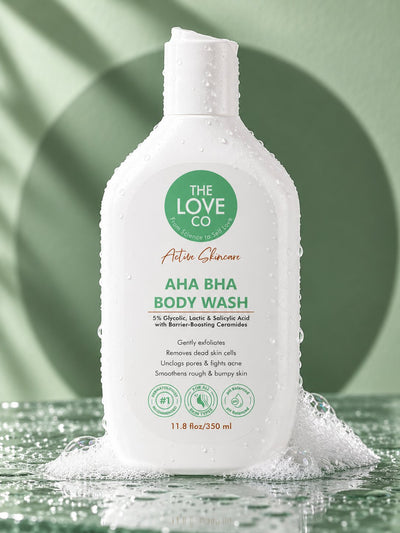
- Shower: a 1–2% salicylic acid body wash, left on 30–60 seconds before rinsing.
- Leave-on treatment: a 2% salicylic acid spray on the back, chest and shoulders once daily, or a 2.5–5% benzoyl peroxide leave-on at night if you tolerate it and can protect fabric. Not both at the same time of day until your skin has adjusted.
- Moisturise with a plain, non-active lotion. Dry skin makes more oil and tolerates actives worse.
- Sunscreen on exposed skin the next morning. Both salicylic acid and retinoids raise sun sensitivity, and sun darkens post-acne marks.
How long it takes
Topical acne trials measure results at eight to twelve weeks for a reason. Follicles turn over on roughly a monthly cycle, so the plugs forming today surface weeks from now. A fair test of any routine is twelve weeks of daily use. Fewer new breakouts by week four to six is the first sign; dark marks lag by another month or two.
FAQ
Is salicylic acid or benzoyl peroxide better for back acne?
Benzoyl peroxide has the stronger guideline grade; salicylic acid is easier to use daily on a large area and does not bleach fabric. Many people do best with salicylic acid as the daily leave-on and benzoyl peroxide a few nights a week.
Can face acne products be used on the body?
Yes, but they are usually too weak and come in too small a tube for the area. Body formulas run higher concentrations and spray or foam formats that reach the back.
Do I need antibiotics for body acne?
Not for mild to moderate acne. Topical antibiotics alone breed resistance; the guideline only recommends them combined with benzoyl peroxide, and oral antibiotics are reserved for moderate to severe cases.[7]
What about diet and supplements?
The evidence for diet is weaker than for topicals. High-glycaemic diets and some dairy are associated with acne in observational studies, but no supplement replaces a topical routine.
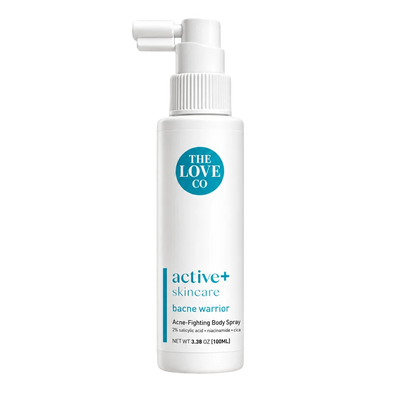
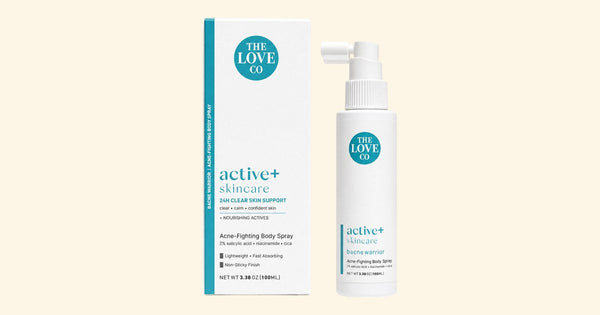
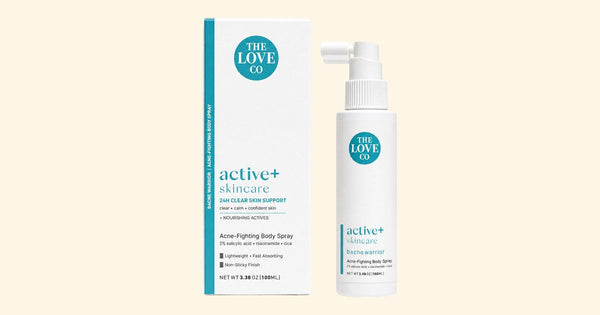
Bacne Spray – 2% Salicylic Acid Body Spray
The Love Co Bacne Warrior is a leave-on 2% salicylic acid body spray for breakouts on the back, chest and shoulders — the areas a wash or cream...
- Prevalence of truncal acne vulgaris: a population study based on private practice experience J Am Acad Dermatol, 2007
- The prevalence and burden of truncal acne PMC, 2025
- Prevalence and demographics of truncal involvement among acne patients J Clin Aesthet Dermatol
- Epidemiological patterns of acne vulgaris among adolescents in North India Indian J Paediatr Dermatol, 2017
- A clinico-epidemiological study of adult acne: is it different from adolescent acne? Indian J Dermatol Venereol Leprol
- Efficacy of benzoyl peroxide 5.3% emollient foam and benzoyl peroxide 8% wash in reducing Propionibacterium acnes on the back J Drugs Dermatol, 2010
- Guidelines of care for the management of acne vulgaris (summary) American Academy of Dermatology, 2024
- Update on truncal acne: a review of treatments for a neglected disease and the re-emergence of tazarotene J Drugs Dermatol, 2022
- Salicylic acid as a peeling agent: a comprehensive review Clin Cosmet Investig Dermatol, 2015
- Efficacy and safety of 2% supramolecular salicylic acid compared with 5% benzoyl peroxide/0.1% adapalene: a randomized split-face study Cutan Ocul Toxicol, 2019
- A systematic review to evaluate the efficacy of azelaic acid in the management of acne, rosacea, melasma and skin aging J Cosmet Dermatol, 2023
- Topical nicotinamide compared with clindamycin gel in the treatment of inflammatory acne vulgaris Int J Dermatol, 1995
- Topical 4% nicotinamide vs. 1% clindamycin in moderate inflammatory acne vulgaris Int J Dermatol, 2013
- ACNESIUM, the daily care for acneic skin Silab, 2020
- 2% supramolecular salicylic acid hydrogel vs. adapalene gel in mild to moderate acne: a multicenter randomized trial J Cosmet Dermatol, 2024
A ritual is the smallest love you give yourself, daily.
— Hemang Jain · 14 Oct 2026