

By The Love Co · Last updated: 2026-08-26
How a fragrance behaves on skin
These are the terms people use most and confuse most.
| Term | What it means |
|---|---|
| Sillage | The scented trail left behind you as you move. From the French for a boat's wake. Distinct from projection. |
| Projection | How far the fragrance reaches around you at a given moment. High projection is noticed across a room; low projection needs proximity. |
| Longevity | How many hours the fragrance remains detectable on skin. Set mostly by the base notes. |
| Drydown | The final stage — base notes alone, from roughly hour three. What you actually smell like for most of the day. |
| Opening | The first 5–10 minutes. The top notes. What you smell in a shop and almost never what you wear. |
| Development | How a fragrance changes through top, heart and drydown over hours. |
| Skin scent | A fragrance that sits very close to the body, detectable only within arm's length. A description, not a criticism. |
| Beast mode | Enthusiast slang for extreme projection and longevity. |
| Scent bubble | The zone around you within which the fragrance is detectable. |
| Nose blindness | Olfactory fatigue — your own receptors adapting so you stop smelling your own fragrance. Others still can. |
| Reapplication | Adding fragrance during the day. Best done to the inside of a collar rather than restarting on skin. |
| Performance | Umbrella term for longevity and projection together. |
How fragrance is built
The structural vocabulary — what a perfumer is actually working with.
| Term | What it means |
|---|---|
| Note | A single identifiable scent element — jasmine, cedarwood, pink pepper. |
| Accord | Two or more notes blended so they read as one new smell. Amber is an accord, not a raw material. |
| Pyramid | The three-tier structure of top, heart and base notes. |
| Top notes | The first 5–10 minutes. Light, volatile materials. |
| Heart notes | Roughly ten minutes to three hours. The character of the fragrance. |
| Base notes | From hour three onward. Heavy, slow materials that hold everything else. |
| Fixative | A material that slows evaporation of everything around it. Resins, mosses, heavy woods, some musks. |
| Concentrate | The pure fragrance oil before dilution into alcohol or carrier oil. |
| Concentration | The percentage of fragrance oil in the finished product. Body mist 1–3%; eau de parfum 15–20%. |
| Maceration | Resting a finished batch for weeks so materials integrate before bottling. |
| Brief | The written description of the intended fragrance a perfumer works from. |
| Submission | One perfumer's interpretation of a brief. Several are usually presented per brief. |
How materials are made
Different extraction methods produce genuinely different materials from the same plant. These words are not interchangeable.
| Term | What it means |
|---|---|
| Essential oil | Material extracted by steam distillation or cold pressing. Common for citrus peel, lavender, vetiver. |
| Absolute | Material extracted with solvents rather than steam. Used for delicate flowers like jasmine and tuberose that distillation would destroy. Richer and closer to the living flower. |
| Attar | Traditional Indian method — a botanical distilled directly into a sandalwood oil base. Both a method and a finished product. |
| Tincture | A material extracted by steeping in alcohol over a long period. |
| Resin | Aromatic material exuded by a tree — benzoin, labdanum, fir resin. Typically heavy and fixative. |
| Aroma-chemical | A synthesised fragrance molecule. Enables effects impossible with naturals, and provides consistency. |
| Natural | Derived from a plant or animal source. Not automatically safer or better than a synthetic. |
| Headspace | A technique that captures the airborne scent of a living flower or place so it can be recreated. |
| Oud | Resinous heartwood produced by Aquilaria trees in response to infection. Among the most expensive materials in perfumery. |
| Ambergris | A rare marine-origin fixative. Almost universally replaced by synthetics today. |
| Musk | Originally animal-derived; now essentially always synthetic. Soft, warm, skin-like, hugely fixative. |
Families, styles and product categories
The classification vocabulary — how fragrances are grouped and sold.
| Term | What it means |
|---|---|
| Olfactive family | The broad territory a fragrance belongs to — floral, gourmand, woody, opulent, fresh. |
| Fougère | A classic structure built on lavender, coumarin and oakmoss. The backbone of most 'masculine' fragrance. |
| Chypre | A classic structure of citrus over labdanum and oakmoss. Dry, sophisticated, unmistakable. |
| Gourmand | A family built on edible materials — vanilla, sugar, caramel, coconut. |
| Oriental / Opulent | Warm, resinous, spicy compositions built on amber, incense and resins. |
| Aquatic | Compositions evoking sea air, built largely on specific aroma-chemicals. |
| Soliflore | A fragrance built to represent a single flower. |
| Flanker | A variation released off an existing successful fragrance. |
| Eau de parfum | 15–20% fragrance oil. Applied to pulse points. |
| Eau de toilette | 5–15% fragrance oil. Lighter, shorter. |
| Body mist | 1–3% fragrance oil in an alcohol-water base, for whole-body wear. |
| Body spray | Typically higher-alcohol, built for a loud short opening. |
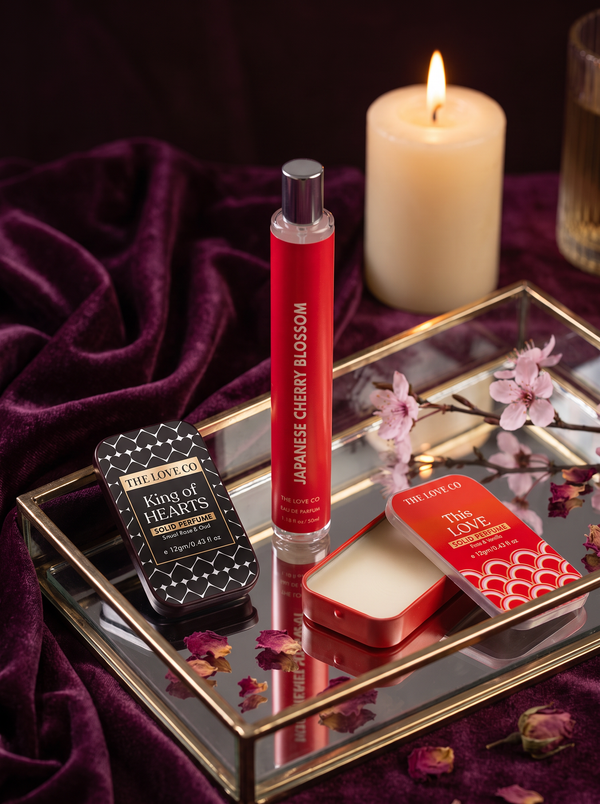
| Solid perfume | Fragrance suspended in a wax base. Very close wear, no alcohol. |
| Layering | Applying fragrance in multiple formats, heaviest first, so each fixes the one above. |
| Fragrance wardrobe | Owning several fragrances for different seasons, times and occasions. |
| Signature scent | One fragrance worn consistently enough that people associate it with you. |
| Blind buy | Buying a fragrance without smelling it first. Usually a mistake. |
| Decant | A small amount transferred into a separate bottle for travel or sampling. |
| Batch code | The manufacturing identifier on a bottle, used for traceability. |
| INCI | The standardised international ingredient naming system used on cosmetic labels. |
| IFRA | The International Fragrance Association, which publishes usage standards for fragrance materials. |
| Period after opening | The number of months a product remains good once opened. Shown as an open-jar symbol. |
Quick questions
What is the difference between sillage and projection?
Projection is how far the fragrance reaches around you at any moment. Sillage is the trail it leaves behind you as you move. A fragrance can project modestly and still leave excellent sillage.
What does drydown mean?
The drydown is the final stage of a fragrance — the base notes alone, from roughly hour three onward. It is what you actually smell like for most of the day.
What is an accord in perfume?
An accord is a blend of two or more notes that reads as a single new smell rather than its components. Amber is an accord, not a single raw material.
What is the difference between an absolute and an essential oil?
An essential oil is produced by steam distillation or cold pressing. An absolute is produced with solvents, and is used for delicate flowers like jasmine that distillation would destroy. Absolutes are usually richer and closer to the living flower.
What is a fixative?
A material that slows the evaporation of everything around it in a composition — typically resins, mosses, heavy woods and musks. A body lotion performs the same function from outside the formula.
What is nose blindness?
Olfactory fatigue — your receptors adapting to a constant scent so you stop noticing your own fragrance. It does not mean the fragrance has faded; other people can still smell it.
The TLC Pick
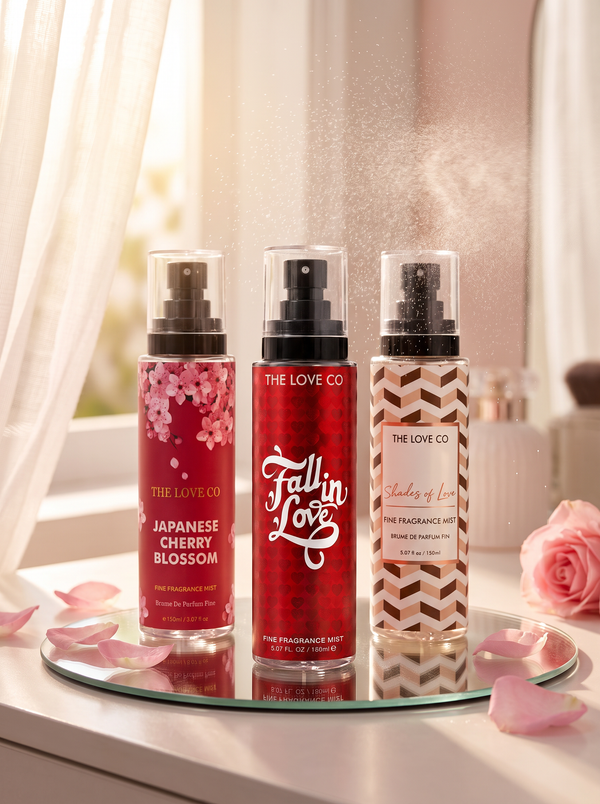
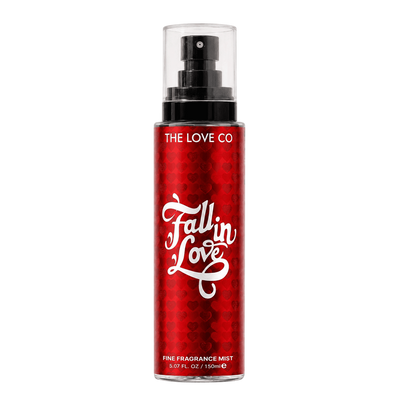
Every term here shows up on a real product page. Read a published pyramid alongside this glossary — Fall in Love Body Mist is a good place to start, with fir resin and oakmoss doing textbook fixative work at the base.
For the materials themselves, the A–Z of ingredients and notes covers 121 entries. Browse body mist or the full fragrance range.
She learned the word sillage on a Tuesday and used it on her mother that weekend, who laughed and said, we just called it your smell.
Keep reading
- Fragrance Notes and the Pyramid, Explained
- Olfactive Families: Find Your Scent World
- How a Body Mist Is Made
- Fragrance Concentration Explained
- Body Mist FAQ: 40 Questions, Answered
Fall in Love Body Mist
Fall in Love body mist · Spritz, linger The mist for the evening someone asks what you're wearing. Warm saffron, soft jasmine, a woody-amber dry-down. A romantic scent...
A ritual is the smallest love you give yourself, daily.
— The Love Co · 26 Aug 2026