

By The Love Co · Last updated: 2026-08-26
TL;DR: Concentration is the share of fragrance oil in the bottle: body mist 1–3%, eau de toilette 5–15%, eau de parfum 15–20%, parfum 20–30%. Higher means louder and longer, not better. A mist is dilute on purpose, so you can wear it all over, every day.
What does fragrance concentration mean?
Fragrance concentration is the proportion of the finished liquid that is actual fragrance oil, with the rest being carrier — alcohol, a little water, and a few functional ingredients.
Every category name you have seen on a bottle is really a shorthand for a concentration band. 'Eau de parfum' does not describe a style or a quality level. It describes roughly how much oil is in there.
Once you know this, the whole category becomes legible. Longevity, projection, price per millilitre and how much you should apply all follow from one number.
| Category | Fragrance oil | How much to apply | Typical hold |
|---|---|---|---|
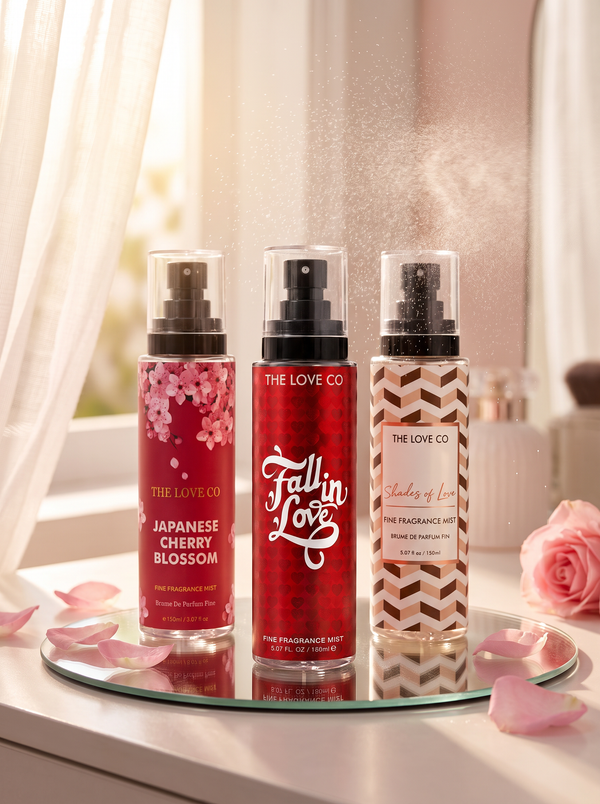
| Body mist | 1–3% | 6 sprays, whole body | 4–6 hrs layered |
| Eau fraiche | 1–3% | Generously | 1–2 hrs |
| Eau de cologne | 2–5% | Generously, reapply | 2–3 hrs |
| Eau de toilette | 5–15% | 2–4 sprays, pulse points | 3–5 hrs |
| Eau de parfum | 15–20% | 2–3 sprays, pulse points | 5–8 hrs |
| Parfum / extrait | 20–30% | 1–2 dabs | 8+ hrs |
Why a body mist is deliberately dilute
The low concentration is the entire design, not a cost-cutting decision.
A body mist is meant to be applied across the torso, the arms, the back of the neck — a surface area many times larger than the two pulse points a parfum touches. Apply a 20% concentration across that area and you have not made a luxurious experience; you have made a room uninhabitable.
Dilution is also what makes daily wear possible. At 1–3% you can wear the same fragrance every day without fatigue, without triggering the people you sit next to, and without spending a fortune per wear.
And in Indian heat there is a further argument. Warm skin projects harder than cool skin. A concentration that reads as elegant in a Delhi December can read as aggressive in a Chennai May. The mist has headroom built into it.
Why higher concentration is not better
Concentration buys you two things: volume and duration. It does not buy you quality.
The quality of a fragrance is set by the materials used and the skill of the composition. A beautifully built 2% mist made with good sandalwood and a properly structured pyramid will smell better than a crude 20% parfum made with cheap materials — it will just smell better more quietly, and for fewer hours.
This is why price per millilitre is a poor proxy for quality across categories. A parfum costs more per millilitre largely because there is more oil in each millilitre. Comparing a mist's per-ml price to a parfum's is comparing two different products.
The right question is never 'how strong is it'. It is 'is this the right strength for where I am going'.
The names are not regulated
One thing worth knowing before you use these labels to compare bottles: the categories are industry conventions, not legal standards.
There is no international body enforcing that 'eau de parfum' must contain between 15% and 20% fragrance oil. Brands apply the names by convention and by positioning, and the bands overlap. One house's eau de toilette can be stronger than another's eau de parfum.
Nor is concentration usually disclosed. You will not find a percentage printed on most bottles — what you will find, on an alcohol-based product, is an alcohol content declaration, which tells you about the carrier rather than the oil.
So use the category as a rough guide to intent, and judge the actual strength the only way that works: wear it, and see how far it travels and how long it stays.
Quick questions
What percentage of fragrance is in a body mist?
Typically 1–3% fragrance oil, against 15–20% for an eau de parfum. The low concentration is deliberate — it is what makes a mist suitable for whole-body, everyday wear.
Is a higher concentration fragrance better?
No. Higher concentration means louder and longer-lasting, not better quality. Quality is set by the materials and the composition, and a well-built low-concentration fragrance can smell far better than a crude strong one.
What is the difference between EDT and EDP?
Concentration. Eau de toilette runs roughly 5–15% fragrance oil and holds 3–5 hours; eau de parfum runs 15–20% and holds 5–8 hours. The same fragrance in both will smell similar but project and last differently.
Why isn't the concentration printed on the bottle?
Because the categories are industry conventions rather than regulated standards, and formulas are protected as trade secrets. Alcohol-based products declare alcohol content, which describes the carrier rather than the fragrance oil.
Which concentration is best for Indian summer?
Lower. Warm skin projects fragrance harder, so a 1–3% body mist tends to sit correctly in heat where a 15–20% eau de parfum can feel overwhelming.
How many sprays should I use at each concentration?
Roughly six for a body mist across the body, two to four for an eau de toilette on pulse points, two to three for an eau de parfum, and one or two dabs of a parfum.
The TLC Pick
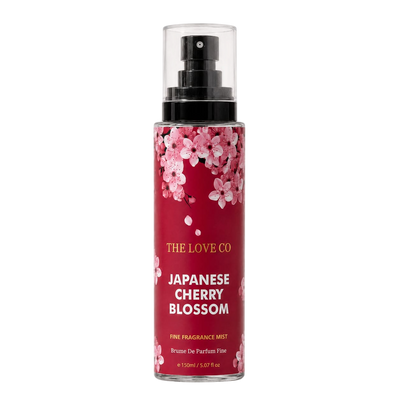
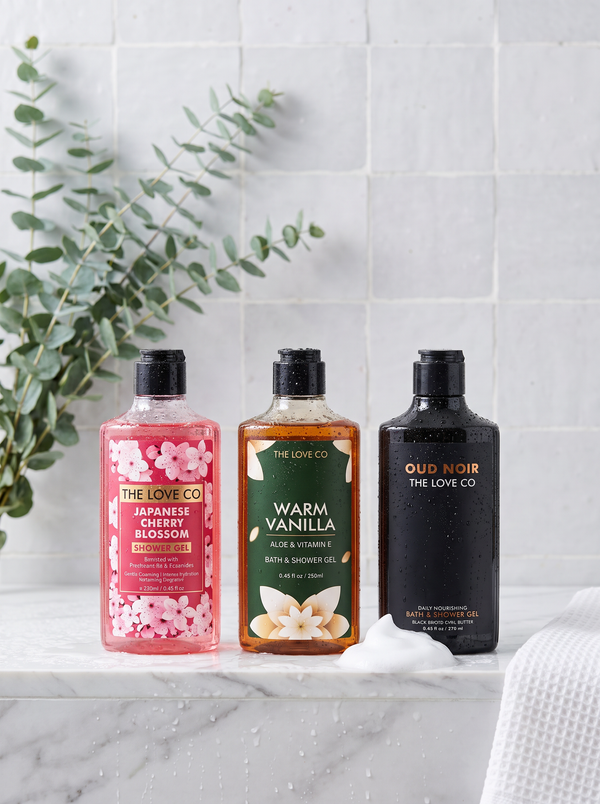
If you want to feel the difference concentration makes, wear a mist across the body and note where it sits at hour three. Warm Vanilla Body Mist is the clearest example in the range — whipped sugar and bergamot over vanilla and coconut, on a sandalwood-musk base — a fragrance designed to stay close rather than fill a room.
Browse the full body mist collection or the wider fragrance range.
Two rows ahead on the flight, a stranger turned around and asked her what it was — which never happens with something this quiet, and that is exactly why she remembered it.
Keep reading
- Body Mist vs Perfume, EDT, Deodorant, Spray and Oil
- Body Mist Price Guide India
- What's Actually In a Body Mist
- Perfumery Glossary: 60 Terms Decoded
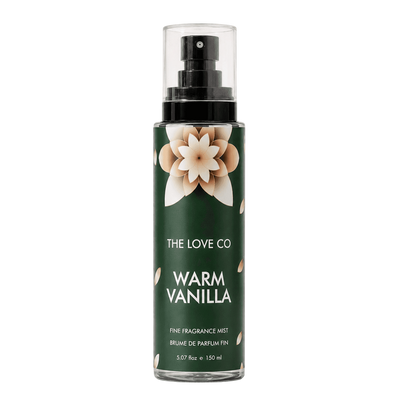
Warm Vanilla Body Mist
Vanilla body mist · Spritz, linger Warm vanilla, the everyday version. Two spritzes and a soft cloud settles on skin and clothes — sugar-bright first, then creamy vanilla...
A ritual is the smallest love you give yourself, daily.
— The Love Co · 26 Aug 2026