



By The Love Co · Last updated: 2026-08-26
A tradition older than the word perfume
Fragrance in India is not an import. It is one of the oldest continuous craft traditions on the subcontinent, and it was highly developed while Europe was still burning resins in churches.
Distillation apparatus has been found at Indus Valley sites. Sanskrit texts describe aromatic preparations in detail — for ritual, for medicine, and for the body. Ayurveda treats aromatic materials as functional rather than decorative, which is why sandalwood paste was applied to skin for cooling as much as for scent.
By the Mughal period the craft was at a courtly peak, with dedicated perfumers, established supply routes for oud and musk, and a technical vocabulary of its own. The word attar itself comes from Persian, and describes both a method and a finished product.
This matters commercially, not just historically. India is not a market that had to be taught to care about fragrance. It is a market that was doing this first.
What an attar actually is
An attar is a botanical material distilled directly into a base of sandalwood oil. That single technical choice separates it from everything in Western perfumery.
In European practice, a distilled essential oil is collected and later diluted into alcohol. In the attar method, the vapour coming off the botanical is condensed straight into a receiver already containing sandalwood oil, so the fragrance is captured into the oil at the moment of distillation rather than blended into it afterwards.
The consequences are practical. There is no alcohol, so nothing flashes off — an attar warms on the skin and releases slowly over many hours. It sits extremely close to the body. And the sandalwood is not a note in the composition; it is the medium the whole composition lives in, which is why traditional attars share a family resemblance regardless of what was distilled into them.
| Attar | Alcohol-based fragrance | |
|---|---|---|
| Carrier | Sandalwood oil | Denatured alcohol |
| Method | Distilled directly into the base | Oil blended into alcohol after extraction |
| On skin | Warms and releases slowly; no evaporation phase | Alcohol flashes off in seconds |
| Projection | Very close to the body | Wider, depending on concentration |
| Typical wear | 6–10 hours per application | 4–8 hours depending on format |
| Ages | Improves over years | Degrades over years |

Kannauj: four centuries of the same method
Kannauj, in Uttar Pradesh, is the working centre of this tradition and has been for roughly four hundred years.
The apparatus is called deg-bhapka. A copper still — the deg — is packed with flowers and water and sealed with clay and cloth. It is heated over a wood fire. The vapour travels through a bamboo pipe into the bhapka, a receiving vessel submerged in a water tank, already containing the sandalwood oil base. The bhapka is cooled by the water around it, condensing the vapour into the oil.
The distiller judges the process by touch and smell. There are no gauges. The fire is managed by hand, and the point at which a batch is finished is a decision made by a person who has made thousands of them.
Kannauj's rose — ruh gulab — is the most famous output, distilled during a short spring window from flowers picked before dawn while the oil content is highest. Jasmine, khus, kewda and saffron follow through the year, each with its own season.
Mitti attar: the smell of first rain
The most extraordinary thing in Indian perfumery has no equivalent anywhere in the world.
Mitti attar captures petrichor — the smell of the first monsoon rain hitting dry earth. It is made by taking clay from the earth, forming it into discs and baking them, then distilling those baked discs and condensing the vapour into sandalwood oil.
You are, quite literally, distilling the ground. The result smells of wet earth, of relief, of the specific moment in June when the heat breaks and everybody in the house goes to the window.
It is the clearest statement of what this tradition understood: that fragrance is a memory technology. Nobody wears mitti attar because it is pretty. They wear it because of where it takes them.
What survives, and what is under pressure
The tradition is alive, and it is not comfortable.
Sandalwood is the central problem. Mysore sandalwood — the base of the entire attar method — became scarce through overharvesting and long restrictions on cultivation. Genuine old-growth Mysore sandalwood oil is now extraordinarily expensive, and much of what is sold as sandalwood is a substitute base or a synthetic reconstruction.
Economics. Deg-bhapka distillation is slow, manual and low-yield against industrial extraction. A distiller can produce more, faster, with modern equipment — and the market rarely pays enough of a premium to justify not doing so.
Knowledge transfer. The skill is held by families and passed down by apprenticeship over years. Fewer of the next generation are staying.
What survives is the materials, the vocabulary, and the underlying idea — that fragrance belongs on the body as part of daily life rather than being saved for occasions. Sandalwood, saffron, jasmine, rose, vetiver and oud remain the materials Indian noses recognise instantly, which is why they keep appearing in the base of anything built for this country.
Quick questions
What is attar?
An attar is a botanical material distilled directly into a base of sandalwood oil rather than into water or alcohol. It is both a traditional Indian method and the finished product it produces.
How is attar different from perfume?
Attar has no alcohol, so nothing evaporates off on application — it warms on skin and releases slowly, typically 6–10 hours, staying very close to the body. Alcohol-based perfume flashes off in seconds and projects more widely.
Why is Kannauj famous for perfume?
Kannauj in Uttar Pradesh has been distilling attar for around four hundred years using the traditional copper deg-bhapka apparatus. Its rose attar, ruh gulab, is the most celebrated Indian fragrance material.
What is mitti attar?
Mitti attar captures the smell of the first monsoon rain on dry earth. It is made by baking discs of clay and distilling them into a sandalwood oil base — a technique with no equivalent in world perfumery.
What is the deg-bhapka method?
A traditional copper distillation apparatus. Flowers and water are sealed in the deg over a wood fire, and the vapour travels through bamboo into the bhapka — a receiver submerged in cooling water and already containing sandalwood oil.
Why is Mysore sandalwood so expensive?
Overharvesting and long-standing restrictions on cultivation made genuine old-growth Mysore sandalwood scarce. As it was the base of the entire attar tradition, its scarcity has forced widespread use of substitute and synthetic bases.
The TLC Pick
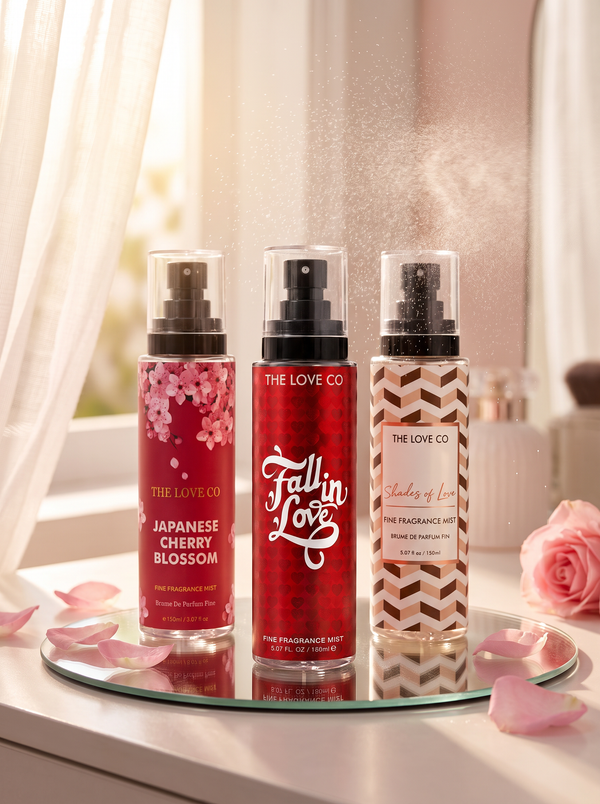
The materials of that tradition are still the ones that work here. Fall in Love Body Mist opens on saffron — the Kashmiri material at the heart of Mughal perfumery — and rests on fir resin and oakmoss.
For sandalwood, browse sandalwood body care; for the opulent world the courts built, oud. Or read the origins of each material in the A–Z of ingredients and notes.
Her grandfather used to keep one small bottle in his cupboard and put a single drop behind each ear on Fridays, and she can still find the shape of that bottle with her eyes shut.
Keep reading
- Perfumery Glossary: 60 Terms Decoded
- How a Body Mist Is Made
- Body Mist vs Perfume, EDT, Deodorant, Spray and Oil
- Olfactive Families: Find Your Scent World
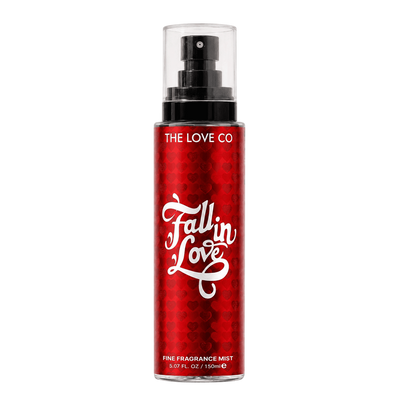
Fall in Love Body Mist
Fall in Love body mist · Spritz, linger The mist for the evening someone asks what you're wearing. Warm saffron, soft jasmine, a woody-amber dry-down. A romantic scent...
A ritual is the smallest love you give yourself, daily.
— Meher Kapoor · 26 Aug 2026